Welcome to About Time

About Time is the national newspaper for Australian prisons and detention facilities

Your browser window currently does not have enough height, or is zoomed in too far to view our website content correctly. Once the window reaches the minimum required height or zoom percentage, the content will display automatically.

Alternatively, you can learn more via the links below.

Donations via GiveNow

Email

Instagram

LinkedIn

ISSUE NO. 12
July 2025
Donate Here

Legal Corner

Laws Around Strip Searches in Prisons

Daniel Vansetten spent around 12 years in prison and has since gone on to study a Bachelor of Law at university. He uses his lived experience and study to advocate for prison reform through volunteering with various organisations as well as writing for About Time and producing podcasts with former inmates.

Strip searching is a security practice purportedly used by prison authorities to prevent drugs and other contraband from entering prisons. Yet, according to sources including the HRLC and the Queensland Human Rights Commission (QHRC), 20 years of research, investigations and inquiries have shown no convincing evidence that strip searches effectively reduce contraband from entering prisons.

According to a 2017 Human Rights Law Centre (HRLC) report, Corrections Victoria conducted 6,200 strip searches in six months across two women’s prisons. In these searches, only six items were detected – four tobacco or nicotine products, a “small quantity of gum” and one unidentified object. It is data like this that questions the justification by prison authorities across Australia in their use of strip searches, particularly in the face of the harm caused to those subjected to these searches.

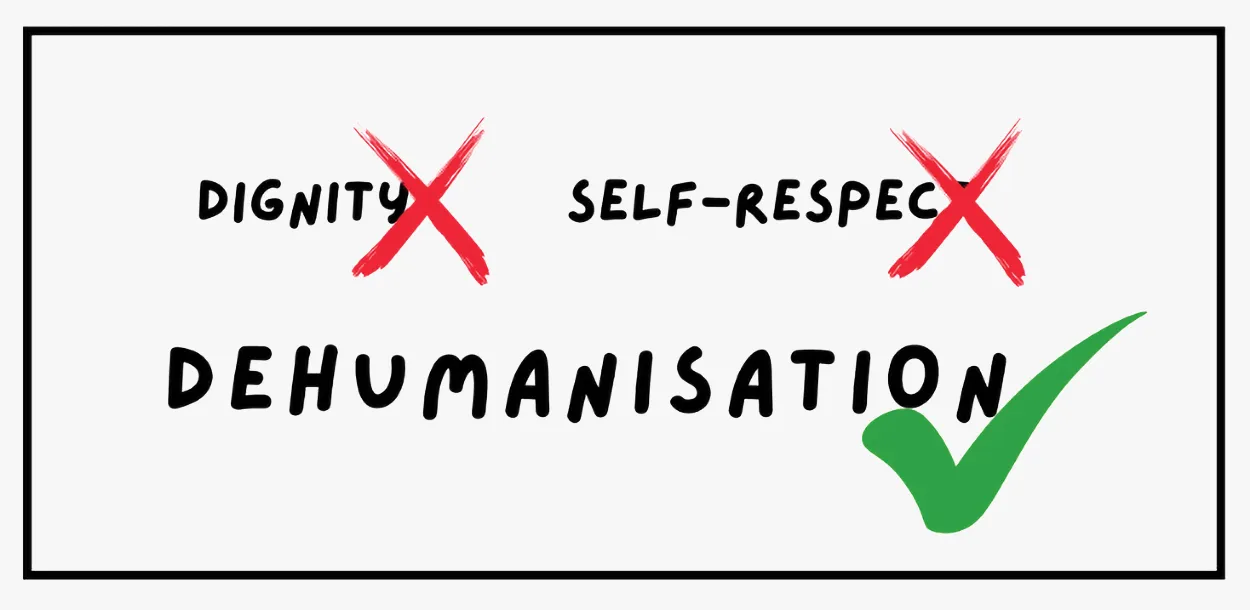
The impact of strip searches goes much further than the embarrassment of standing naked in front of strangers. People subjected to strip searches are forced to assume certain positions and conduct certain acts upon themselves that are significantly degrading and dehumanising.

Policies facilitating strip searches are regularly criticised for not considering the unique circumstances of women, transgender and First Nations people – resulting in further dehumanisation. Women, for example, are required to remove tampons during a search. Transgender people are often strip searched by officers of the opposite sex, despite general rules requiring strip searches by same sex officers. These rules determine a person’s gender at birth and ignore gender reassignment. The rules of strip searching across all institutions appear to completely omit any consideration of cultural sensitivities of First Nations peoples.

According to the 2023 report by QHRC, ‘Stripped of our dignity’, the harm caused by strip searches includes psychological and emotional harm and regular re-traumatisation of women previously subjected to sexual, physical or emotional abuse.

Despite the evidence that strip searching is harmful and ineffective, strip searching is legal – in all states and territories, in some shape or form. So what are the laws that allow this practice to continue?

Laws surrounding strip searches

Laws allowing strip searches are found in every state and territory across Australia. Their relatively similar provisions allow strip searching of incarcerated people when entering prisons, when visited by someone from the community, when moving between certain sections within a prison, when there is reasonable cause to suspect possession of a prohibited item, for security and good order of a prison and for the safe custody and welfare of prisoners. These vague terms often make challenging the legitimacy of a strip search difficult.

The processes are relatively consistent across all jurisdictions, requiring that strip searches are done by at least two officers; are conducted as expeditiously as possible to minimise the impact on the prisoner’s dignity and self-respect; avoid unnecessary force; are done in an area that provides reasonable privacy and only in the presence or sight of a person who is necessary to ensure the safety of prison officers conducting the strip search; does not involve touching of the prisoner’s body; and allows the prisoner to dress in private immediately after the search.

There are also many slight variations. Victoria allows strip searches by one or more officers of a different gender to the gender that the prisoner identifies with if the governor is satisfied the search is urgent and officers of the same gender as the prisoner are not available, or the belief that such search is reasonable. Tasmania requires a female to be ‘searched or examined’ only by female officers but there is no equivalent requirement for males.

Strip searching is a security practice purportedly used by prison authorities to prevent drugs and other contraband from entering prisons. Yet, according to sources including the HRLC and the Queensland Human Rights Commission (QHRC), 20 years of research, investigations and inquiries have shown no convincing evidence that strip searches effectively reduce contraband from entering prisons.

According to a 2017 Human Rights Law Centre (HRLC) report, Corrections Victoria conducted 6,200 strip searches in six months across two women’s prisons. In these searches, only six items were detected – four tobacco or nicotine products, a “small quantity of gum” and one unidentified object. It is data like this that questions the justification by prison authorities across Australia in their use of strip searches, particularly in the face of the harm caused to those subjected to these searches.

The impact of strip searches goes much further than the embarrassment of standing naked in front of strangers. People subjected to strip searches are forced to assume certain positions and conduct certain acts upon themselves that are significantly degrading and dehumanising.

Policies facilitating strip searches are regularly criticised for not considering the unique circumstances of women, transgender and First Nations people – resulting in further dehumanisation. Women, for example, are required to remove tampons during a search. Transgender people are often strip searched by officers of the opposite sex, despite general rules requiring strip searches by same sex officers. These rules determine a person’s gender at birth and ignore gender reassignment. The rules of strip searching across all institutions appear to completely omit any consideration of cultural sensitivities of First Nations peoples.

According to the 2023 report by QHRC, ‘Stripped of our dignity’, the harm caused by strip searches includes psychological and emotional harm and regular re-traumatisation of women previously subjected to sexual, physical or emotional abuse.

Despite the evidence that strip searching is harmful and ineffective, strip searching is legal – in all states and territories, in some shape or form. So what are the laws that allow this practice to continue?

Laws surrounding strip searches

Laws allowing strip searches are found in every state and territory across Australia. Their relatively similar provisions allow strip searching of incarcerated people when entering prisons, when visited by someone from the community, when moving between certain sections within a prison, when there is reasonable cause to suspect possession of a prohibited item, for security and good order of a prison and for the safe custody and welfare of prisoners. These vague terms often make challenging the legitimacy of a strip search difficult.

The processes are relatively consistent across all jurisdictions, requiring that strip searches are done by at least two officers; are conducted as expeditiously as possible to minimise the impact on the prisoner’s dignity and self-respect; avoid unnecessary force; are done in an area that provides reasonable privacy and only in the presence or sight of a person who is necessary to ensure the safety of prison officers conducting the strip search; does not involve touching of the prisoner’s body; and allows the prisoner to dress in private immediately after the search.

There are also many slight variations. Victoria allows strip searches by one or more officers of a different gender to the gender that the prisoner identifies with if the governor is satisfied the search is urgent and officers of the same gender as the prisoner are not available, or the belief that such search is reasonable. Tasmania requires a female to be ‘searched or examined’ only by female officers but there is no equivalent requirement for males.

Legal Q&A

Do you have a general legal query that you want answered?
Is  there an area of law that you think people inside should know more about? Submit your question in the provided form, and we might publish an answer in the paper.

Submit Your Question

A.C.T. requires the searched prisoner to remain partially clothed at all times, while Queensland requires the prisoner to remain partially clothed if ‘reasonably practicable.’ Partially clothed means that a full search is done in stages – the upper body first, then the lower body.

Queensland allows a ‘body search’; an examination of an orifice or cavity requiring the assistance of two medical practitioners. Such search requires a reasonable belief that the prisoner has ingested something that may jeopardise their health or wellbeing, or risks security and good order of a facility, or that the search may reveal evidence of an offence.

Northern Territory allows an ‘intimate search’ of the genital area, the anal area, or the breasts (of females). Such search requires a reasonable belief the prisoner has concealed a prohibited thing, or a thing connected with an offence against prison rules.

The future of strip searches

Many believe that advances in technology allowing full body scans will significantly reduce or end the practice of strip searching. Prison authorities across many jurisdictions appear motivated to release information to the public confirming the introduction of body scanning technology into prisons. For example, Queensland, New South Wales and South Australia have made public statements in the last year confirming the introduction of body-scanning technology, particularly in women’s prisons.

Advancements in the enactment of human rights laws, such as in Victoria, Queensland and A.C.T. has not prevented strip searches but has resulted in fresh challenges based on human rights principles.

In 2021, the Victorian Court of Appeal upheld a claim that the routine use of strip searches prior to urine testing was an unjustified limit upon the right to privacy and dignity (see Thompson v Minogue [2021] VSCA 358). These routine searches allegedly prevented contamination of urine samples. However, the Court found the prison authorities failed to show that these searches had that effect.

Earlier this year the Supreme Court of NSW heard a trial for a class action suit against NSW police for conducting unlawful strip searches on people at music festivals. A spokesperson for Redfern Legal Centre stated that, ‘for decades, people have been humiliated, intimidated and often left traumatised by these experiences of police officers abusing their powers.’ The outcome of this trial is pending.

While technology will likely reduce the use of strip searches, it seems unlikely these invasive searches will be discontinued in our prisons given their continued support from government and prison authorities. If you believe you have been subjected to an unlawful strip search, you should contact the Ombudsman or seek legal advice.

A.C.T. requires the searched prisoner to remain partially clothed at all times, while Queensland requires the prisoner to remain partially clothed if ‘reasonably practicable.’ Partially clothed means that a full search is done in stages – the upper body first, then the lower body.

Queensland allows a ‘body search’; an examination of an orifice or cavity requiring the assistance of two medical practitioners. Such search requires a reasonable belief that the prisoner has ingested something that may jeopardise their health or wellbeing, or risks security and good order of a facility, or that the search may reveal evidence of an offence.

Northern Territory allows an ‘intimate search’ of the genital area, the anal area, or the breasts (of females). Such search requires a reasonable belief the prisoner has concealed a prohibited thing, or a thing connected with an offence against prison rules.

The future of strip searches

Many believe that advances in technology allowing full body scans will significantly reduce or end the practice of strip searching. Prison authorities across many jurisdictions appear motivated to release information to the public confirming the introduction of body scanning technology into prisons. For example, Queensland, New South Wales and South Australia have made public statements in the last year confirming the introduction of body-scanning technology, particularly in women’s prisons.

Advancements in the enactment of human rights laws, such as in Victoria, Queensland and A.C.T. has not prevented strip searches but has resulted in fresh challenges based on human rights principles.

In 2021, the Victorian Court of Appeal upheld a claim that the routine use of strip searches prior to urine testing was an unjustified limit upon the right to privacy and dignity (see Thompson v Minogue [2021] VSCA 358). These routine searches allegedly prevented contamination of urine samples. However, the Court found the prison authorities failed to show that these searches had that effect.

Earlier this year the Supreme Court of NSW heard a trial for a class action suit against NSW police for conducting unlawful strip searches on people at music festivals. A spokesperson for Redfern Legal Centre stated that, ‘for decades, people have been humiliated, intimidated and often left traumatised by these experiences of police officers abusing their powers.’ The outcome of this trial is pending.

While technology will likely reduce the use of strip searches, it seems unlikely these invasive searches will be discontinued in our prisons given their continued support from government and prison authorities. If you believe you have been subjected to an unlawful strip search, you should contact the Ombudsman or seek legal advice.

Explainer of Prison Offence Laws

Explainer of Prison Offence Laws

Explainer of Prison Offence Laws

By About Time
By About Time

There are major differences between how offences in prisons are dealt with around Australia. These offences typically range from minor ones, such as keeping an untidy cell, to more serious ones and others that can become criminal charges.

Legal Corner

ISSUE NO. 17

3 MIN READ

Practical Self-Advocacy Tips: Part 1 – Using Prison Policies

Practical Self-Advocacy Tips: Part 1 – Using Prison Policies

Practical Self-Advocacy Tips: Part 1 – Using Prison Policies

By Daniel Vansetten
By Daniel Vansetten

One of the most important aspects of self-advocacy in prison is to understand the rights of prisoners and the limitations of power of prison authorities.

Legal Corner

ISSUE NO. 19

2 MIN READ

What You Need to Know About OPCAT

What You Need to Know About OPCAT

What You Need to Know About OPCAT

By Andreea Lachsz
By Andreea Lachsz

When people are imprisoned, they lose their freedom, but they do not lose all of their human rights. International human rights law makes this very clear.

Legal Corner

ISSUE NO. 2

9 MIN READ

Silence May Be Golden, but Is It a ‘Right’?

Silence May Be Golden, but Is It a ‘Right’?

Silence May Be Golden, but Is It a ‘Right’?

By Daniel Vansetten
By Daniel Vansetten

In law, silence is considered a fundamental right that provides fairness in criminal proceedings.

Legal Corner

ISSUE NO. 9

5 MIN READ

Law and Healthcare: Why Can’t I Get My Usual Prescriptions From Prison?

By Prisoners' Legal Service Queensland

There is a lot of talk about human rights in prison – with things like ‘the Mandela Rules’, ‘the principle of equivalence’, and access to health care without discrimination.

Legal Corner

ISSUE NO. 21

2 MIN READ

Self-Advocacy from Prison: Procedural Fairness

By Dan Vansetten

Procedural fairness, often called “natural justice”, is a collection of rights, established under common law in Australia around the 1980s.

Legal Corner

ISSUE NO. 21

2 MIN READ

What Happens to Your Debts While You’re Inside?

By Prisoner Legal Service Queensland

Generally, debts can be put into two categories. First, there are private debts (e.g. from a bank, a landlord, a car dealer, or ‘Afterpay’). Second, there are debts owed to the State (e.g. unpaid fines).

Legal Corner

ISSUE NO. 20

2 MIN READ

Confusing Decision Made About You? Maybe FOI Can Help

By Dan Vansetten

The concern for those who are subjected to government decisions is that they often do not get to see the integrity of the information which was considered by the decision-maker and don’t get to check if it’s correct.

Legal Corner

ISSUE NO. 20

3 MIN READ