Welcome to About Time

About Time is the national newspaper for Australian prisons and detention facilities

Your browser window currently does not have enough height, or is zoomed in too far to view our website content correctly. Once the window reaches the minimum required height or zoom percentage, the content will display automatically.

Alternatively, you can learn more via the links below.

Donations via GiveNow

Email

Instagram

LinkedIn

ISSUE NO. 9
April 2025
Donate Here

Reintegration

Back on the Path of Freedom

Tips and reflections from someone who just came out
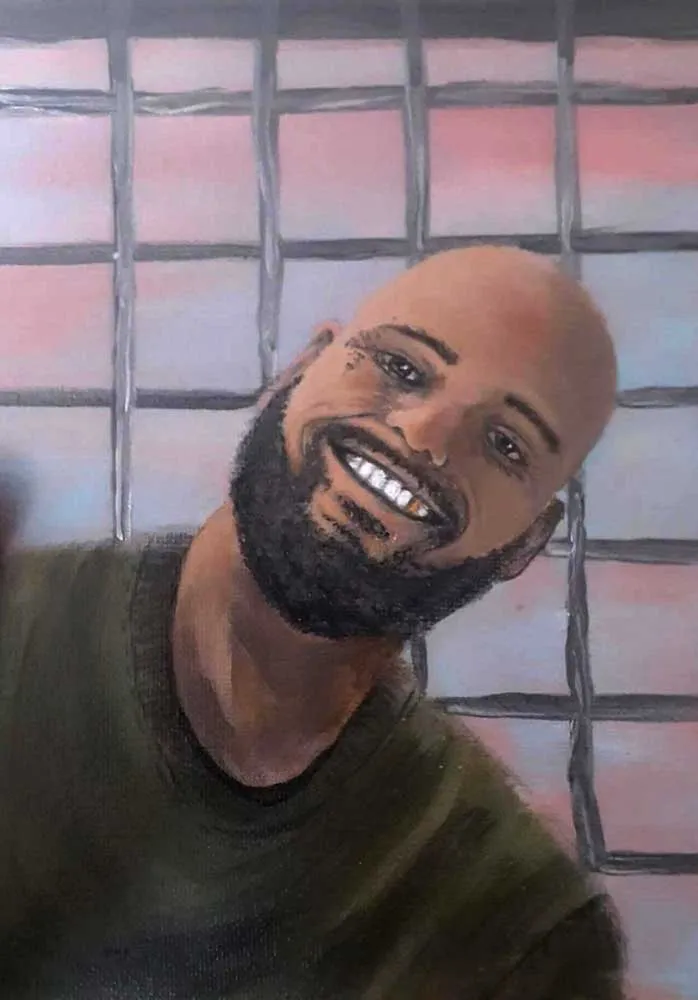
Ronin Cruise, based in Queensland, has spent a significant portion of his life in prison. He wrote a book during his recent time called Pri-Zen, and considers writing and sharing his story a key driver in staying clean and out of prison.

Self portrait, by Cruise

I was released about four weeks ago and I was quite stressed. To be completely honest, I didn't really want to leave. The truth is, I loved prison and it became part of my identity. It was a place where I could do all the things I love without getting sucked into the outside world full of distractions that can take you for a mad ride. The outside can become overwhelming: the stress of not knowing where you're going to sleep; if you can afford your next meal; or if you can even bear to see your family after slipping up and relapsing into drug use. I know these problems all too well.

But I want to figure out how to make it work on the outside. I want to be closer to the path of freedom. So I thought I'd share some little tricks that I have been implementing to try to keep me less distracted.

There are a lot of things we think about when we are locked up: plans for the future, bucket lists, training routines. We write them down with high hopes only to get out and never look at those books and lists full of dreams.

Being close to everything is how we are naturally supposed to live. But now in the last hundred or so years, we started expanding yet isolating at the same time. We built a system dependent on working for other people to help them achieve their goals. We once would work our crops and animals to feed and spend time with our families. Now we sacrifice the majority of our time doing jobs for the sake of others. We forget who we are, we forget what we love, we get told what to do but don't get informed how to be.

If there's one thing I can take from prison that we can use in society is try to remember to take the time to disconnect from the expectations of society and do the things that you love.

Take a break from being a part of the world. Use maybe 30 mins everyday to turn off all devices and do something that you would do while you were in prison. Read, cook, paint, train, write, or just simply talk to the people around you.

One example which has worked for me is finding something that I can use as a form of muster. Being a convert to Islam, I've started using the midday 12:30 prayer as my half-way point of the day. So just like in prison when I would train until 10:30 then eat etc,, this is something that I found I can do to muster myself and break up the overwhelmingly long days where we can do both everything and nothing.

I must admit it is more difficult on the outside to remember to break up the day but I'm quite lucky that I have a place to stay when the world stresses me out. When I get to that stressful point I go to that safe place, instead of getting out and about dealing with all the variables that can take me for a ride. I think it's good to kind of put yourself on lockdown for a day or two. Better to stay in and watch TV for a couple of days then do things you might regret. I've been there before and it's a rollercoaster ride, like really on a rollercoaster; you're getting tossed from left to right all while you're trapped in your seat. It may feel like fun at times, but it is still a trap and the thrills aren't as real as they seem.

Here are some dot point tips for reintegrating which has worked for me so far, but please remember I'm a human being so I can't say that it's been perfect these first weeks, but I can say my little hacks have given me a better start.

  • Save your mullah: find a way to save money that works for you. For me, I don't shop at big corporations. No Woolies, Coles, Maccas, etc. This stops me from spending too much money.
  • Write a list of things that you will need outside while in prison. When you’re out, check at least once a week to keep on track.
  • Put family first: spend your first moments or weeks out as close to family as possible. Friends and distractions can come later.
  • Find a structure in freedom: take some time out of your day to do something you love to do, whether you did it in prison or not.
  • Don't rush! Don't be too eager to go straight back to work or play the catch up game too quickly: you will get lost in it and end up back in prison.
  • Take 5: Too much stress, better to have a couple of days of doing nothing. Find a cell/room you can be comfortable in, this is so important to have a safe space that you can kick back when things aren't going your way. Sit, chill, and try again another time.
  • Most importantly, learn to forgive yourself if you mess up. It's a slippery slope once you do and there are only two places you're gonna end up; that's prison or the grave.

I was released about four weeks ago and I was quite stressed. To be completely honest, I didn't really want to leave. The truth is, I loved prison and it became part of my identity. It was a place where I could do all the things I love without getting sucked into the outside world full of distractions that can take you for a mad ride. The outside can become overwhelming: the stress of not knowing where you're going to sleep; if you can afford your next meal; or if you can even bear to see your family after slipping up and relapsing into drug use. I know these problems all too well.

But I want to figure out how to make it work on the outside. I want to be closer to the path of freedom. So I thought I'd share some little tricks that I have been implementing to try to keep me less distracted.

There are a lot of things we think about when we are locked up: plans for the future, bucket lists, training routines. We write them down with high hopes only to get out and never look at those books and lists full of dreams.

Being close to everything is how we are naturally supposed to live. But now in the last hundred or so years, we started expanding yet isolating at the same time. We built a system dependent on working for other people to help them achieve their goals. We once would work our crops and animals to feed and spend time with our families. Now we sacrifice the majority of our time doing jobs for the sake of others. We forget who we are, we forget what we love, we get told what to do but don't get informed how to be.

If there's one thing I can take from prison that we can use in society is try to remember to take the time to disconnect from the expectations of society and do the things that you love.

Take a break from being a part of the world. Use maybe 30 mins everyday to turn off all devices and do something that you would do while you were in prison. Read, cook, paint, train, write, or just simply talk to the people around you.

One example which has worked for me is finding something that I can use as a form of muster. Being a convert to Islam, I've started using the midday 12:30 prayer as my half-way point of the day. So just like in prison when I would train until 10:30 then eat etc,, this is something that I found I can do to muster myself and break up the overwhelmingly long days where we can do both everything and nothing.

I must admit it is more difficult on the outside to remember to break up the day but I'm quite lucky that I have a place to stay when the world stresses me out. When I get to that stressful point I go to that safe place, instead of getting out and about dealing with all the variables that can take me for a ride. I think it's good to kind of put yourself on lockdown for a day or two. Better to stay in and watch TV for a couple of days then do things you might regret. I've been there before and it's a rollercoaster ride, like really on a rollercoaster; you're getting tossed from left to right all while you're trapped in your seat. It may feel like fun at times, but it is still a trap and the thrills aren't as real as they seem.

Here are some dot point tips for reintegrating which has worked for me so far, but please remember I'm a human being so I can't say that it's been perfect these first weeks, but I can say my little hacks have given me a better start.

  • Save your mullah: find a way to save money that works for you. For me, I don't shop at big corporations. No Woolies, Coles, Maccas, etc. This stops me from spending too much money.
  • Write a list of things that you will need outside while in prison. When you’re out, check at least once a week to keep on track.
  • Put family first: spend your first moments or weeks out as close to family as possible. Friends and distractions can come later.
  • Find a structure in freedom: take some time out of your day to do something you love to do, whether you did it in prison or not.
  • Don't rush! Don't be too eager to go straight back to work or play the catch up game too quickly: you will get lost in it and end up back in prison.
  • Take 5: Too much stress, better to have a couple of days of doing nothing. Find a cell/room you can be comfortable in, this is so important to have a safe space that you can kick back when things aren't going your way. Sit, chill, and try again another time.
  • Most importantly, learn to forgive yourself if you mess up. It's a slippery slope once you do and there are only two places you're gonna end up; that's prison or the grave.
Reintegration

ISSUE NO. 12

4 MIN READ

Finding Support After Release: Who Can Help and Where to Start

Finding Support After Release: Who Can Help and Where to Start

Finding Support After Release: Who Can Help and Where to Start

By Vacro
By Vacro

What you need to survive in prison is different to what you need on the outside. Many people have said that the first few weeks out were harder than their time inside. Coping with money problems, dealing with other people and feeling like you don’t belong in society can take a toll.

Reintegration

ISSUE NO. 20

5 MIN READ

From Prison to the Outside: Dealing With the Loneliness

From Prison to the Outside: Dealing With the Loneliness

From Prison to the Outside: Dealing With the Loneliness

By Community Restorative Centre (republished from the 'Survival on the Outside' guide)

Feeling isolated and lonely is very common after you’ve left prison. In prison you didn’t expect to open up to people and enjoy their company. Now you’re outside, it takes time to relax and be friendly to people.

Reintegration

ISSUE NO. 2

10 MIN READ

Getting a Job After Prison

Getting a Job After Prison

Getting a Job After Prison

By VACRO
By VACRO

Getting a job after prison is hard for most people. If you had a job before you went in, you may not be able to go back to it, or you might not want to.

Reintegration

ISSUE NO. 8

10 MIN READ

Finding Support After Release: Who Can Help and Where to Start

By Vacro

What you need to survive in prison is different to what you need on the outside. Many people have said that the first few weeks out were harder than their time inside. Coping with money problems, dealing with other people and feeling like you don’t belong in society can take a toll.

Reintegration

ISSUE NO. 20

5 MIN READ

Breaking the Cycle: How I Gave Myself Another Chance

By Gary Griffiths

Walking out of jail here in Perth wasn’t the moment my life changed.

Reintegration

ISSUE NO. 19

4 MIN READ

Finding Yourself Again

By Dr Carollyne Youssef

When the walls close in, both physically and mentally, it is easy to feel like the person you once was has been lost. For many, incarceration becomes not only a punishment but a pause. A disconnection from one’s true self.

Reintegration

ISSUE NO. 18

3 MIN READ

Preparing for Employment While Inside

By John Kotsifas

At first, it felt like nobody wanted to give me a chance. But, eventually, one employer took a chance on me. That warehouse job may not have looked like much to others, but to me it was everything: it gave me purpose, structure and, most of all, hope.

Reintegration

ISSUE NO. 17

3 MIN READ