Welcome to About Time

About Time is the national newspaper for Australian prisons and detention facilities

Your browser window currently does not have enough height, or is zoomed in too far to view our website content correctly. Once the window reaches the minimum required height or zoom percentage, the content will display automatically.

Alternatively, you can learn more via the links below.

Donations via GiveNow

Email

Instagram

LinkedIn

ISSUE NO. 15
October 2025
Donate Here

Legal Corner

What to Do: Mandatory Visa Cancellation Letters

By
RACS (Refugee Advice and Casework Service)

Ethan Cassidy

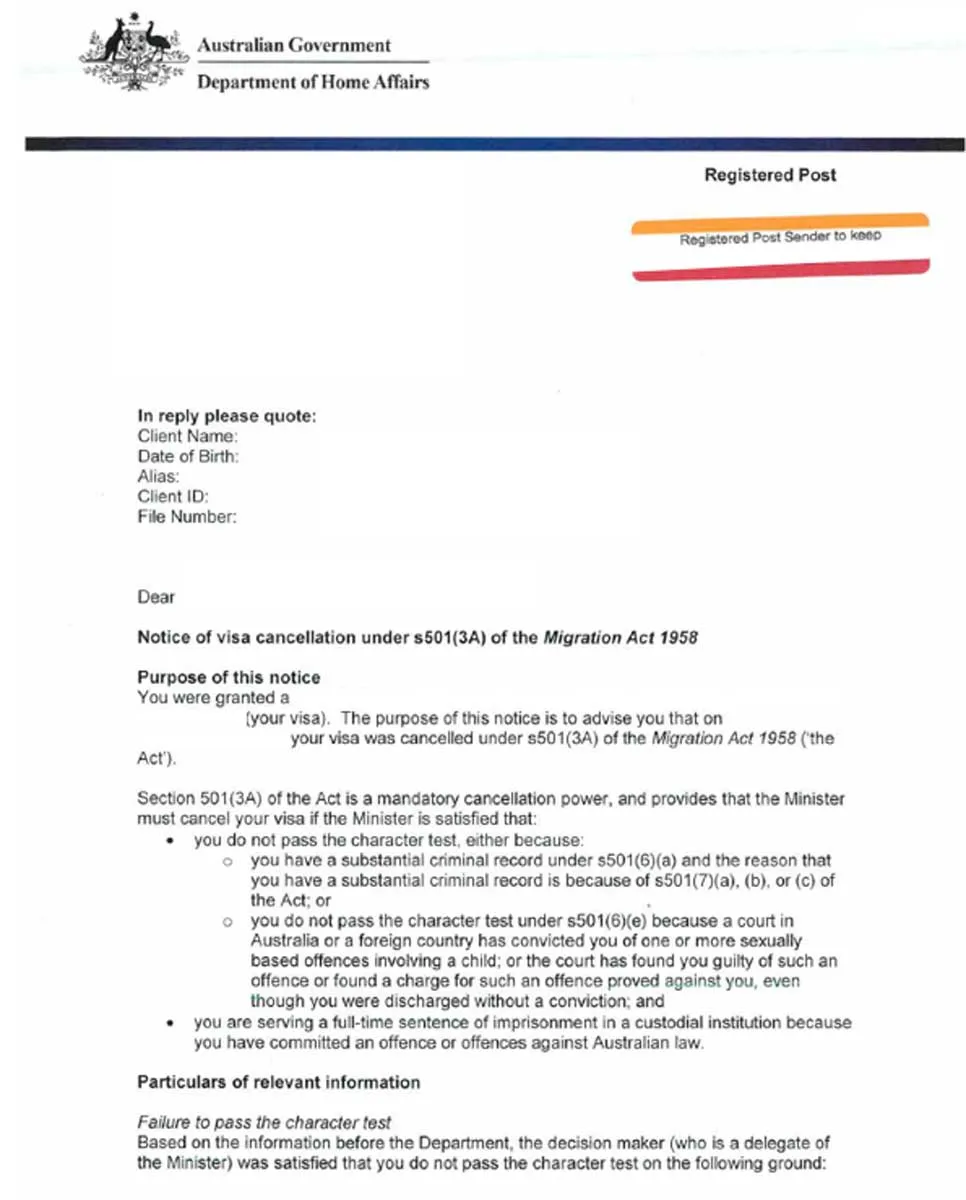
The letter usually looks like this:

What does it mean?

You got this letter to say that your visa has been cancelled due to your offending. This means you no longer hold a visa.

If you received a letter from the Department of Home Affairs about the cancellation of your visa, you should have also received a Revocation Request Form and a Personal Details Form.

What do I do?

If you want to ask the department to revoke the cancellation of your visa, you should complete and lodge these two forms within 28 days of receiving your visa cancellation notice.

You can lodge it by emailing it to the email address on the letter with the “in reply please quote” details.

It is very important that you lodge these forms within the 28-day time limit as no extensions can be granted. Immigration deadlines are very strict.

In addition to the Revocation Request Form and the Personal Details Form, you can write a short letter to the department with information that you want them to consider when they make a decision about whether they should revoke your visa cancellation.

After these have been submitted within 28 days, you can continue submitting supporting documents until a decision has been made. A list of documents we suggest you get is in this factsheet.

The department may consider the following things in making their decision:

  • the protection of the Australian community
    • This includes the seriousness and nature of your conduct and the risk that you might re-offend
    • They can consider any courses or rehabilitation efforts you have engaged in
  • the best interests of any children in Australia
  • If you are able to complete the revocation form with as much detail about these children and, if available, include photos of them with you
  • if you wouldn’t be safe if you were returned to your home country
  • your ties to Australia
  • how long you have been here for, any work you’ve done here, any family you have here. (The Revocation Request Form asks you all these details)
  • the difficulties you might face if you have to return to your country of origin (i.e. difficulties surrounding your age, health, lack of ties to the country that you will be returned to, hardship likely to result from deportation and your level of education).

If you get a negative decision, you will likely only have nine days to appeal. We ask that you then get legal help immediately.

Documents to collect

Set out below is a list of documents it would be good to obtain in support of a character test submission.

These documents should be submitted in addition to completing the Revocation Request Form and submitting it within 28 days.

Don’t wait to have all these documents before submitting your revocation request. You can submit them afterwards.

Documents you may have in connection with your criminal case:

  • professional psychiatric or psychological reports presented to the court
  • sentencing reports that include positive information such as:
  • mitigating circumstances
  • positive comments on the unlikelihood of re-offending
  • comments that the offending was not of the most serious kind.
  • parole assessments, parole reports (including a separate reference from the parole officer)
  • probation reports.

Documents you could get from your time in prison:

  • written references from prison counsellors or prison officers, who might talk about your behaviour in prison and rehabilitation
  • evidence of any work, study or other programs that you have done in prison
  • reference from the prison chaplain.

Medical documents:

  • details of any medical or psychiatric treatment received overseas or in Australia, including any drug or alcohol rehabilitation
  • your IHMS records from your time in immigration detention – you just ask your IHMS service provider for them
  • evidence of any arrangements for treatment or other rehabilitation programs if you are released.

Documents from your time in the community:

  • evidence of membership of social clubs or church groups
  • evidence of membership of a trade union or professional association
  • evidence of any offices held in community or public affairs
  • evidence of any guarantee of future work
  • any other evidence of your ties with and contributions to the community.

Documents from family and friends:

  • written statements (or letters) from your family and friends, especially anyone who depends on you
  • statement from your partner about your relationship, their intentions about the future of that relationship and how cancellation of your visa affects them
  • statements from friends who live in Australia
  • statement from a leader of a community group.

If you have a child/children:

  • written statements from other caregivers describing your relationship with the child, positive influence on the child’s life and impact of the visa cancellation on the child
  • evidence of any courses, programs or counselling that will help you to be a positive part of the child’s life – for example, parenting courses, anger management courses or seeing a psychologist or psychiatrist
  • a copy of any court order about the child/children
  • photos reflecting your positive relationship with the child
  • if your child has any health issues, medical reports
  • depending on the age of the child and whether the caregiver thinks it is appropriate, a letter from your child.

Getting legal help from RACS

RACS is entirely independent of the Department of Home Affairs. All assistance is free. RACS can provide refugees with legal advice on visa cancellation matters, but we rarely can represent them at the AAT. If your matter is at the AAT on a visa cancellation, or if you have no fears of persecution in your home country, we suggest at first instance you contact Legal Aid NSW’s immigration team to see if they can assist you: (02) 9219 5790.

Legal Aid ACT Migration Clinic:

1300 654 314

Refugee Legal Vic:

(03) 9413 0100

(Wednesday & Friday 10am–2pm)

Legal Services Commission SA:

1300 366 424

Tasmania Refugee Legal Service:

(03) 6169 9473

Refugee and Immigration Legal Service QLD:

(07) 3846 9300

Northern Territory Legal Aid Commission:

1800 019 343

Legal Aid WA Infoline:

1300 650 579

The letter usually looks like this:

What does it mean?

You got this letter to say that your visa has been cancelled due to your offending. This means you no longer hold a visa.

If you received a letter from the Department of Home Affairs about the cancellation of your visa, you should have also received a Revocation Request Form and a Personal Details Form.

What do I do?

If you want to ask the department to revoke the cancellation of your visa, you should complete and lodge these two forms within 28 days of receiving your visa cancellation notice.

You can lodge it by emailing it to the email address on the letter with the “in reply please quote” details.

It is very important that you lodge these forms within the 28-day time limit as no extensions can be granted. Immigration deadlines are very strict.

In addition to the Revocation Request Form and the Personal Details Form, you can write a short letter to the department with information that you want them to consider when they make a decision about whether they should revoke your visa cancellation.

After these have been submitted within 28 days, you can continue submitting supporting documents until a decision has been made. A list of documents we suggest you get is in this factsheet.

The department may consider the following things in making their decision:

  • the protection of the Australian community
    • This includes the seriousness and nature of your conduct and the risk that you might re-offend
    • They can consider any courses or rehabilitation efforts you have engaged in
  • the best interests of any children in Australia
  • If you are able to complete the revocation form with as much detail about these children and, if available, include photos of them with you
  • if you wouldn’t be safe if you were returned to your home country
  • your ties to Australia
  • how long you have been here for, any work you’ve done here, any family you have here. (The Revocation Request Form asks you all these details)
  • the difficulties you might face if you have to return to your country of origin (i.e. difficulties surrounding your age, health, lack of ties to the country that you will be returned to, hardship likely to result from deportation and your level of education).

If you get a negative decision, you will likely only have nine days to appeal. We ask that you then get legal help immediately.

Documents to collect

Set out below is a list of documents it would be good to obtain in support of a character test submission.

These documents should be submitted in addition to completing the Revocation Request Form and submitting it within 28 days.

Don’t wait to have all these documents before submitting your revocation request. You can submit them afterwards.

Documents you may have in connection with your criminal case:

  • professional psychiatric or psychological reports presented to the court
  • sentencing reports that include positive information such as:
  • mitigating circumstances
  • positive comments on the unlikelihood of re-offending
  • comments that the offending was not of the most serious kind.
  • parole assessments, parole reports (including a separate reference from the parole officer)
  • probation reports.

Documents you could get from your time in prison:

  • written references from prison counsellors or prison officers, who might talk about your behaviour in prison and rehabilitation
  • evidence of any work, study or other programs that you have done in prison
  • reference from the prison chaplain.

Medical documents:

  • details of any medical or psychiatric treatment received overseas or in Australia, including any drug or alcohol rehabilitation
  • your IHMS records from your time in immigration detention – you just ask your IHMS service provider for them
  • evidence of any arrangements for treatment or other rehabilitation programs if you are released.

Documents from your time in the community:

  • evidence of membership of social clubs or church groups
  • evidence of membership of a trade union or professional association
  • evidence of any offices held in community or public affairs
  • evidence of any guarantee of future work
  • any other evidence of your ties with and contributions to the community.

Documents from family and friends:

  • written statements (or letters) from your family and friends, especially anyone who depends on you
  • statement from your partner about your relationship, their intentions about the future of that relationship and how cancellation of your visa affects them
  • statements from friends who live in Australia
  • statement from a leader of a community group.

If you have a child/children:

  • written statements from other caregivers describing your relationship with the child, positive influence on the child’s life and impact of the visa cancellation on the child
  • evidence of any courses, programs or counselling that will help you to be a positive part of the child’s life – for example, parenting courses, anger management courses or seeing a psychologist or psychiatrist
  • a copy of any court order about the child/children
  • photos reflecting your positive relationship with the child
  • if your child has any health issues, medical reports
  • depending on the age of the child and whether the caregiver thinks it is appropriate, a letter from your child.

Getting legal help from RACS

RACS is entirely independent of the Department of Home Affairs. All assistance is free. RACS can provide refugees with legal advice on visa cancellation matters, but we rarely can represent them at the AAT. If your matter is at the AAT on a visa cancellation, or if you have no fears of persecution in your home country, we suggest at first instance you contact Legal Aid NSW’s immigration team to see if they can assist you: (02) 9219 5790.

Legal Aid ACT Migration Clinic:

1300 654 314

Refugee Legal Vic:

(03) 9413 0100

(Wednesday & Friday 10am–2pm)

Legal Services Commission SA:

1300 366 424

Tasmania Refugee Legal Service:

(03) 6169 9473

Refugee and Immigration Legal Service QLD:

(07) 3846 9300

Northern Territory Legal Aid Commission:

1800 019 343

Legal Aid WA Infoline:

1300 650 579

Legal Q&A

Legal Q&A

Legal Q&A

By Brian
By Brian

My name is Brian. A lot of guys here are talking about new legislation coming in the near future, but I haven’t found it anywhere. It is called “Daniel’s Law”. I was wondering if you could explain it and when it will take effect and who it will apply to?

Legal Corner

ISSUE NO. 11

3 MIN READ

How to Complain to the Ombudsman

How to Complain to the Ombudsman

How to Complain to the Ombudsman

By About Time
By About Time

The Ombudsman is an independent organisation that oversees complaints against government decisions and actions. Each state/territory has their own Ombudsman. The Ombudsman responds to a complaint by investigating from both sides what has happened and why.

Legal Corner

ISSUE NO. 2

8 MIN READ

Video Court: What to Know

Video Court: What to Know

Video Court: What to Know

By About Time
By About Time

This guide doesn’t assume fair treatment, but it hopes to offer some tools to help you navigate online court while in prison.

Legal Corner

ISSUE NO. 13

4 MIN READ

Confusing Decision Made About You? Maybe FOI Can Help

Confusing Decision Made About You? Maybe FOI Can Help

Confusing Decision Made About You? Maybe FOI Can Help

By Dan Vansetten
By Dan Vansetten

The concern for those who are subjected to government decisions is that they often do not get to see the integrity of the information which was considered by the decision-maker and don’t get to check if it’s correct.

Legal Corner

ISSUE NO. 20

3 MIN READ

Law and Healthcare: Why Can’t I Get My Usual Prescriptions From Prison?

By Prisoners' Legal Service Queensland

There is a lot of talk about human rights in prison – with things like ‘the Mandela Rules’, ‘the principle of equivalence’, and access to health care without discrimination.

Legal Corner

ISSUE NO. 21

2 MIN READ

Self-Advocacy from Prison: Procedural Fairness

By Dan Vansetten

Procedural fairness, often called “natural justice”, is a collection of rights, established under common law in Australia around the 1980s.

Legal Corner

ISSUE NO. 21

2 MIN READ

What Happens to Your Debts While You’re Inside?

By Prisoner Legal Service Queensland

Generally, debts can be put into two categories. First, there are private debts (e.g. from a bank, a landlord, a car dealer, or ‘Afterpay’). Second, there are debts owed to the State (e.g. unpaid fines).

Legal Corner

ISSUE NO. 20

2 MIN READ

Confusing Decision Made About You? Maybe FOI Can Help

By Dan Vansetten

The concern for those who are subjected to government decisions is that they often do not get to see the integrity of the information which was considered by the decision-maker and don’t get to check if it’s correct.

Legal Corner

ISSUE NO. 20

3 MIN READ