Welcome to About Time

About Time is the national newspaper for Australian prisons and detention facilities

Your browser window currently does not have enough height, or is zoomed in too far to view our website content correctly. Once the window reaches the minimum required height or zoom percentage, the content will display automatically.

Alternatively, you can learn more via the links below.

Donations via GiveNow

Email

Instagram

LinkedIn

ISSUE NO. 23
June 2026
Donate Here

Legal Corner

The Parole Patchwork: An Overview of Australia’s Parole Laws

What makes you eligible for parole in each state and territory

By
Human Rights Law Centre lawyer Monique Hurley, with assistance from Connor Shaw

The Human Rights Law Centre is a community legal centre focused on driving systemic change, including ensuring that people in prison are treated in dignity.

Ethan Cassidy

Parole allows a person to serve part of their prison sentence in the community. The idea is that parole provides people with a structured, supported and supervised transition from prison back into the community. In recent years, regressive reform of parole laws in many places has made it increasingly difficult for people in prison to access parole.

Each state and territory has an independent parole authority that makes decisions about whether to grant, deny, defer or cancel a person’s parole pursuant to the relevant governing law. Some jurisdictions have automatic parole where a person does not need to apply for their first parole hearing. In contrast, others do not have automatic parole and people in prison must make an application to be considered for release on parole.

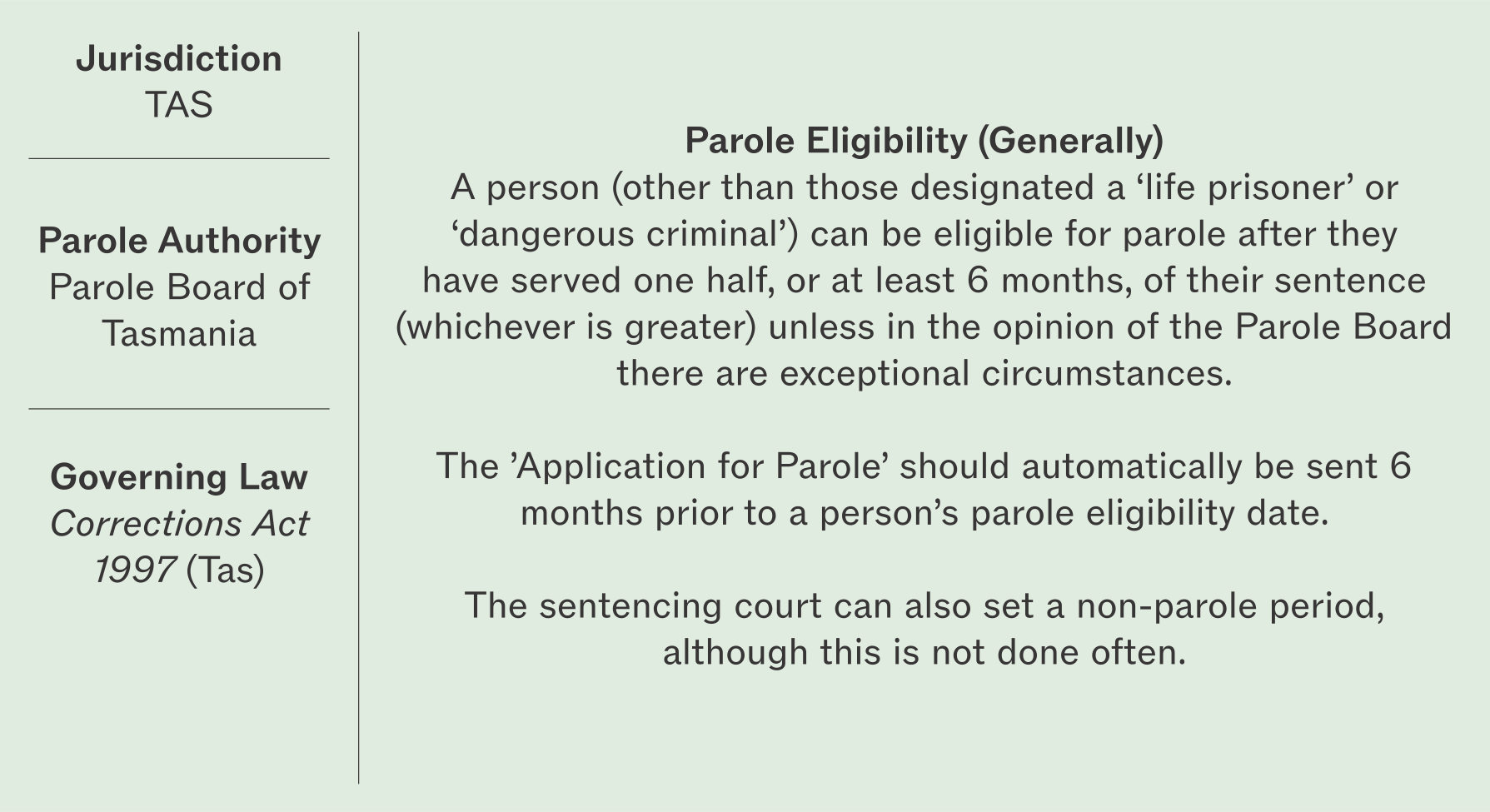
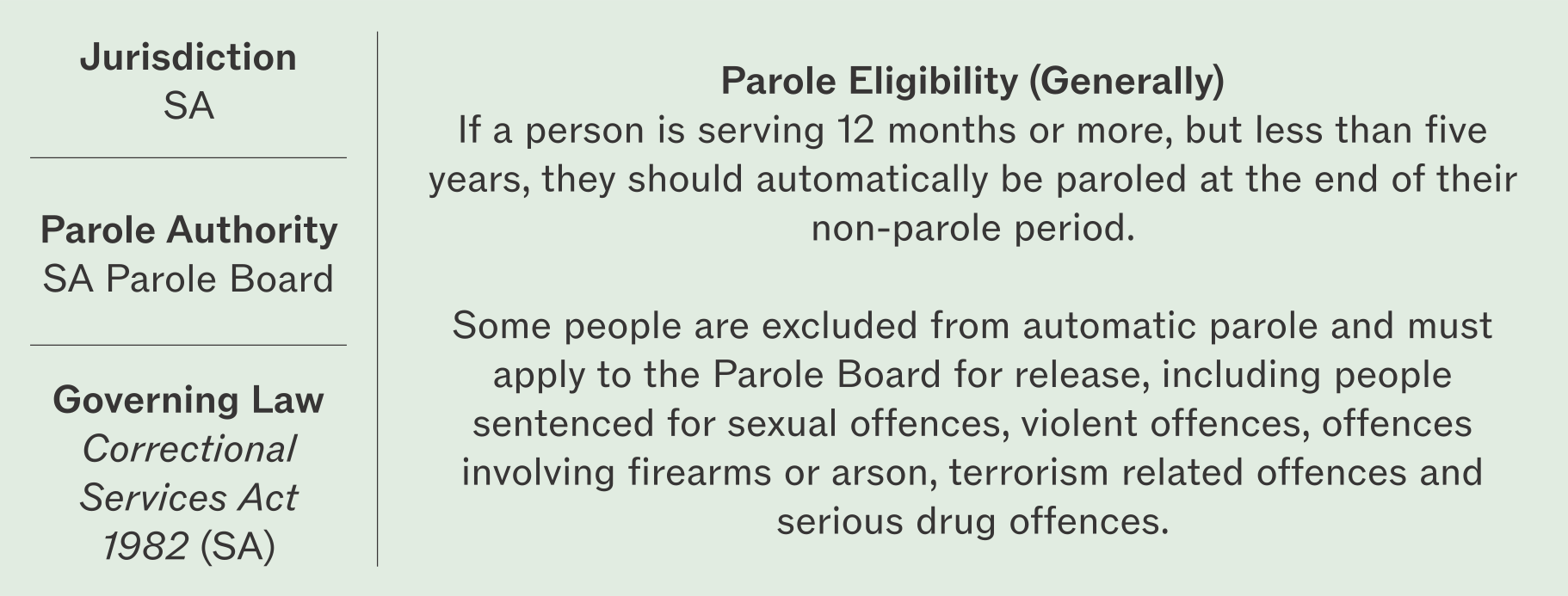
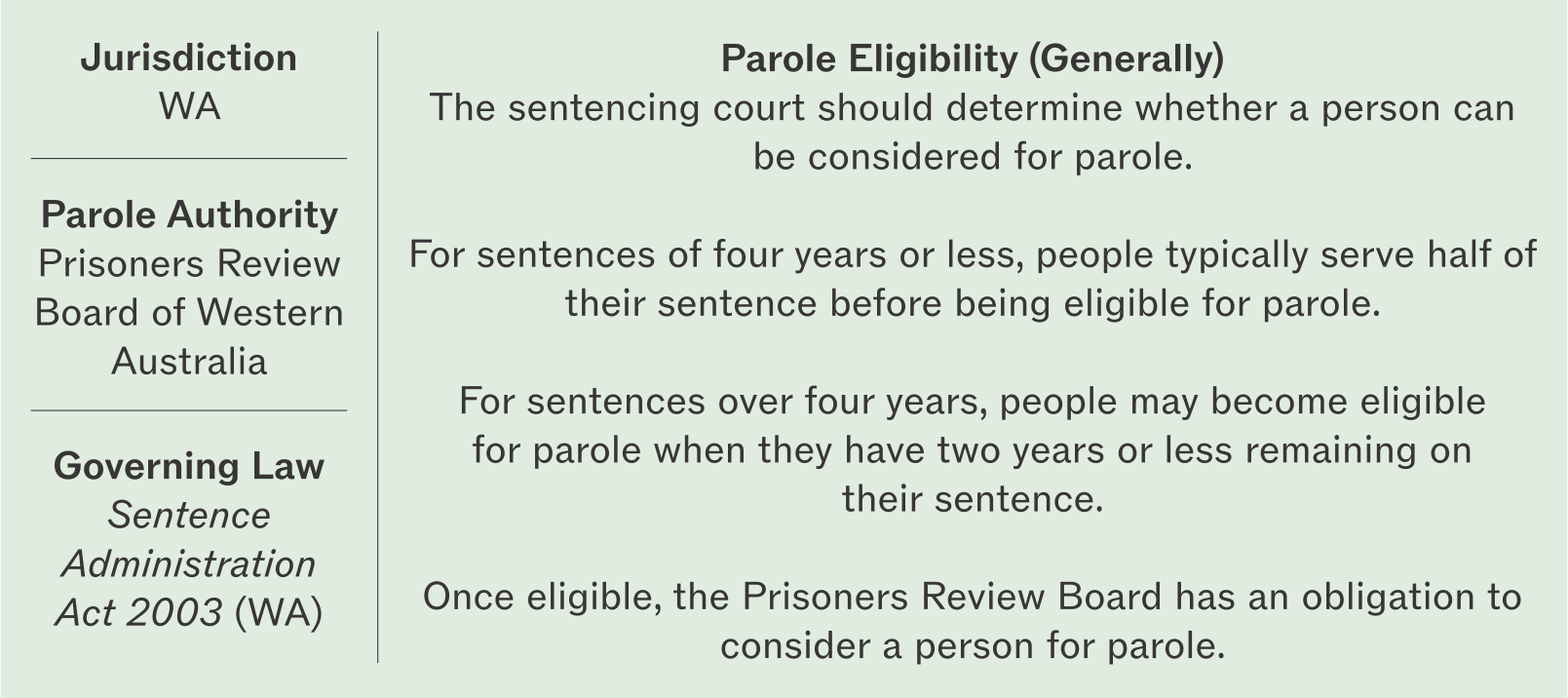
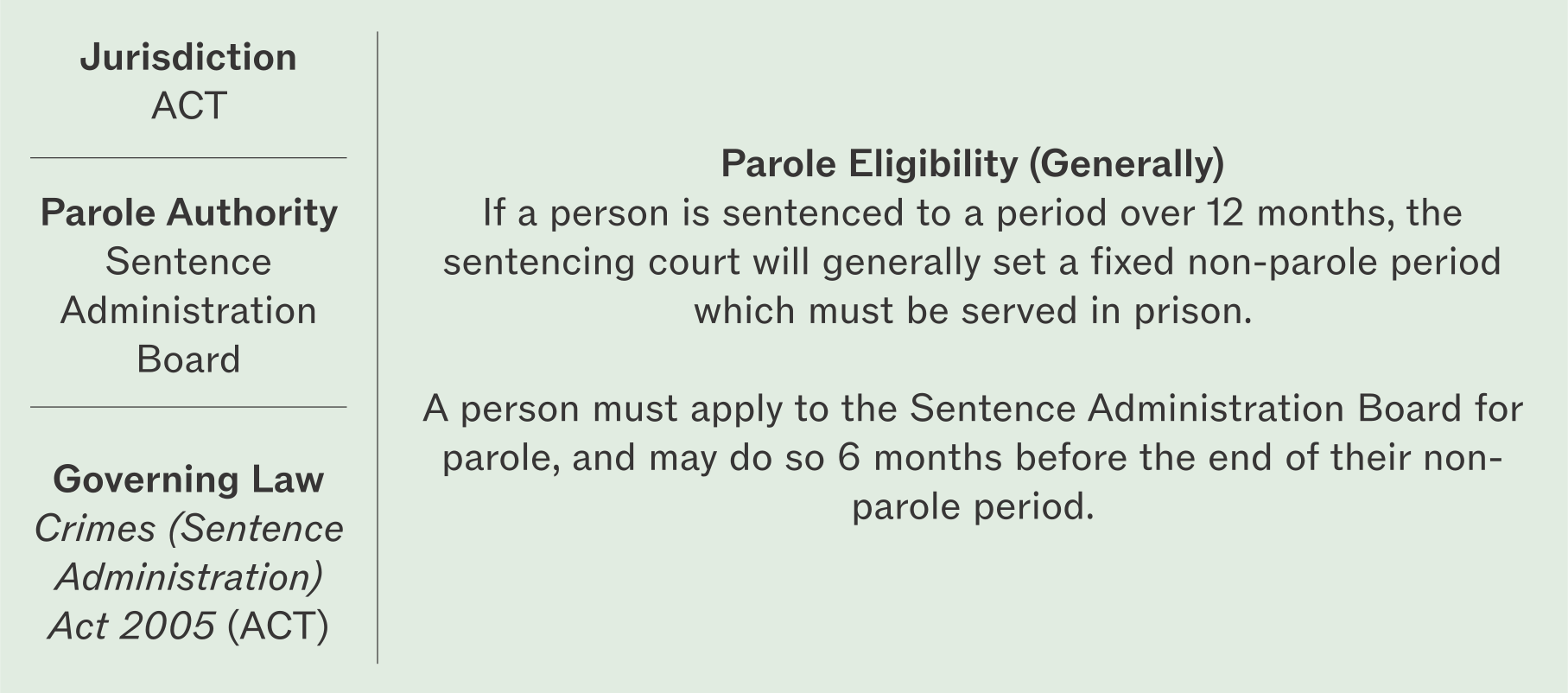
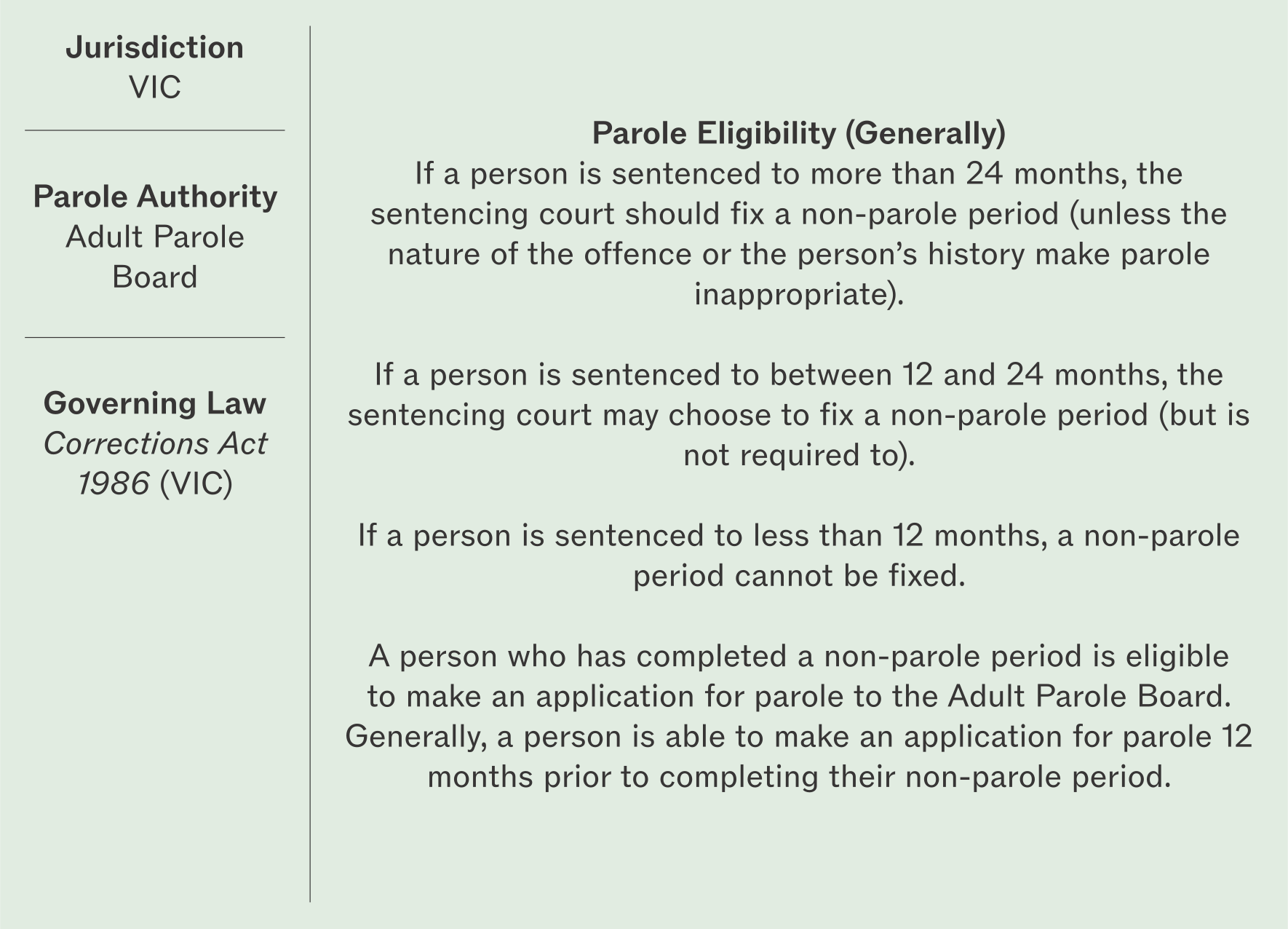
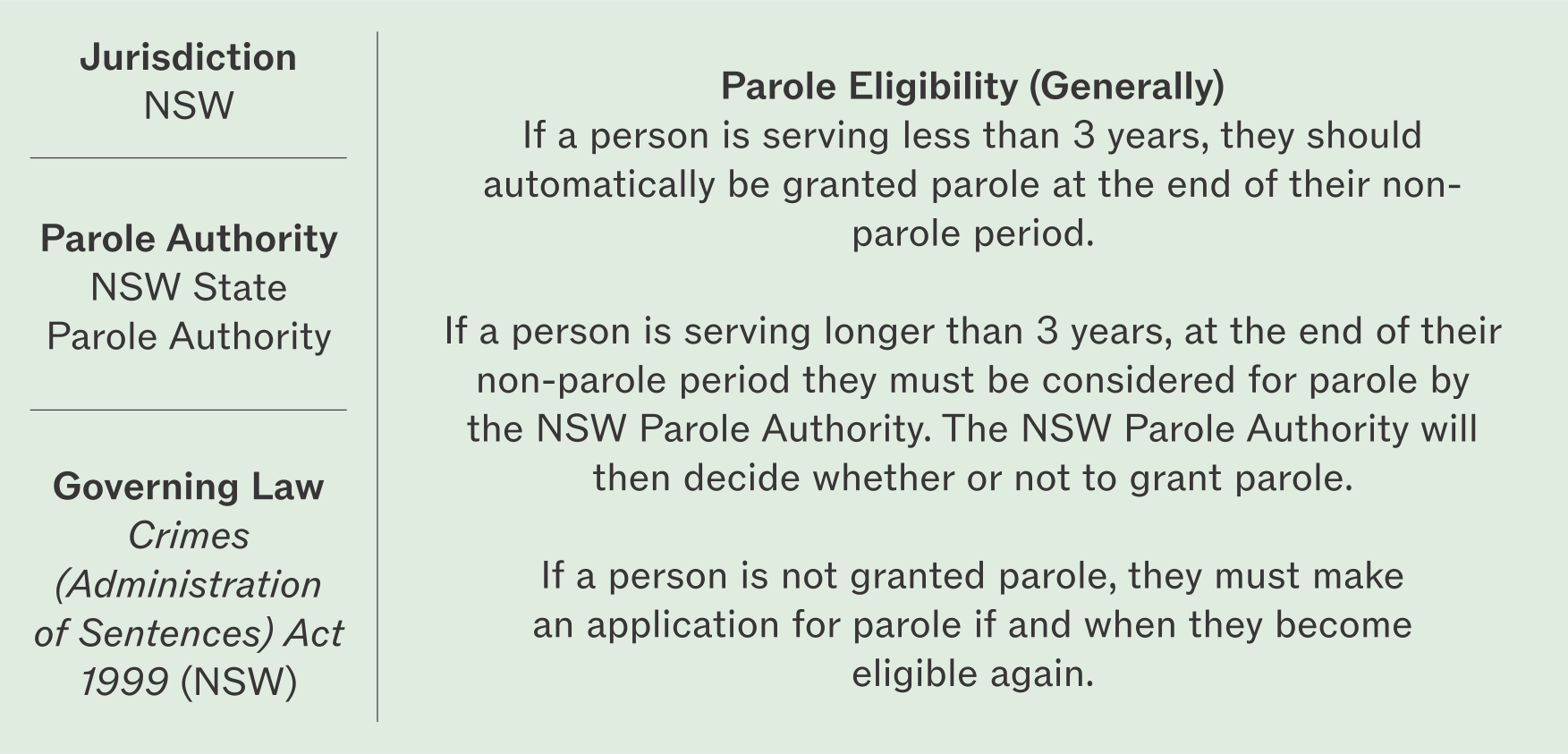
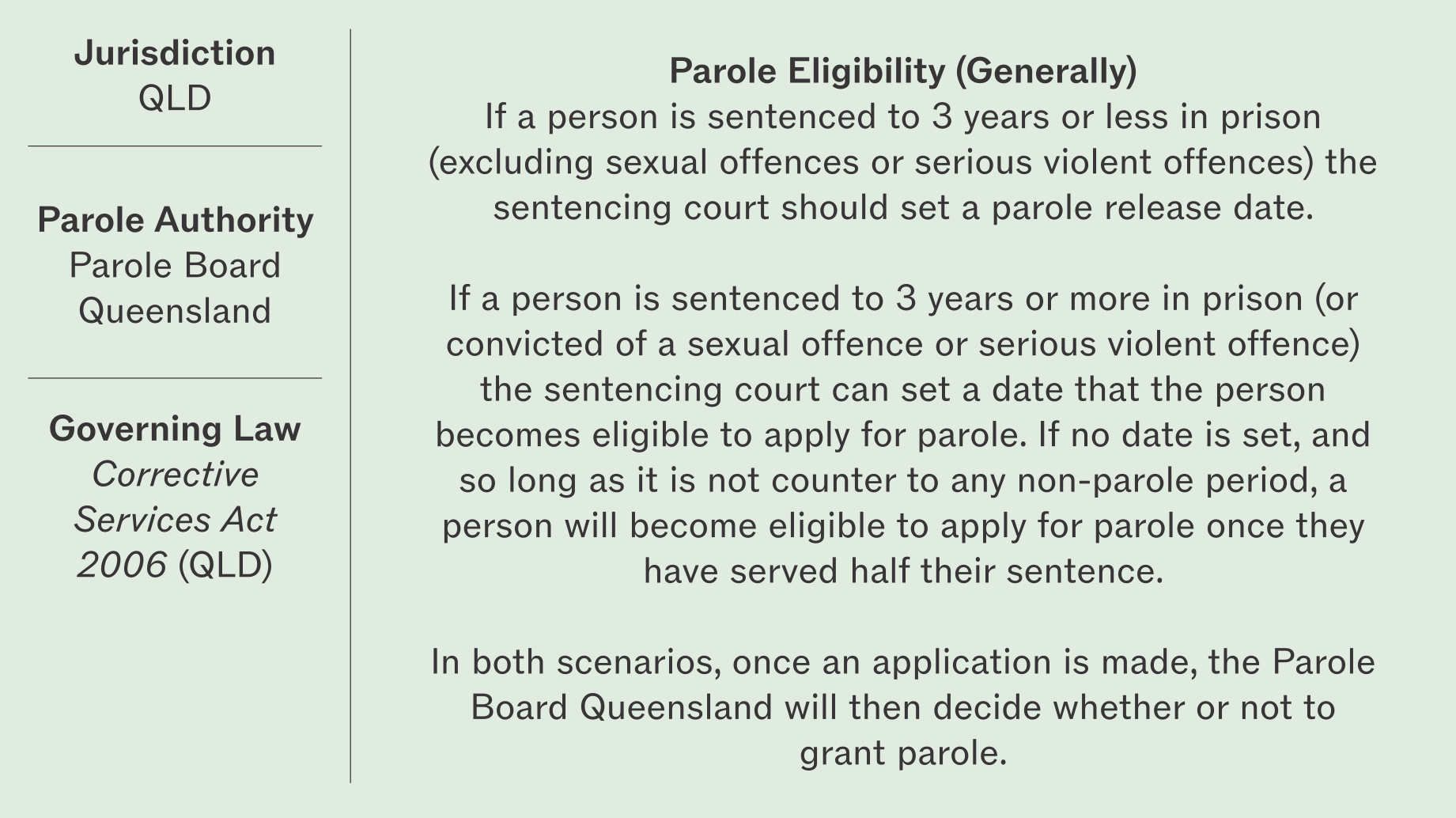
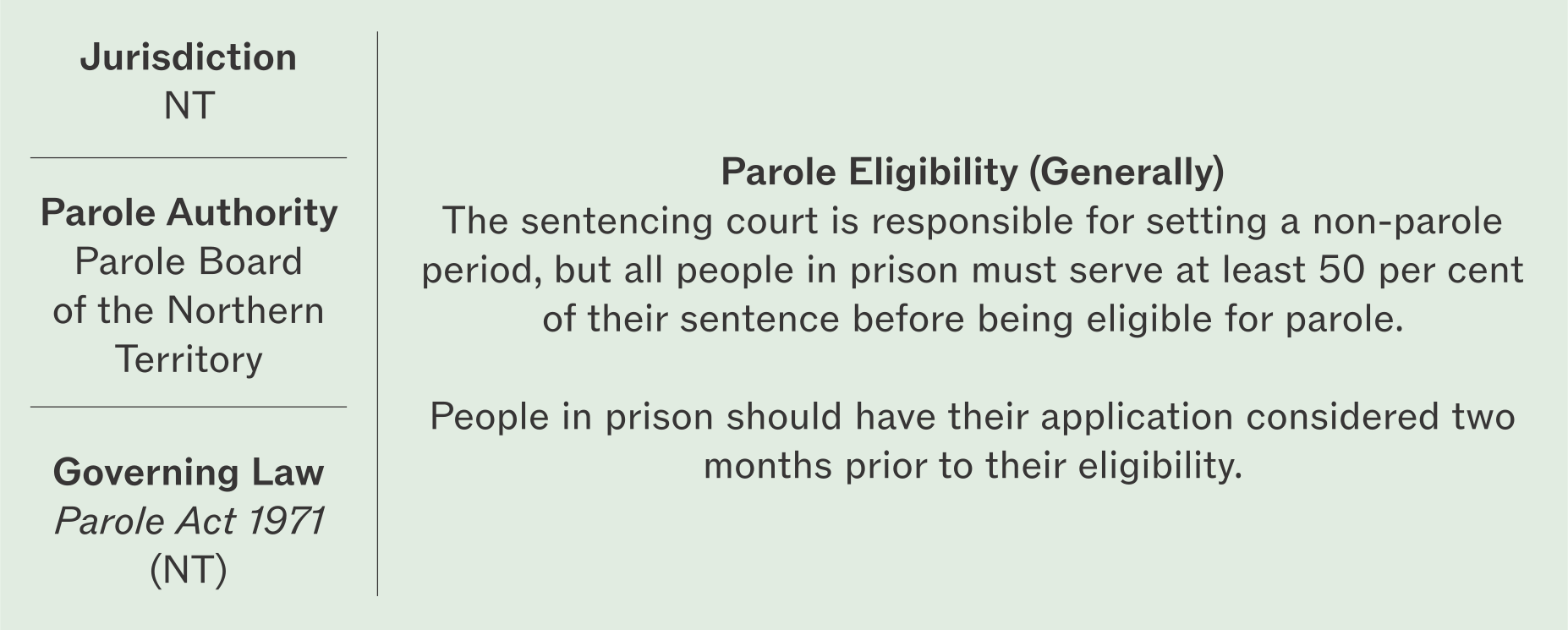
Parole laws in each jurisdiction differ, are not always straightforward and can be challenging to navigate. A high-level summary of parole eligibility can be viewed across the green boxes on the following page.

In most jurisdictions, “no body no parole laws” exist and generally provide that the parole authority must not release a person sentenced to life on parole unless they are satisfied that the person has satisfactorily cooperated in the investigation of the offence. Other exclusions and restrictions exist, including some in relation to specific people in prison.

At the federal level, the Albanese government is in the process of establishing the Commonwealth Parole Board that will replace the Attorney-General as the decision-maker on parole matters for people serving federal sentences. This is likely to commence operations in late 2026, subject to the relevant laws being passed.

In making their decisions, parole authorities are sometimes mandated to consider certain matters, but can generally consider all relevant information, with a significant focus on ‘safety and protection of the community’.

Parole authorities will generally consider:

  • the nature of the offending and any sentencing remarks made by the Judge;
  • any pre-release risk assessments or reports;
  • reports from psychologists or psychiatrists;
  • submissions from the victims/s or family;
  • submissions from the person in prison;
  • the ability for the person in prison to access suitable and stable accommodation post-release;
  • whether the person has undertaken any treatment or programs in prison; and
  • any other considerations they deem relevant.

The mismanagement of parole applications is not uncommon and can have fatal consequences. In 2021, proud Yamatji, Noongar, Wongi and Pitjantjatjara woman Heather Calgaret died in custody at the Dame Phyllis Frost women’s prison in Victoria. This followed significant delays in Ms Calgaret being able to access the treatment programs she was required to complete for her parole application, which was ultimately refused because her proposed accommodation was deemed “unsuitable”.

In Victoria, two of the most frequently used reasons for parole being denied in 2024-25 reported by the Adult Parole Board were the absence of suitable accommodation (69 per cent) and the failure to complete assessment/programs (34 per cent).

Review rights differ between jurisdictions. While on parole, a person is subject to parole conditions and is under supervision. Common conditions include abstaining from alcohol, drug testing, curfews, residential restrictions and electronic monitoring. Parole can be cancelled at any time by the parole authority if a person does not comply with their parole conditions or if they are convicted of a new criminal offence.
Parole allows a person to serve part of their prison sentence in the community. The idea is that parole provides people with a structured, supported and supervised transition from prison back into the community. In recent years, regressive reform of parole laws in many places has made it increasingly difficult for people in prison to access parole.

Each state and territory has an independent parole authority that makes decisions about whether to grant, deny, defer or cancel a person’s parole pursuant to the relevant governing law. Some jurisdictions have automatic parole where a person does not need to apply for their first parole hearing. In contrast, others do not have automatic parole and people in prison must make an application to be considered for release on parole.

Parole laws in each jurisdiction differ, are not always straightforward and can be challenging to navigate. A high-level summary of parole eligibility can be viewed across the green boxes on the following page.

In most jurisdictions, “no body no parole laws” exist and generally provide that the parole authority must not release a person sentenced to life on parole unless they are satisfied that the person has satisfactorily cooperated in the investigation of the offence. Other exclusions and restrictions exist, including some in relation to specific people in prison.

At the federal level, the Albanese government is in the process of establishing the Commonwealth Parole Board that will replace the Attorney-General as the decision-maker on parole matters for people serving federal sentences. This is likely to commence operations in late 2026, subject to the relevant laws being passed.

In making their decisions, parole authorities are sometimes mandated to consider certain matters, but can generally consider all relevant information, with a significant focus on ‘safety and protection of the community’.

Parole authorities will generally consider:

  • the nature of the offending and any sentencing remarks made by the Judge;
  • any pre-release risk assessments or reports;
  • reports from psychologists or psychiatrists;
  • submissions from the victims/s or family;
  • submissions from the person in prison;
  • the ability for the person in prison to access suitable and stable accommodation post-release;
  • whether the person has undertaken any treatment or programs in prison; and
  • any other considerations they deem relevant.

The mismanagement of parole applications is not uncommon and can have fatal consequences. In 2021, proud Yamatji, Noongar, Wongi and Pitjantjatjara woman Heather Calgaret died in custody at the Dame Phyllis Frost women’s prison in Victoria. This followed significant delays in Ms Calgaret being able to access the treatment programs she was required to complete for her parole application, which was ultimately refused because her proposed accommodation was deemed “unsuitable”.

In Victoria, two of the most frequently used reasons for parole being denied in 2024-25 reported by the Adult Parole Board were the absence of suitable accommodation (69 per cent) and the failure to complete assessment/programs (34 per cent).

Review rights differ between jurisdictions. While on parole, a person is subject to parole conditions and is under supervision. Common conditions include abstaining from alcohol, drug testing, curfews, residential restrictions and electronic monitoring. Parole can be cancelled at any time by the parole authority if a person does not comply with their parole conditions or if they are convicted of a new criminal offence.
Legal Q&A: DSP After Prison

Legal Q&A: DSP After Prison

Legal Q&A: DSP After Prison

From Al
From Al

What is the legal sentence period after which an inmate must reapply for the DSP?

Legal Corner

ISSUE NO. 5

2 MIN READ

Travel While on Parole

Travel While on Parole

Travel While on Parole

By Prisoners' Legal Service (PLS)

A parole order will include general and specific conditions. These include getting approval from the relevant authority for any travel interstate, or overseas.

Legal Corner

ISSUE NO. 7

3 MIN READ

Understanding Australia’s Legal System: How Legislation and Common Law Work Together

Understanding Australia’s Legal System: How Legislation and Common Law Work Together

Understanding Australia’s Legal System: How Legislation and Common Law Work Together

By Daniel Vansetten
By Daniel Vansetten

Australia has two sources of law: legislation and common law. Legislation is made by parliaments and is available in documents called acts. Common law is made by judges in court decisions and covers areas that have not been legislated.

Legal Corner

ISSUE NO. 11

4 MIN READ

Welcome to the Legal Corner

Welcome to the Legal Corner

Welcome to the Legal Corner

By About Time
By About Time

Through these articles, we provide information on relevant areas of law. This first article provides basic information to make it easier for family and friends to support you. There are differences in the ways the systems operate depending on where you’re located (VIC, NSW, ACT or TAS), so we hope this is useful and relevant to where you are.

Legal Corner

ISSUE NO. 1

7 MIN READ

Interstate Prison Transfers 101

By About Time

People in prison can apply to transfer from a prison in one state or territory to another, generally for welfare reasons to be closer to family, community supports, or rehabilitation opportunities.

Legal Corner

ISSUE NO. 24

4 MIN READ

Inspectors’ Report!

By About Time

Inspectors and ombudsmen regularly go to prisons and publish reports on what they find and what they think needs to be improved. They also complete reports on issues such as access to healthcare or the use of segregation.

Legal Corner

ISSUE NO. 23

4 MIN READ

Open Air in Prison: Your Rights Explained

By Human Rights Law Centre and Prisoners’ Legal Service

With people in prisons across the country being subjected to an “epidemic of prison lockdowns”, it is important to note that bare minimum safeguards exist in law, in most jurisdictions, that purport to guarantee at least some time ‘in the open air’ each day for people behind bars.

Legal Corner

ISSUE NO. 22

5 MIN READ

Law and Healthcare: Why Can’t I Get My Usual Prescriptions From Prison?

By Prisoners' Legal Service Queensland

There is a lot of talk about human rights in prison – with things like ‘the Mandela Rules’, ‘the principle of equivalence’, and access to health care without discrimination.

Legal Corner

ISSUE NO. 21

2 MIN READ