A Plain English Guide to the Courtroom

Tingey Injury Law Firm via Unplash


Your browser window currently does not have enough height, or is zoomed in too far to view our website content correctly. Once the window reaches the minimum required height or zoom percentage, the content will display automatically.
Alternatively, you can learn more via the links below.
The law, like other professions, has its own language. It helps keep all the lawyers huddled around some special stuff and keep the rest of us outside.
It is not just the law that has its own language. Every profession does. Medicine has its codes; finance its acronyms; academia its jargon.
But the stakes here are different.
When a doctor uses unfamiliar language, the patient may feel confused. When a lawyer does it in a criminal court, a person may lose their liberty without ever fully understanding the process by which that happened.
The courtroom is, in theory, a public place. Anyone can walk in. Justice is meant to be seen to be done. But language can quietly close the doors that architecture leaves open. You can sit in the gallery, hear every word, and still not understand what is unfolding.
Inside the system, everything is precise. Each word has a settled meaning, refined over centuries. Outside the system, the same words are fogged, distorted, or entirely opaque.
The person caught in the middle must somehow bridge that gap in real time, often under stress and with consequences that are immediate and irreversible.
Which raises a simple question: why is the translation not built into the system?
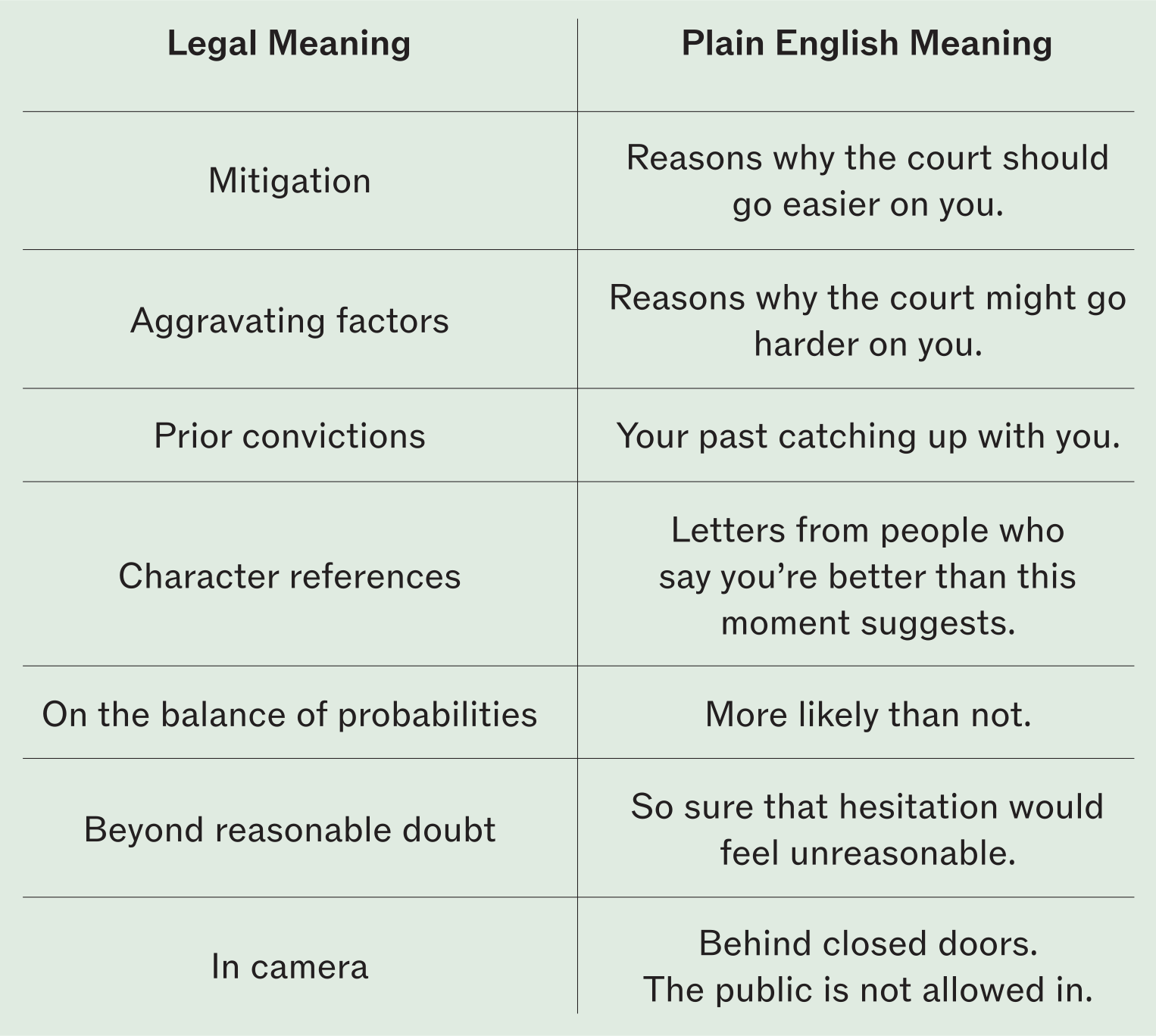
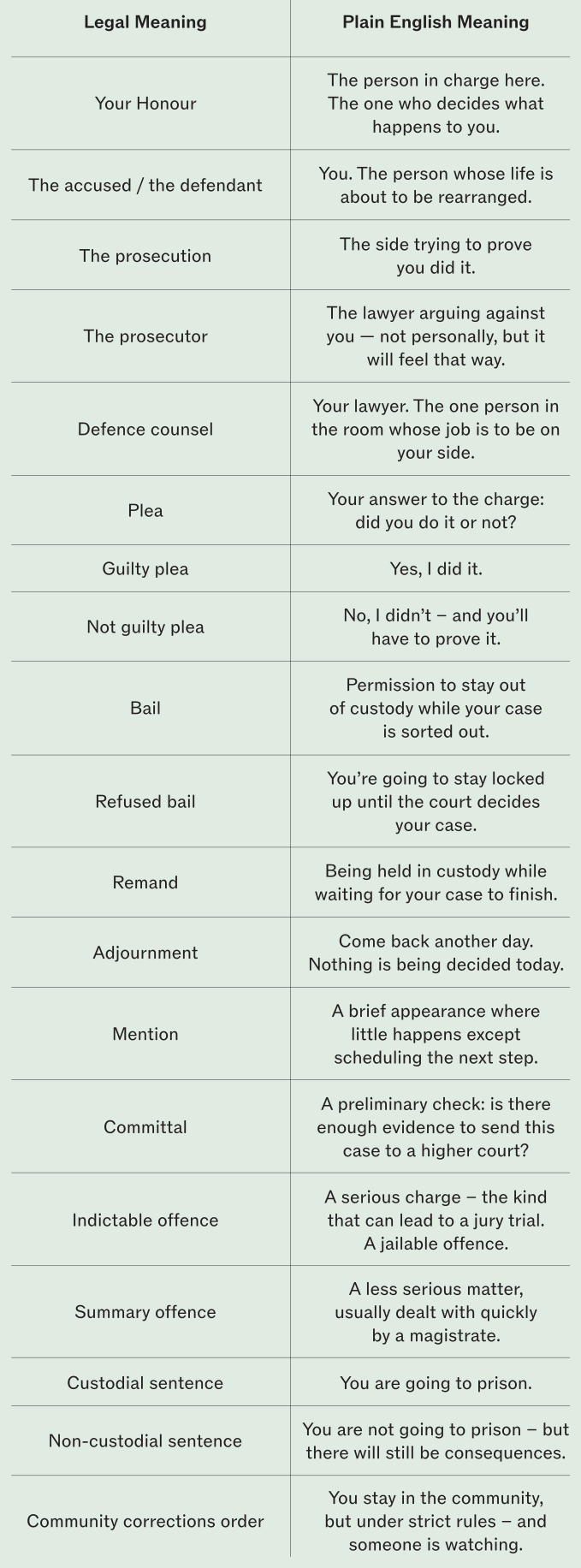
Why not accompany “custodial sentence” with “you are going to prison”? Why not say plainly that an adjournment means nothing will be decided today?
Some lawyers already do this. The good ones always have. They quietly translate the moment into something human.
But the system itself still speaks in its own tongue.
And so the person standing there hears the words, recognises the sounds, and yet does not quite grasp the meaning.
It is not that justice is absent. It is that justice is being spoken in a language we were never taught.
On 1 April 2026, the Australian Parliament passed new laws which will change the way Commonwealth parole works.
In Queensland, there have been concerns raised about the way DNA evidence is processed and examined in forensic laboratories.
New laws mean that immigration detention officers can now confiscate things like mobile phones, iPads and laptops, which were previously allowed in detention centres. If you’re facing time in immigration detention at the end of your sentence, this article gives some practical tips to prepare for the new rules before you go.
Bail is a promise you can make that you will return to court. It means you can stay in the community (instead of jail) until your legal matters finish. If you are being held in custody and you haven’t been found guilty, you may be able to apply for bail.
If you have been the victim of a crime, you may be able to apply for financial assistance through a government-run victim compensation scheme.
On 1 April 2026, the Australian Parliament passed new laws which will change the way Commonwealth parole works.
People in prison can apply to transfer from a prison in one state or territory to another, generally for welfare reasons to be closer to family, community supports, or rehabilitation opportunities.
Inspectors and ombudsmen regularly go to prisons and publish reports on what they find and what they think needs to be improved. They also complete reports on issues such as access to healthcare or the use of segregation.