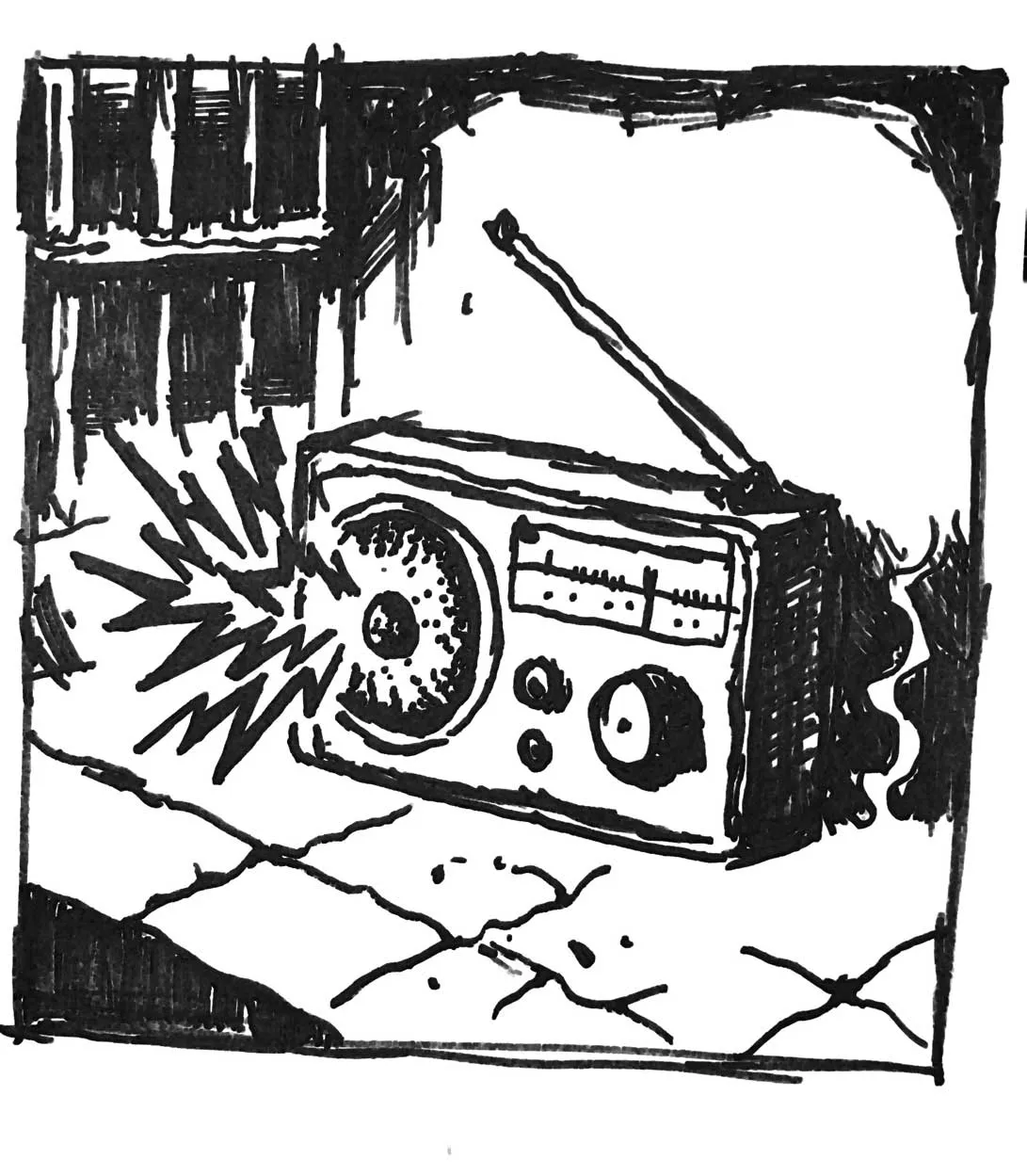
Prisons are built of concrete that holds residents as tightly as it holds the noise around them. Noise lingers in its walls, bouncing around the unit. Beneath that, silence persists, a silence borne from being cut off.
One of the few things that can break through is radio – a minor distraction from the endless hours, a way to pass time and, sometimes, a spark of nostalgia. But who gets to listen, what they hear and what it means inside prison is more complicated than it first seems.
In most Australian prisons, radios are still accessible, sometimes through small transistor sets sold at the canteen, sometimes built into prison-issued devices. They’re not free. That means those without money or outside support are left without access.
Yet, for those who tune in, the radio can be a quiet escape. I remember the feeling of hearing a song I knew well. I might listen for hours on end, not knowing what would come next or if I would even hear that song at all. It’s a reminder that life continues.

For some, it’s comforting. For others, it sharpens the sense of being left behind.
Radio also fills a gap that prison life rarely provides: a choice. Well, depending on your celly. You can switch the dial and choose a station. That choice matters in a place where almost everything else is decided for you.

A certain song at the right moment can anchor someone to memories, to hope or simply to themselves.
But radio is not without tension. Access is limited, and not everyone can tune in, which can create conflict among those who want it most. It can fuel the feeling of disconnection or anger at a system that already feels stacked against you. And sometimes the lack of representation is apparent: so many voices on the airwaves but rarely those from inside.
This absence only deepens the sense that prisoners are silenced – spoken about but not spoken with. Radio made by and for prisoners is a unique response to the challenges of prison life, which are often unseen and unheard.
Prisons are built of concrete that holds residents as tightly as it holds the noise around them. Noise lingers in its walls, bouncing around the unit. Beneath that, silence persists, a silence borne from being cut off.
One of the few things that can break through is radio – a minor distraction from the endless hours, a way to pass time and, sometimes, a spark of nostalgia. But who gets to listen, what they hear and what it means inside prison is more complicated than it first seems.
In most Australian prisons, radios are still accessible, sometimes through small transistor sets sold at the canteen, sometimes built into prison-issued devices. They’re not free. That means those without money or outside support are left without access.
Yet, for those who tune in, the radio can be a quiet escape. I remember the feeling of hearing a song I knew well. I might listen for hours on end, not knowing what would come next or if I would even hear that song at all. It’s a reminder that life continues.
For some, it’s comforting. For others, it sharpens the sense of being left behind.
Radio also fills a gap that prison life rarely provides: a choice. Well, depending on your celly. You can switch the dial and choose a station. That choice matters in a place where almost everything else is decided for you.
A certain song at the right moment can anchor someone to memories, to hope or simply to themselves.
But radio is not without tension. Access is limited, and not everyone can tune in, which can create conflict among those who want it most. It can fuel the feeling of disconnection or anger at a system that already feels stacked against you. And sometimes the lack of representation is apparent: so many voices on the airwaves but rarely those from inside.
This absence only deepens the sense that prisoners are silenced – spoken about but not spoken with. Radio made by and for prisoners is a unique response to the challenges of prison life, which are often unseen and unheard.
Prisoner-run radio offers powerful ways to challenge the silence. In Queensland, Locked In shares messages and song requests sent in by prisoners each week, giving priority to those inside.
In Victoria, Beyond the Bars amplifies the voices of Aboriginal and Torres Strait Islander peoples through annual live broadcasts. And, since 1976, 3CR has kept prisoner radio alive, starting with a show that exposed conditions in Melbourne’s notorious Pentridge Prison H Division.
The Inside Voice program on Vision Australia Radio (VAR) has been amplifying the perspectives of those who know the system best, and they do it well. Recently, the show was even nominated as a finalist for the Best Program: News & Current Affairs award by the Community Broadcasting Association of Australia.
Recognition like this shows that prisoner-focused broadcasting isn’t just valuable on the inside; it’s being taken seriously in the wider media landscape too.
But what happens when commercial radio just doesn’t cut it? Prisoners create their own.
I remember helping a friend as I passed the yard next to my unit, on the way to the doctor. Alongside the fence, a group of African inmates was posted, waiting expectantly.
I slipped them a cassette tape through the gap – freestyles our friend had recorded on a radio’s tape recorder.
Those tapes circulated from hand to hand, fence to fence, becoming their version of radio.
For them, it was a way to keep culture close, to fill the silence in whatever ways they could.
In that context, even a rough tape carried more weight than anything blasting from a mainstream station. That moment showed me something important.

Radio, whether transmitted through airwaves or held in someone’s pocket on a cassette, is about connection. It can be a bridge in a place designed to cut bridges down. It can bring the outside in, but it can also amplify the inside out.
The question isn’t only who gets to listen in prison but who gets to speak. Given that space, prisoners’ voices could carry more than just background noise. They could carry change.
Prisoner-run radio offers powerful ways to challenge the silence. In Queensland, Locked In shares messages and song requests sent in by prisoners each week, giving priority to those inside.
In Victoria, Beyond the Bars amplifies the voices of Aboriginal and Torres Strait Islander peoples through annual live broadcasts. And, since 1976, 3CR has kept prisoner radio alive, starting with a show that exposed conditions in Melbourne’s notorious Pentridge Prison H Division.
The Inside Voice program on Vision Australia Radio (VAR) has been amplifying the perspectives of those who know the system best, and they do it well. Recently, the show was even nominated as a finalist for the Best Program: News & Current Affairs award by the Community Broadcasting Association of Australia.
Recognition like this shows that prisoner-focused broadcasting isn’t just valuable on the inside; it’s being taken seriously in the wider media landscape too.
But what happens when commercial radio just doesn’t cut it? Prisoners create their own.
I remember helping a friend as I passed the yard next to my unit, on the way to the doctor. Alongside the fence, a group of African inmates was posted, waiting expectantly.
I slipped them a cassette tape through the gap – freestyles our friend had recorded on a radio’s tape recorder.
Those tapes circulated from hand to hand, fence to fence, becoming their version of radio.
For them, it was a way to keep culture close, to fill the silence in whatever ways they could.
In that context, even a rough tape carried more weight than anything blasting from a mainstream station. That moment showed me something important.
Radio, whether transmitted through airwaves or held in someone’s pocket on a cassette, is about connection. It can be a bridge in a place designed to cut bridges down. It can bring the outside in, but it can also amplify the inside out.
The question isn’t only who gets to listen in prison but who gets to speak. Given that space, prisoners’ voices could carry more than just background noise. They could carry change.


