Warning: This article contains references to Indigenous Australians who have died in custody.
Spit hoods continue to be used in prisons around the country, despite some states banning their use and the controversial restraints being implicated in a number of deaths in custody.
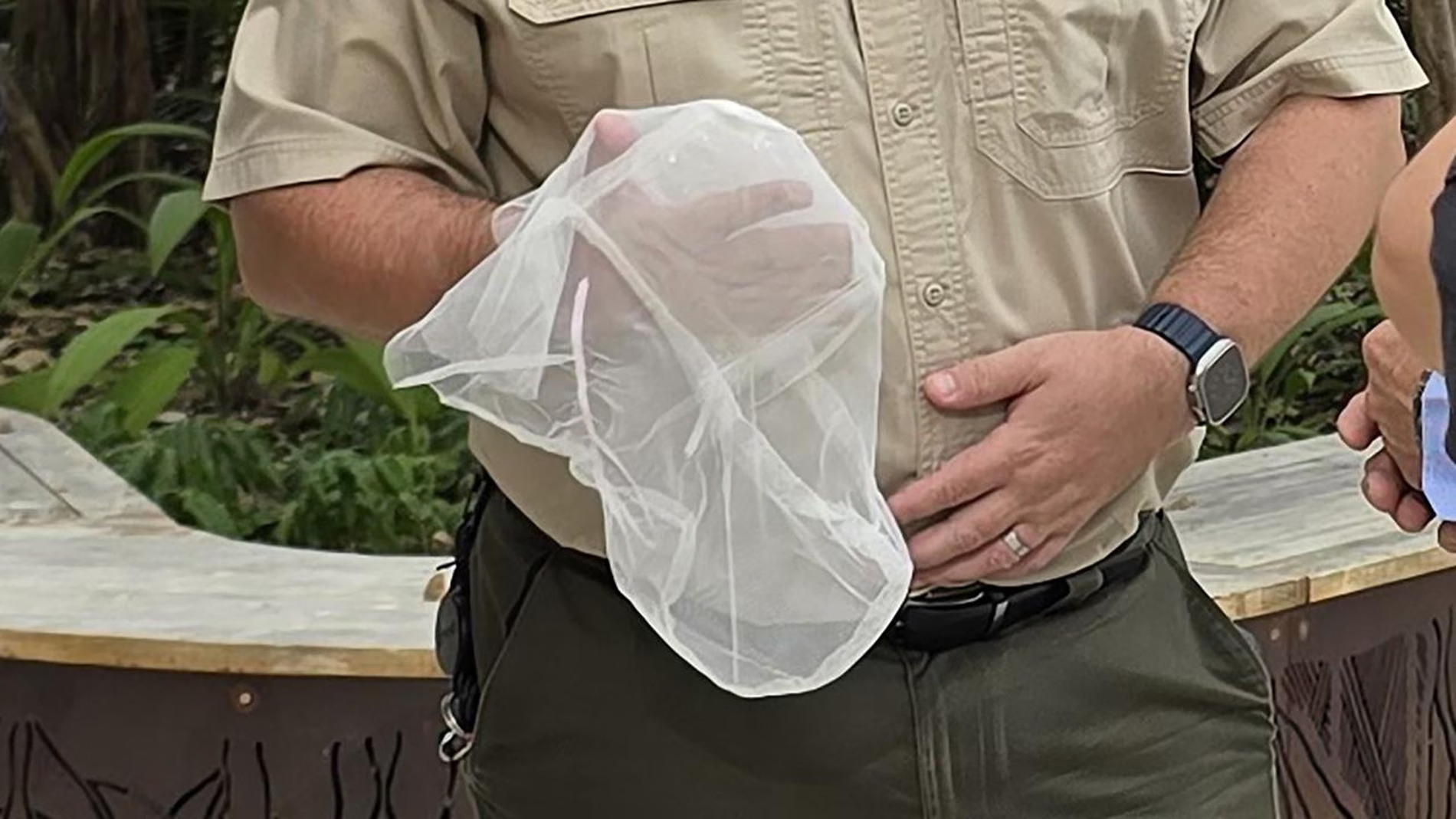
Spit hoods are mesh face coverings used by police and in places of detention ostensibly as “safety hoods” or to prevent spitting and the spread of transmissible diseases.
The use of spit hoods on people in custody has been highly controversial in Australia and around the world, and according to Australian Human Rights Commissioner Lorraine Finlay, they bring “significant risks of injury and death”.
While they are typically used under the guise of preventing the spread of transmissible diseases, a recent review by the Australian Federal Police (AFP) found they were largely ineffective in doing so, and the risks of using them outweighed any potential benefits.
Despite these findings, spit hoods are still allowed to be used in prisons in Victoria, Queensland, Western Australia and the Northern Territory.
The Northern Territory has also recently reversed a ban on the use of spit hoods on children in youth detention centres.
The use of spit hoods in other states and territories is banned.
The NSW government legislated a ban on the use of spit hoods in any setting in 2023, acknowledging that they can “cause trauma, injury or death to the wearer”.
The use of spit hoods in prisons is an “outdated practice that does not align with community expectations about the treatment of persons in places of detention”, the statement government.
Most police forces around the country have also banned the use of spit hoods.
Despite some state governments acknowledging the risks associated with spit hoods, some of the largest in the country continue to back their use in prison.
A spokesperson for the Victorian government said spit hoods were allowed to be used as a protective measure rather than a disciplinary one, while a Western Australian government spokesperson said they are used “infrequently” and for the “minimum amount of time necessary to manage the risk of injury and or disease”.
The Queensland Inspector of Detention Services states that spit hoods should never be used on people in prison, but they are still available in the state, and were used 122 times in 2021–22.
A Queensland Corrective Services spokesperson said that spit hoods are a “risk mitigation tool” that can be used on adults in prison “to protect officers from being spat on, bitten and potentially exposed to transmittable diseases”.
A number of recent coronial inquests into deaths in custody have looked into the use of spit hoods in prisons and called for this to be outlawed.
Selesa Tafaifa, a 44-year-old woman of Samoan heritage, died at Townsville Women’s Correctional Centre in 2021, after having a spit hood applied to her following a prolonged physical interaction with prison officers.
The inquest was told that Tafaifa was heard saying that the spit hood was “suffocating” her and that she could not breathe.
A coronial inquest into her death last year found that there was not enough evidence to say that the use of the spit hood contributed to her death, but that their use in prisons should be reconsidered.
Late last year a Northern Territory coroner urged its government to ban the use of spit hoods, as part of an inquest into the death of a First Nations man in Alice Springs in 2023.
The man, who had an alcohol use disorder and a cognitive impairment, had a spit hood applied to him while he was in hospital under guard.
The Coroner found that while there was no evidence that the spit hood contributed to the man’s death, its use would have been distressing to a dying and vulnerable man.
The Coroner said that evidence of the risk of transmissible diseases was “insufficient to justify the use of spit hoods in a hospital or any other setting”.
Spit hoods continue to be used in prisons around the country, despite some states banning their use and the controversial restraints being implicated in a number of deaths in custody.
Spit hoods are mesh face coverings used by police and in places of detention ostensibly as “safety hoods” or to prevent spitting and the spread of transmissible diseases.
The use of spit hoods on people in custody has been highly controversial in Australia and around the world, and according to Australian Human Rights Commissioner Lorraine Finlay, they bring “significant risks of injury and death”.
While they are typically used under the guise of preventing the spread of transmissible diseases, a recent review by the Australian Federal Police (AFP) found they were largely ineffective in doing so, and the risks of using them outweighed any potential benefits.
Despite these findings, spit hoods are still allowed to be used in prisons in Victoria, Queensland, Western Australia and the Northern Territory.
The Northern Territory has also recently reversed a ban on the use of spit hoods on children in youth detention centres.
The use of spit hoods in other states and territories is banned.
The NSW government legislated a ban on the use of spit hoods in any setting in 2023, acknowledging that they can “cause trauma, injury or death to the wearer”.
The use of spit hoods in prisons is an “outdated practice that does not align with community expectations about the treatment of persons in places of detention”, the statement government.
Most police forces around the country have also banned the use of spit hoods.
Despite some state governments acknowledging the risks associated with spit hoods, some of the largest in the country continue to back their use in prison.
A spokesperson for the Victorian government said spit hoods were allowed to be used as a protective measure rather than a disciplinary one, while a Western Australian government spokesperson said they are used “infrequently” and for the “minimum amount of time necessary to manage the risk of injury and or disease”.
The Queensland Inspector of Detention Services states that spit hoods should never be used on people in prison, but they are still available in the state, and were used 122 times in 2021–22.
A Queensland Corrective Services spokesperson said that spit hoods are a “risk mitigation tool” that can be used on adults in prison “to protect officers from being spat on, bitten and potentially exposed to transmittable diseases”.
A number of recent coronial inquests into deaths in custody have looked into the use of spit hoods in prisons and called for this to be outlawed.
Selesa Tafaifa, a 44-year-old woman of Samoan heritage, died at Townsville Women’s Correctional Centre in 2021, after having a spit hood applied to her following a prolonged physical interaction with prison officers.
The inquest was told that Tafaifa was heard saying that the spit hood was “suffocating” her and that she could not breathe.
A coronial inquest into her death last year found that there was not enough evidence to say that the use of the spit hood contributed to her death, but that their use in prisons should be reconsidered.
Late last year a Northern Territory coroner urged its government to ban the use of spit hoods, as part of an inquest into the death of a First Nations man in Alice Springs in 2023.
The man, who had an alcohol use disorder and a cognitive impairment, had a spit hood applied to him while he was in hospital under guard.
The Coroner found that while there was no evidence that the spit hood contributed to the man’s death, its use would have been distressing to a dying and vulnerable man.
The Coroner said that evidence of the risk of transmissible diseases was “insufficient to justify the use of spit hoods in a hospital or any other setting”.
A remote WA prison holding mostly First Nations people is “unfit for purpose”, with people sleeping on the floors and cockroach infestations.
A number of Victorian prisons may have to be renovated or rebuilt after the Supreme Court found that no “open air” was being provided to inmates in multiple units.
The Liberal Queensland government has announced plans to significantly minimise the rights to vote for people in prison.
The death of a 16-year-old First Nations teenager in a notorious youth unit of an adult prison in Western Australia was preventable and predictable, and the result of “serious longstanding deficiencies in the system, a Coroner has found.
Help keep the momentum going. All donations will be vital in providing an essential resource for people in prison and their loved ones.
All donations of $2 or more are tax deductible. If you would like to pay directly into our bank account to avoid the processing fee, please contact donate@abouttime.org.au. ABN 67 667 331 106.
Help us get About Time off the ground. All donations are tax deductible and will be vital in providing an essential resource for people in prison and their loved ones.
Your browser window currently does not have enough height, or is zoomed in too far to view our website content correctly. Once the window reaches the minimum required height or zoom percentage, the content will display automatically.
Alternatively, you can learn more via the links below.
Leave a Comment
Lorem ipsum dolor sit amet, consectetur adipiscing elit. Suspendisse varius enim in eros elementum tristique. Duis cursus, mi quis viverra ornare, eros dolor interdum nulla, ut commodo diam libero vitae erat. Aenean faucibus nibh et justo cursus id rutrum lorem imperdiet. Nunc ut sem vitae risus tristique posuere. uis cursus, mi quis viverra ornare, eros dolor interdum nulla, ut commodo diam libero vitae erat. Aenean faucibus nibh et justo cursus id rutrum lorem imperdiet. Nunc ut sem vitae risus tristique posuere.