Welcome to About Time

About Time is the national newspaper for Australian prisons and detention facilities

Your browser window currently does not have enough height, or is zoomed in too far to view our website content correctly. Once the window reaches the minimum required height or zoom percentage, the content will display automatically.

Alternatively, you can learn more via the links below.

Donations via GiveNow

Email

Instagram

LinkedIn

ISSUE NO. 7
February 2025
Donate Here

Legal Corner

Do You Have a Right to Legal Representation?

"Putting an accused to trial in a serious case without a lawyer is barbarous” – Justice Murphy, McInnes v The Queen (1979)

Daniel Vansetten spent around 12 years in prison and has since gone on to study a Bachelor of Law at university. He uses his lived experience and study to advocate for prison reform through volunteering with various organisations as well as writing for About Time and producing podcasts with former inmates.

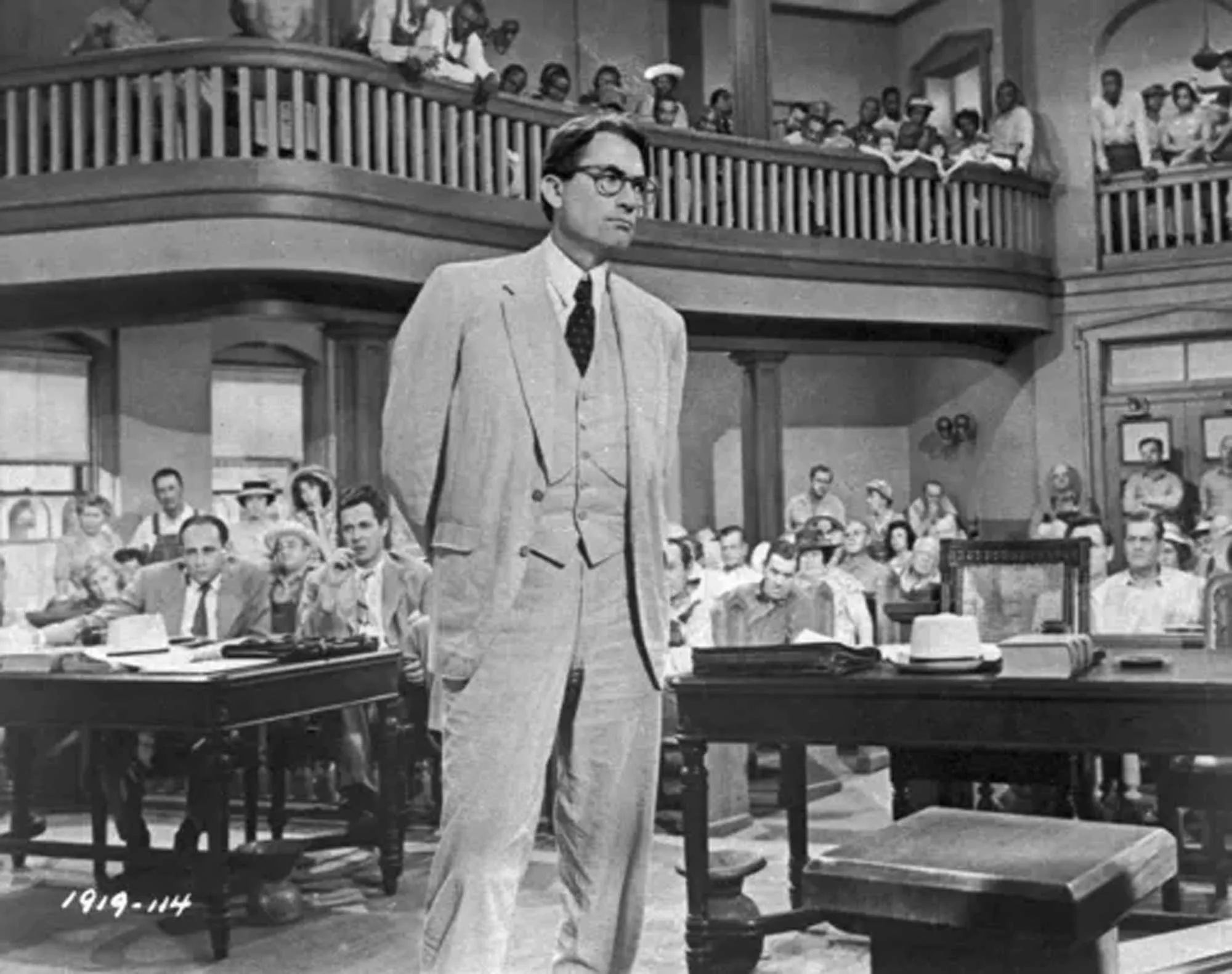
Gregory Peck, as Atticus Finch, is shown in a scene from the film ‘To Kill a Mockingbird’

The case of Dietrich

In 1992, the landmark judgment by the High Court of Australia in Dietrich (Dietrich v The Queen (1992) 177 CLR 292) extended the common law right to a fair trial, more accurately stated as the right not to be tried unfairly, to require trial judges, subject to the below considerations, to adjourn, postpone or stay a trial to allow an unrepresented accused to obtain legal representation. The High Court ruling did not, however, go so far as to provide a clear right to legal representation.

Olaf Dietrich was forced to represent himself in the Victorian County Court on serious drug offences, including importing a trafficable quantity of heroin and possession of heroin. Legal aid was denied on the ground that Mr Dietrich had no real prospects of acquittal.

During the trial, Mr Dietrich repeatedly complained about having to represent himself. One interesting exchange between Mr Dietrich and the judge during trial was exemplified in the High Court ruling as follows:

His Honour: I want you to understand this, Mr Dietrich – if you will listen to me – that I have no power to give you legal representation.

Accused: You have the power to adjourn the matter, sir.

His Honour: I don’t propose to adjourn the matter. The matter is an alleged offence, which occurred the year before last, and it is desirable that the matter proceed to trial.

Accused: Desire by whose side?

His Honour: Desirable to the community.

Accused: The community has got no interest in it. If the community is aware that they’re putting people in front of a court without representation, the community would be aghast.

His Honour: Yes. Well, I don’t propose to engage in this type of matter; this debate can get us nowhere.

The trial lasted approximately 40 days. Without formal legal training, Mr Dietrich was successful in defending one charge of possession, although found guilty of trafficking.

Mr Dietrich’s appeal of conviction ultimately went to the High Court. The acquittal on one charge was central to the decision of the High Court, with the High Court noting that the acquittal disproved any claim that Mr Dietrich had no real prospect of acquittal.

The rule from Dietrich

The rule in Dietrich applies where (1) the offence charged is a “serious” offence; (2) the accused is unable to obtain legal representation through no fault of their own; and (3) the accused wishes to be represented.

While the term “serious offence” was not defined in Dietrich, the term is generally accepted to mean indictable offences. The South Australian Supreme Court found, generally, that ‘offences carrying a penalty of imprisonment should be regarded as “serious”’ (Weinel v Fedcheshen (1995) 65 SASR 156).

Ultimately, whether a case is stayed on the Dietrich principle will depend on the circumstances of the case and any risk of a substantial miscarriage of justice. Legislation in many jurisdictions now provides for an accused to be represented through legal assistance schemes. See, for example: s 197 Criminal Procedure Act 2009 (VIC), s 6 Criminal Law (Legal Representation) Act 2001 (SA).

The case of Dietrich

In 1992, the landmark judgment by the High Court of Australia in Dietrich (Dietrich v The Queen (1992) 177 CLR 292) extended the common law right to a fair trial, more accurately stated as the right not to be tried unfairly, to require trial judges, subject to the below considerations, to adjourn, postpone or stay a trial to allow an unrepresented accused to obtain legal representation. The High Court ruling did not, however, go so far as to provide a clear right to legal representation.

Olaf Dietrich was forced to represent himself in the Victorian County Court on serious drug offences, including importing a trafficable quantity of heroin and possession of heroin. Legal aid was denied on the ground that Mr Dietrich had no real prospects of acquittal.

During the trial, Mr Dietrich repeatedly complained about having to represent himself. One interesting exchange between Mr Dietrich and the judge during trial was exemplified in the High Court ruling as follows:

His Honour: I want you to understand this, Mr Dietrich – if you will listen to me – that I have no power to give you legal representation.

Accused: You have the power to adjourn the matter, sir.

His Honour: I don’t propose to adjourn the matter. The matter is an alleged offence, which occurred the year before last, and it is desirable that the matter proceed to trial.

Accused: Desire by whose side?

His Honour: Desirable to the community.

Accused: The community has got no interest in it. If the community is aware that they’re putting people in front of a court without representation, the community would be aghast.

His Honour: Yes. Well, I don’t propose to engage in this type of matter; this debate can get us nowhere.

The trial lasted approximately 40 days. Without formal legal training, Mr Dietrich was successful in defending one charge of possession, although found guilty of trafficking.

Mr Dietrich’s appeal of conviction ultimately went to the High Court. The acquittal on one charge was central to the decision of the High Court, with the High Court noting that the acquittal disproved any claim that Mr Dietrich had no real prospect of acquittal.

The rule from Dietrich

The rule in Dietrich applies where (1) the offence charged is a “serious” offence; (2) the accused is unable to obtain legal representation through no fault of their own; and (3) the accused wishes to be represented.

While the term “serious offence” was not defined in Dietrich, the term is generally accepted to mean indictable offences. The South Australian Supreme Court found, generally, that ‘offences carrying a penalty of imprisonment should be regarded as “serious”’ (Weinel v Fedcheshen (1995) 65 SASR 156).

Ultimately, whether a case is stayed on the Dietrich principle will depend on the circumstances of the case and any risk of a substantial miscarriage of justice. Legislation in many jurisdictions now provides for an accused to be represented through legal assistance schemes. See, for example: s 197 Criminal Procedure Act 2009 (VIC), s 6 Criminal Law (Legal Representation) Act 2001 (SA).

Legal Q&A

Do you have a general legal query that you want answered?
Is  there an area of law that you think people inside should know more about? Submit your question in the provided form, and we might publish an answer in the paper.

Submit Your Question

What if the accused is at fault for not having representation?

In 1994, a NSW Court of Criminal Appeal case, R v Small (1994) 22 NSWLR 575, found that the court must still consider the interests of justice as well as the interests of the accused, even when the accused may be at fault for the absence of legal representation.

In Small, there had been some misunderstanding between Mr Small and his legal representatives which resulted in them deciding not to represent him at trial. Real attempts to secure representation at the last minute had failed. Subsequently, at trial, Mr Small complained on multiple occasions that he was not getting a fair trial due to having no legal representation. The jury also expressed concerns about the lack of legal representation in a note to the judge. The judge continued the trial and Mr Small was convicted of two counts of armed robbery.

The Court of Appeal found the trial judge should have balanced the interests of justice and the interests of Mr Small, and ‘ought very seriously to consider whether an accused should be forced on without [representation] in [a] case in which there is a reasonable possibility that he may obtain [representation] … without unbearable delay’. The convictions were quashed.

Final word

In 2006, then Justice Kirby of the High Court of Australia defended the decision in Dietrich, stating ‘Surely [a person’s] liberty should not depend upon the means of a person. Ultimately, to force an unrepresented person to defend a serious criminal charge without a lawyer is a form of cruel and unusual punishment.’

If you believe your right to a fair trial has not been provided, you should seek advice from a lawyer.

What if the accused is at fault for not having representation?

In 1994, a NSW Court of Criminal Appeal case, R v Small (1994) 22 NSWLR 575, found that the court must still consider the interests of justice as well as the interests of the accused, even when the accused may be at fault for the absence of legal representation.

In Small, there had been some misunderstanding between Mr Small and his legal representatives which resulted in them deciding not to represent him at trial. Real attempts to secure representation at the last minute had failed. Subsequently, at trial, Mr Small complained on multiple occasions that he was not getting a fair trial due to having no legal representation. The jury also expressed concerns about the lack of legal representation in a note to the judge. The judge continued the trial and Mr Small was convicted of two counts of armed robbery.

The Court of Appeal found the trial judge should have balanced the interests of justice and the interests of Mr Small, and ‘ought very seriously to consider whether an accused should be forced on without [representation] in [a] case in which there is a reasonable possibility that he may obtain [representation] … without unbearable delay’. The convictions were quashed.

Final word

In 2006, then Justice Kirby of the High Court of Australia defended the decision in Dietrich, stating ‘Surely [a person’s] liberty should not depend upon the means of a person. Ultimately, to force an unrepresented person to defend a serious criminal charge without a lawyer is a form of cruel and unusual punishment.’

If you believe your right to a fair trial has not been provided, you should seek advice from a lawyer.

What Happens to Your Debts While You’re Inside?

What Happens to Your Debts While You’re Inside?

What Happens to Your Debts While You’re Inside?

By Prisoner Legal Service Queensland

Generally, debts can be put into two categories. First, there are private debts (e.g. from a bank, a landlord, a car dealer, or ‘Afterpay’). Second, there are debts owed to the State (e.g. unpaid fines).

Legal Corner

ISSUE NO. 20

2 MIN READ

Human Rights in Prison

Human Rights in Prison

Human Rights in Prison

By Human Rights Law Centre

All people behind bars should be treated with dignity.

Legal Corner

ISSUE NO. 10

6 MIN READ

Legal Q&A: DSP After Prison

Legal Q&A: DSP After Prison

Legal Q&A: DSP After Prison

From Al
From Al

What is the legal sentence period after which an inmate must reapply for the DSP?

Legal Corner

ISSUE NO. 5

2 MIN READ

Struggling With Debt? Financial Counselling Might Help!

Struggling With Debt? Financial Counselling Might Help!

Struggling With Debt? Financial Counselling Might Help!

By About Time
By About Time

Financial counsellors are skilled professionals who provide advice and support to people struggling with bills and debt.

Legal Corner

ISSUE NO. 6

3 MIN READ

Interstate Prison Transfers 101

By About Time

People in prison can apply to transfer from a prison in one state or territory to another, generally for welfare reasons to be closer to family, community supports, or rehabilitation opportunities.

Legal Corner

ISSUE NO. 24

4 MIN READ

Inspectors’ Report!

By About Time

Inspectors and ombudsmen regularly go to prisons and publish reports on what they find and what they think needs to be improved. They also complete reports on issues such as access to healthcare or the use of segregation.

Legal Corner

ISSUE NO. 23

4 MIN READ

The Parole Patchwork: An Overview of Australia’s Parole Laws

By Human Rights Law Centre lawyer Monique Hurley, with assistance from Connor Shaw

In recent years, regressive reform of parole laws in many places has made it increasingly difficult for people in prison to access parole.

Legal Corner

ISSUE NO. 23

4 MIN READ

Open Air in Prison: Your Rights Explained

By Human Rights Law Centre and Prisoners’ Legal Service

With people in prisons across the country being subjected to an “epidemic of prison lockdowns”, it is important to note that bare minimum safeguards exist in law, in most jurisdictions, that purport to guarantee at least some time ‘in the open air’ each day for people behind bars.

Legal Corner

ISSUE NO. 22

5 MIN READ