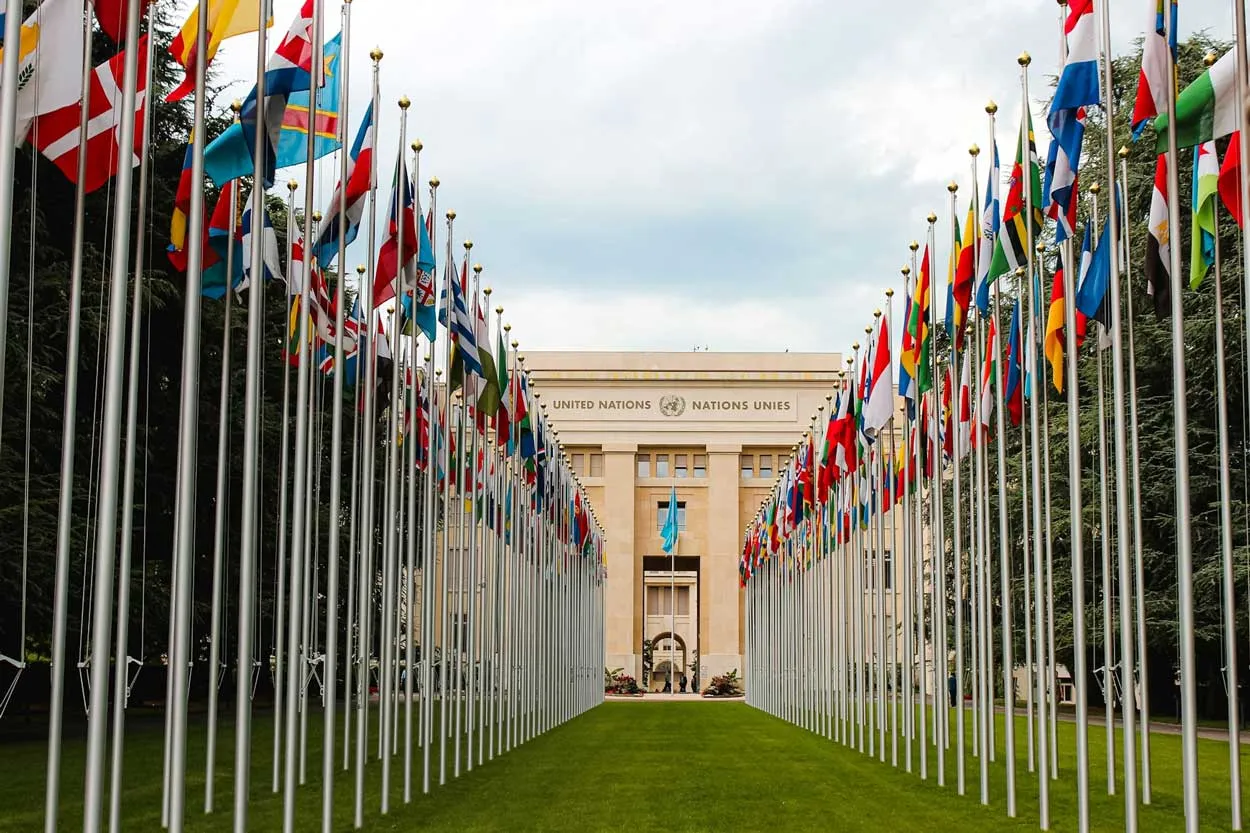
In early December, the United Nations (UN) Working Group on Arbitrary Detention visited Australia. Their purpose was to provide guidance on how international human rights standards apply to prisons and places of detention.
Throughout the visit, the Working Group met with government and legal officials, as well as with representatives from NGOs and community groups. People with lived experience, such as myself, were also invited to attend and provide submissions.
The Working Group also inspected a range of places where individuals may be deprived of their liberty, such as prisons, police stations, psychiatric institutions, and immigration detention centres. During these inspections, the Group was to ensure private, confidential, and unsupervised contact with witnesses and other individuals, including detainees.
The delegation's plan was to conduct visits in the Australian Capital Territory, New South Wales, Western Australia, and the Northern Territory.
The Northern Territory went on to block access to all government-operated detention facilities, due to “operational capacity, safety and workforce resourcing priorities,” according to local authorities.
This incident follows a similar event in October 2022, when a separate UN body, the Subcommittee on the Prevention of Torture (SPT), was forced to suspend its entire visit to Australia after being blocked entry to detention facilities in New South Wales and Queensland.
Despite being blocked, the SPT went on to deliver a scathing assessment of Australia's detention practices after its aborted 2022 visit, finding the use of restraints such as spithoods and the use of solitary confinement of people under 18 “may amount to torture”.
The United Nations (UN) Working Group on Arbitrary Detention visit concluded on 12 December 2025, at which time the Working Group presented its conclusions and recommendations to the Australian Government and at a press conference.
Before giving their findings, they noted that it was only the second time they have been denied access to a whole region (Northern Territory), the only other being Rwanda, having previously been allowed into prisons in regions like Mexico and Mongolia.
The findings urge Australia to do the following:
- To take urgent action to address the remand crisis.
- To work together with first nation peoples to end their over representation In detention.
- To raise the minimum age of criminal responsibility to at least 14 years old
- To prohibit the solitary confinement children
- and to bring its mandatory migration detention regime into conformity with its human rights politicians.
More to come.
This incident follows a similar event in October 2022, when a separate UN body, the Subcommittee on the Prevention of Torture (SPT), was forced to suspend its entire visit to Australia after being blocked entry to detention facilities in New South Wales and Queensland.
Despite being blocked, the SPT went on to deliver a scathing assessment of Australia's detention practices after its aborted 2022 visit, finding the use of restraints such as spithoods and the use of solitary confinement of people under 18 “may amount to torture”.
The United Nations (UN) Working Group on Arbitrary Detention visit concluded on 12 December 2025, at which time the Working Group presented its conclusions and recommendations to the Australian Government and at a press conference.
Before giving their findings, they noted that it was only the second time they have been denied access to a whole region (Northern Territory), the only other being Rwanda, having previously been allowed into prisons in regions like Mexico and Mongolia.
The findings urge Australia to do the following:
- To take urgent action to address the remand crisis.
- To work together with first nation peoples to end their over representation In detention.
- To raise the minimum age of criminal responsibility to at least 14 years old
- To prohibit the solitary confinement children
- and to bring its mandatory migration detention regime into conformity with its human rights politicians.
More to come.


