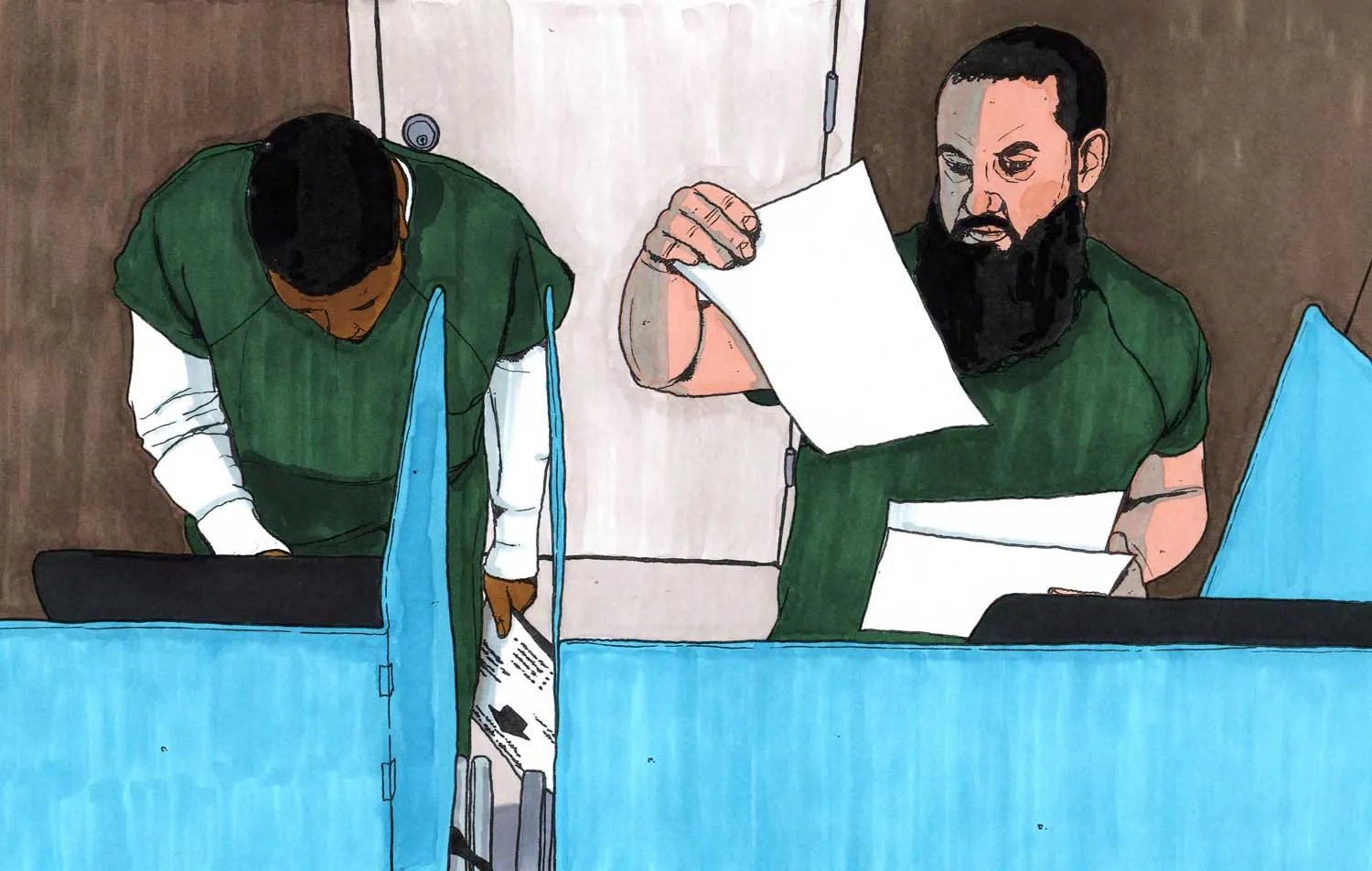
While last year’s federal election saw the number of incarcerated people voting increase significantly, new informal voting data reveals there is still a long way to go to ensure the prison population is provided with proper information and education.
The 2025 federal election was the first time that every state and territory allowed mobile polling booths to be placed in prisons, leading to a sharp uptick in the number of incarcerated people.
While just 274 people in prison cast a vote at the 2022 federal election, the Australian Electorate Commission (AEC) issued more than 9700 votes across 82 prisons last year.
But data provided to the Senate revealed an informal voting rate in prisons of just over 10 per cent, nearly double the national rate of 5.6 per cent.
Informal votes relate to those that cannot be counted, either because they have been filled in incorrectly or deliberately left blank or voided.
According to the AEC, the vast majority of informal votes from the last election showed an intention to vote properly, but involved incorrect numbering or method, such as only including a first preference in the lower house.
Reasons for informal voting can often be down to literacy and language challenges, cultural and social barriers, confusion around voting instructions or methods and and distrust of government institutions.
In NSW, votes are often not counted because they listed just the first preference, which is a correct way to vote in the state election but not the federal one.
Australia’s Voice Senator Fatima Payman, who obtained the data, said it was troubling that the rates of informal voting vary so dramatically across prisons.
“I was concerned to learn through Senate Estimates that prison mobile polling teams at the last election didn’t count many of the votes they collected, with one team excluding two-thirds of the votes from Wellington Correctional Centre,” Payman told About Time.
She said that more needs to be done to make sure that people in prison, especially those with a disability or for whom English is not their first language, are able to properly understand how to vote.
“While the AEC has done good work to improve participation for prisoners since the 274 incarcerated voters of the 2022 election, more needs to be done to make sure that these votes are not only collected, but counted,” Payman said.
There were varying rates of informal voting in different prisons around the country.
The highest informal rate was at Wellington Correctional Centre, where more than 67 per cent of the votes could not be counted.
There were 108 votes made by people incarcerated at Wellington, but 73 of these were informal.
More than a quarter of votes placed at the Alexander Maconochie Centre in the ACT were informal, while one mobile polling booth at Clarence Correctional Centre had informal rates of more than 57 per cent.
Several prisons recorded no informal votes, including Cooma Correctional Centre, John Morony Correctional Centre, Palen Creek Correctional Centre, Numinbah Correctional Centre and Casuarina Prison.
In NSW, votes are often not counted because they listed just the first preference, which is a correct way to vote in the state election but not the federal one.
Australia’s Voice Senator Fatima Payman, who obtained the data, said it was troubling that the rates of informal voting vary so dramatically across prisons.
“I was concerned to learn through Senate Estimates that prison mobile polling teams at the last election didn’t count many of the votes they collected, with one team excluding two-thirds of the votes from Wellington Correctional Centre,” Payman told About Time.
She said that more needs to be done to make sure that people in prison, especially those with a disability or for whom English is not their first language, are able to properly understand how to vote.
“While the AEC has done good work to improve participation for prisoners since the 274 incarcerated voters of the 2022 election, more needs to be done to make sure that these votes are not only collected, but counted,” Payman said.
There were varying rates of informal voting in different prisons around the country.
The highest informal rate was at Wellington Correctional Centre, where more than 67 per cent of the votes could not be counted.
There were 108 votes made by people incarcerated at Wellington, but 73 of these were informal.
More than a quarter of votes placed at the Alexander Maconochie Centre in the ACT were informal, while one mobile polling booth at Clarence Correctional Centre had informal rates of more than 57 per cent.
Several prisons recorded no informal votes, including Cooma Correctional Centre, John Morony Correctional Centre, Palen Creek Correctional Centre, Numinbah Correctional Centre and Casuarina Prison.


