Australia's National
Prison Newspaper

Australia's National
Prison Newspaper

ISSUE NO. 17

December 2025

Donate Here

News and Investigations

Bar Lowered to Find Someone Guilty of Prison Offences in NSW

Denham Sadler is the Chief Reporter at About Time.

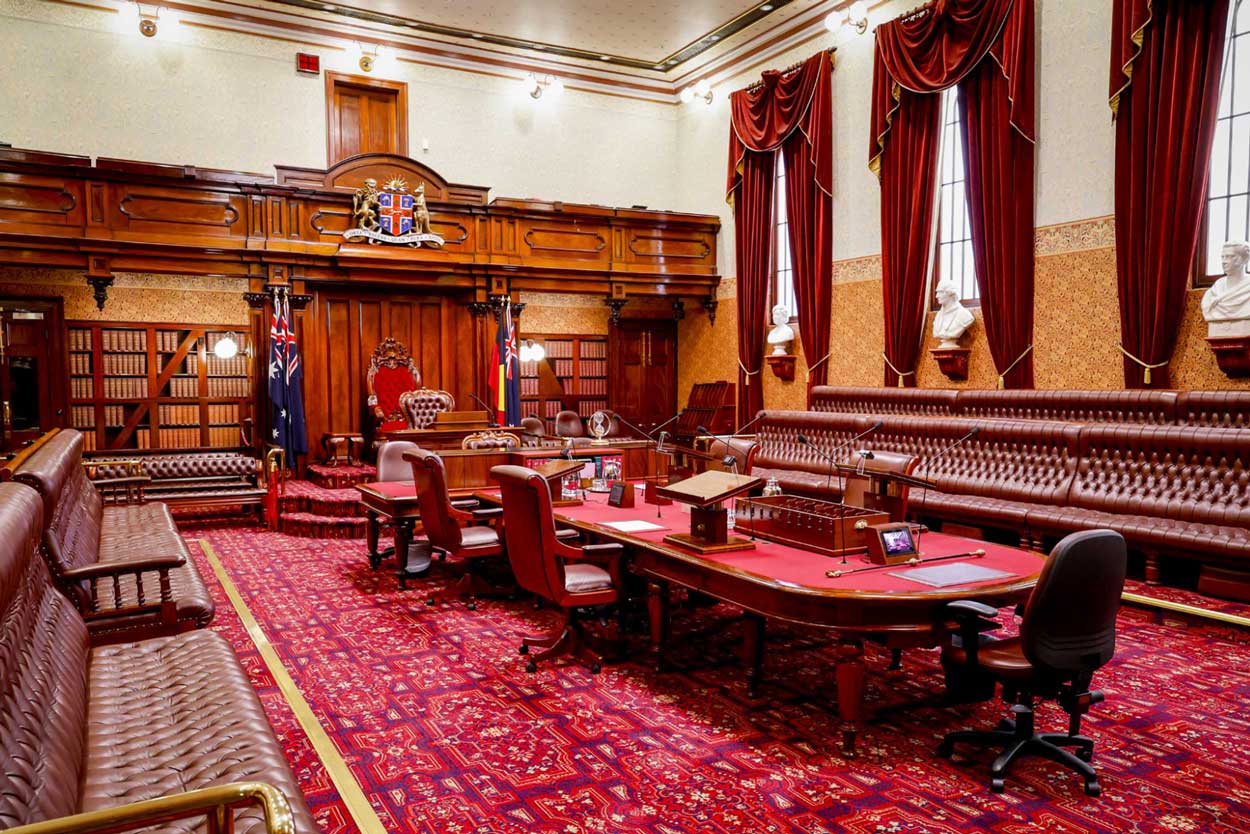
Parliament of New South Wales (Source: www.parliament.nsw.gov.au)

Font Size
Font Size
Line Height
Line Height
Dyslexia Friendly
Black & White
Hide Images
Night Mode

The NSW Government has moved to make it easier to find incarcerated people guilty of a “prison offence”, against the advice of independent experts.

A “prison offence” includes a range of offences, from serious charges to not keeping a cell “tidy and orderly” and failing to maintain “personal cleanliness”. People in prison in NSW face losing privileges – such as accessing the buy-up, phone calls and visits – for up to 56 days if it is found that “on the balance of probabilities” they committed a prison offence.

The current requirement is for the decision-maker to be sure “beyond reasonable doubt” that an offence had taken place in order to find someone guilty and strip them of privileges. This bar will be lowered under reforms put forward by the NSW Government.

Independent legal advice given to the state government last year instead recommended for prison offences to be divided into “minor” and “major” ones, with different burdens of proof applied. It also called for more diversionary options and improved review avenues if someone is found guilty.

Last year, the NSW Ombudsman found that the current standard of proof was being applied incorrectly in many cases but did not recommend that it be lowered.

Aboriginal Legal Service (NSW/ACT) CEO Karly Warner said the organisation is concerned that the government is “weakening protections for people who are incarcerated”.

“These amendments infringe on the rights of imprisoned people and fly in the face of the NSW Ombudsman’s recommendations to improve fairness in the prison disciplinary system,” Warner told About Time.

“Instead of following the ombudsman’s expert advice, the government is doing the opposite of what was recommended, with no regard for the safety and wellbeing of those locked in NSW prisons.”

The NSW Government has moved to make it easier to find incarcerated people guilty of a “prison offence”, against the advice of independent experts.

A “prison offence” includes a range of offences, from serious charges to not keeping a cell “tidy and orderly” and failing to maintain “personal cleanliness”. People in prison in NSW face losing privileges – such as accessing the buy-up, phone calls and visits – for up to 56 days if it is found that “on the balance of probabilities” they committed a prison offence.

The current requirement is for the decision-maker to be sure “beyond reasonable doubt” that an offence had taken place in order to find someone guilty and strip them of privileges. This bar will be lowered under reforms put forward by the NSW Government.

Independent legal advice given to the state government last year instead recommended for prison offences to be divided into “minor” and “major” ones, with different burdens of proof applied. It also called for more diversionary options and improved review avenues if someone is found guilty.

Last year, the NSW Ombudsman found that the current standard of proof was being applied incorrectly in many cases but did not recommend that it be lowered.

Aboriginal Legal Service (NSW/ACT) CEO Karly Warner said the organisation is concerned that the government is “weakening protections for people who are incarcerated”.

“These amendments infringe on the rights of imprisoned people and fly in the face of the NSW Ombudsman’s recommendations to improve fairness in the prison disciplinary system,” Warner told About Time.

“Instead of following the ombudsman’s expert advice, the government is doing the opposite of what was recommended, with no regard for the safety and wellbeing of those locked in NSW prisons.”

Get the full paper in print each month.

6-Month Subscription:

Physical copy of About Time delivered to your home or organisation each month for six months. Paid upfront.

Subscribe for $70

12-Month Subscription:

Physical copy of About Time delivered to your home or organisation each month for twelve months. Paid upfront.

Subscribe for $125

Most other states and territories require it to be proven that someone committed a prison offence on the “balance of probabilities”, but several apply this standard only to minor offences and the higher standard to major ones.

Punishments for prison offences also vary across Australia.

In NSW, privileges such as visitation and access to buy-up and phone calls can be withdrawn for up to 56 days or up to 6 months if the offence involves a mobile phone.

In Victoria, privileges can be removed for 14 days or a maximum of 30 days for multiple offences, while in Queensland the penalty can be up to 24 hours for minor offences and up to 7 days for a major offence.

Punishment sentences are by far the longest in the ACT, where privileges can be removed for up to 180 days.

The independent advice provided to the NSW Government and written by Simeon Beckett SC and Dev Bhutani, from Maurice Byers Chambers, recommended changes to the prison discipline process to “promote fairness and just outcomes for prisoners” and the “just, efficient and quick operation of the disciplinary process”.

It recommended that the higher bar of “beyond reasonable doubt” remain for prison offences deemed to be “major”.

“Our view is that, because correctional centre offending is considered as part of the parole purpose and may have the effect of prolonging a period of imprisonment, the higher standard of proof should apply for a major offence,” the advice said.

The state government did not agree to this recommendation and has instead introduced legislation to NSW parliament lowering the bar to find someone guilty of any prison offence.

Most other states and territories require it to be proven that someone committed a prison offence on the “balance of probabilities”, but several apply this standard only to minor offences and the higher standard to major ones.

Punishments for prison offences also vary across Australia.

In NSW, privileges such as visitation and access to buy-up and phone calls can be withdrawn for up to 56 days or up to 6 months if the offence involves a mobile phone.

In Victoria, privileges can be removed for 14 days or a maximum of 30 days for multiple offences, while in Queensland the penalty can be up to 24 hours for minor offences and up to 7 days for a major offence.

Punishment sentences are by far the longest in the ACT, where privileges can be removed for up to 180 days.

The independent advice provided to the NSW Government and written by Simeon Beckett SC and Dev Bhutani, from Maurice Byers Chambers, recommended changes to the prison discipline process to “promote fairness and just outcomes for prisoners” and the “just, efficient and quick operation of the disciplinary process”.

It recommended that the higher bar of “beyond reasonable doubt” remain for prison offences deemed to be “major”.

“Our view is that, because correctional centre offending is considered as part of the parole purpose and may have the effect of prolonging a period of imprisonment, the higher standard of proof should apply for a major offence,” the advice said.

The state government did not agree to this recommendation and has instead introduced legislation to NSW parliament lowering the bar to find someone guilty of any prison offence.

Leave a Comment

Thank you! Your submission has been received!
Oops! Something went wrong while submitting the form.
0 Comments
Author Name
Comment Time

Lorem ipsum dolor sit amet, consectetur adipiscing elit. Suspendisse varius enim in eros elementum tristique. Duis cursus, mi quis viverra ornare, eros dolor interdum nulla, ut commodo diam libero vitae erat. Aenean faucibus nibh et justo cursus id rutrum lorem imperdiet. Nunc ut sem vitae risus tristique posuere. uis cursus, mi quis viverra ornare, eros dolor interdum nulla, ut commodo diam libero vitae erat. Aenean faucibus nibh et justo cursus id rutrum lorem imperdiet. Nunc ut sem vitae risus tristique posuere.

Holiday Messages from Loved Ones on the Outside

By About Time

We put a call out for messages from loved ones of people in prison across the country, and more than 100 people responded. We hope these brighten your day.

News and Investigations

ISSUE NO. 17

4 MIN READ

Around the Country – November 2025

By About Time

Including smoking being banned in WA prisons, a death in custody at Mary Hutchinson in TAS, a painkiller trial hailed as a success in QLD and more.

News and Investigations

ISSUE NO. 17

9 MIN READ

Christmas Cards in Solidarity

By Daniel Vansetten

Nothing warms my heart more than the selflessness of good people doing good deeds for our sisters and brothers in prison.

News and Investigations

ISSUE NO. 17

2 MIN READ

Delivering Christmas Cheer Behind Bars

By Denham Sadler

Every year in early December, a group of volunteers come together to pack a hamper for every woman in prison in Victoria.

News and Investigations

ISSUE NO. 17

2 MIN READ

Newsletter

Be the first to learn about our monthly stories, plus new initiatives and live events

You've successfully registered!
Something went wrong when we tried to register your details. Please try again.

Support Australia's First National Prison Newspaper

A place for news and education, expression and hope

Help keep the momentum going. All donations will be vital in providing an essential resource for people in prison and their loved ones.

All donations of $2 or more are tax deductible. If you would like to pay directly into our bank account to avoid the processing fee, please contact donate@abouttime.org.au. ABN 67 667 331 106.

It's
About Time.

A place for news and education, expression and hope.

Help us get About Time off the ground. All donations are tax deductible and will be vital in providing an essential resource for people in prison and their loved ones.

Donate Here

Welcome to About Time

About Time is the national newspaper for Australian prisons and detention facilities

Your browser window currently does not have enough height, or is zoomed in too far to view our website content correctly. Once the window reaches the minimum required height or zoom percentage, the content will display automatically.

Alternatively, you can learn more via the links below.

Donations via GiveNow

Email

Instagram

LinkedIn

Newsletter

Be the first to learn about our monthly stories, plus new initiatives and live events

You've successfully registered!
Something went wrong when we tried to register your details. Please try again.