Welcome to About Time

About Time is the national newspaper for Australian prisons and detention facilities

Your browser window currently does not have enough height, or is zoomed in too far to view our website content correctly. Once the window reaches the minimum required height or zoom percentage, the content will display automatically.

Alternatively, you can learn more via the links below.

Donations via GiveNow

Email

Instagram

LinkedIn

ISSUE NO. 14
September 2025
ISSUE NO. 14
+
Sections
September 2025
Donate Here

Mob

Artwork From The Torch – Issue No. 14

Two new artworks from First Nations artists
Since 2011 The Torch has been providing art, cultural and arts industry support to Indigenous offenders and ex-offenders in Victoria through its Indigenous Arts in Prisons and Community program.

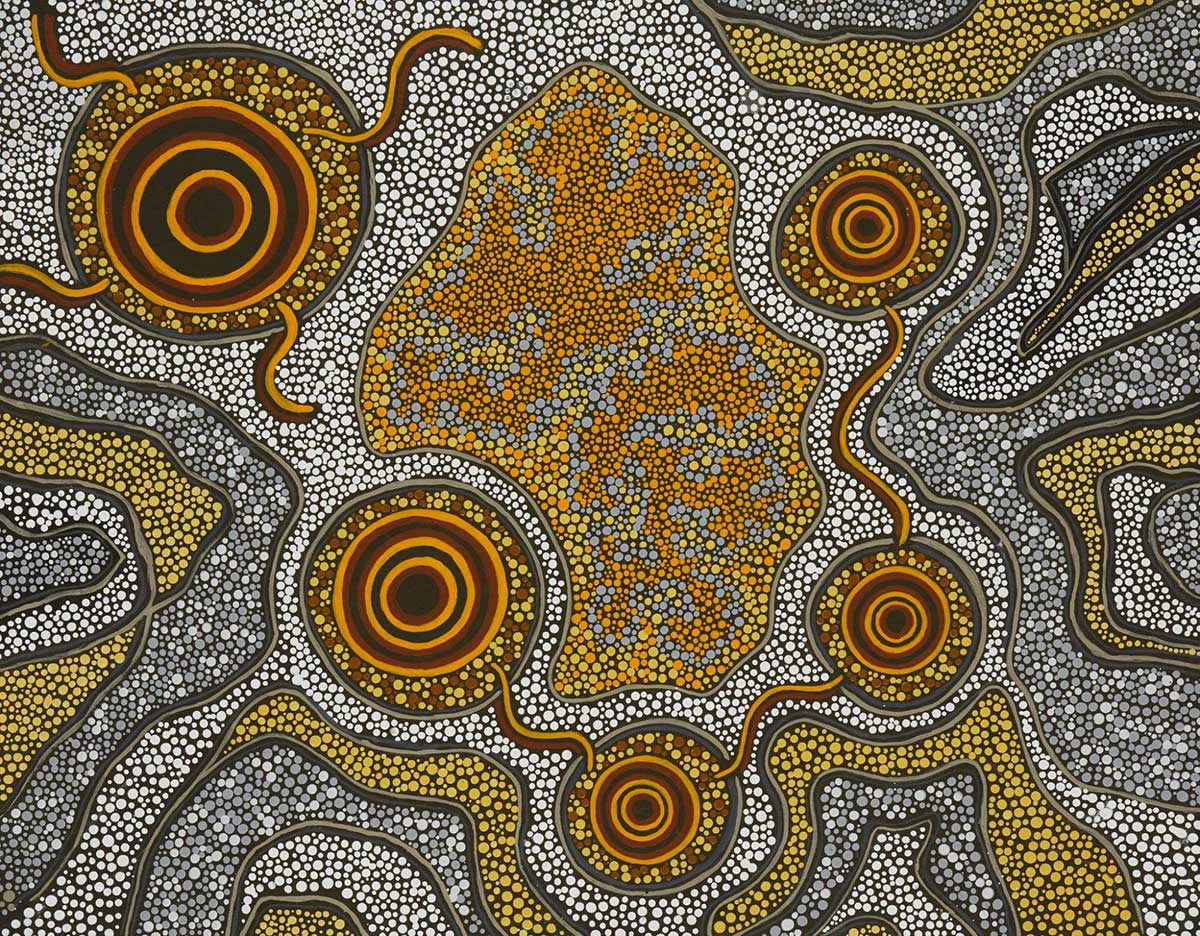
“Reconnect” by Putecharung, Kamu people, acrylic on canvas, 2024

The Lands of the Namoi River People

By Hippai Francis
Kamilaroi people
2025

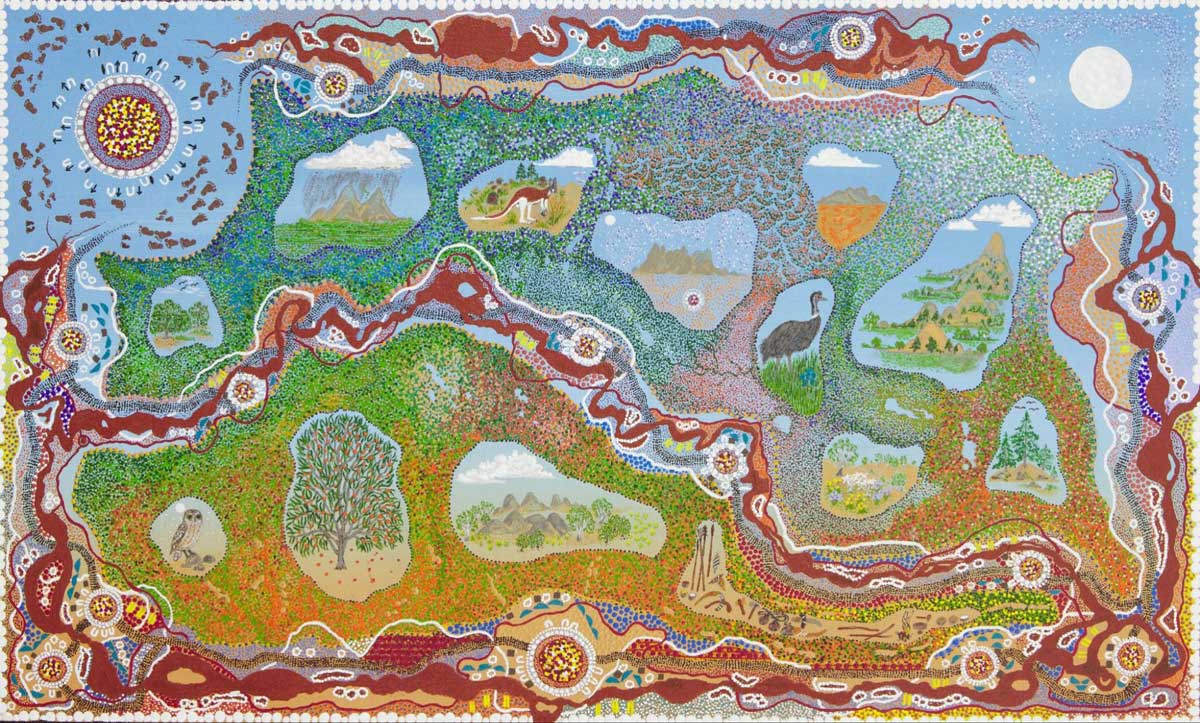
Looking down on the lands of the Namoi River people from the Guinbrai clan, the stylised river flows across the land.

Along the river are the meeting places of the Guinbrai families, shown as fireplaces with people sitting around them. Since time immemorial, the families have gathered, living in their gunyahs and cooking in earth ovens.

They are born, grow, live, hunt and gather around the river and wetlands and the surrounding mountains, hills, and plains.

Here children played; here people died and are buried.

Along the river, events over the generations are remembered in the clan’s Songlines. It is a great tapestry of human life and of the world around them.

The surrounding country, with its plains, woodlands, forests, hills, and mountains is represented.

The pictorial inserts show common trees such as the cypress pine, red gum, wilga, and wattles. Important totem animals are also shown, such as the red kangaroo, emu and red cockatoo, and the sky with its own life.

The seasons are seen top to bottom.

The Lands of the Namoi River People

By Hippai Francis
Kamilaroi people
2025

Looking down on the lands of the Namoi River people from the Guinbrai clan, the stylised river flows across the land.

Along the river are the meeting places of the Guinbrai families, shown as fireplaces with people sitting around them. Since time immemorial, the families have gathered, living in their gunyahs and cooking in earth ovens.

They are born, grow, live, hunt and gather around the river and wetlands and the surrounding mountains, hills, and plains.

Here children played; here people died and are buried.

Along the river, events over the generations are remembered in the clan’s Songlines. It is a great tapestry of human life and of the world around them.

The surrounding country, with its plains, woodlands, forests, hills, and mountains is represented.

The pictorial inserts show common trees such as the cypress pine, red gum, wilga, and wattles. Important totem animals are also shown, such as the red kangaroo, emu and red cockatoo, and the sky with its own life.

The seasons are seen top to bottom.

‘It’s Changing Lives’: New Program Helping First Nations Women Find Housing After Prison

By Denham Sadler

Tracy was one of many women released from prison straight into homelessness. Thanks to the Homeward Sisters program, Tracy was able to secure priority housing that meets her needs.

Mob

ISSUE NO. 24

3 MIN READ

Roger Knox: The ‘Koori King of Country’ on Prison Stages

By Denham Sadler

First Nations music legend Roger Knox has played everywhere from huge music festivals in the USA to the Sydney Opera House. But he says the shows that mean the most to him are the ones he played in prisons around Australia.

Mob

ISSUE NO. 24

4 MIN READ

Celebrating NAIDOC Week!

By About Time

To celebrate NAIDOC week, we’re showcasing First Nations art submissions. We acknowledge the fierce First Nations people and Elders across the country advocating for justice.

Mob

ISSUE NO. 24

4 MIN READ

Artwork From The Torch – Issue No. 23

By The Torch

Two new artworks from First Nations artists.

Mob

ISSUE NO. 23

2 MIN READ