Welcome to About Time

About Time is the national newspaper for Australian prisons and detention facilities

Your browser window currently does not have enough height, or is zoomed in too far to view our website content correctly. Once the window reaches the minimum required height or zoom percentage, the content will display automatically.

Alternatively, you can learn more via the links below.

Donations via GiveNow

Email

Instagram

LinkedIn

ISSUE NO. 17

December 2025

Donate Here

Health

Ask the Doctor: High Blood Pressure

Harley Stiebel is a Resident Medical Officer at The Royal Children’s Hospital and Founder of Scrublets.

Ethan Cassidy

Hello! I’m Harley, a doctor working in Victoria. Welcome back to Ask the Doctor!

Today, we are talking about high blood pressure.

What exactly is “blood pressure”?

Blood pressure can be thought of as the speed of the blood whizzing around your blood vessels (arteries). This is affected by two things: your heart and your arteries.

1. Your heart: When your heart beats faster, the blood travels around faster, and, since this racing blood doesn’t follow road rules, it pushes on the walls of your blood vessels, stretching them this way and that. The more the blood pushes on your arteries the higher your blood pressure is.

2. Your arteries: When we’re young and invincible, so are our blood vessels; they’re flexible, like one of the balloons the clown weaves into a poodle. These flexible vessels can expand when the blood speed increases to create more space. So there’s less blood pushing against the wall and therefore a lower blood pressure.

But, as we get older, our vessels become stiff and rigid, like the magician left the balloon out in the sun for a few days. These stiff blood vessels can’t expand when the speed of blood rushing through increases. Since they can’t expand the blood has to squeeze through a smaller space, so there is more blood hitting the walls of the arteries. This means a higher blood pressure.
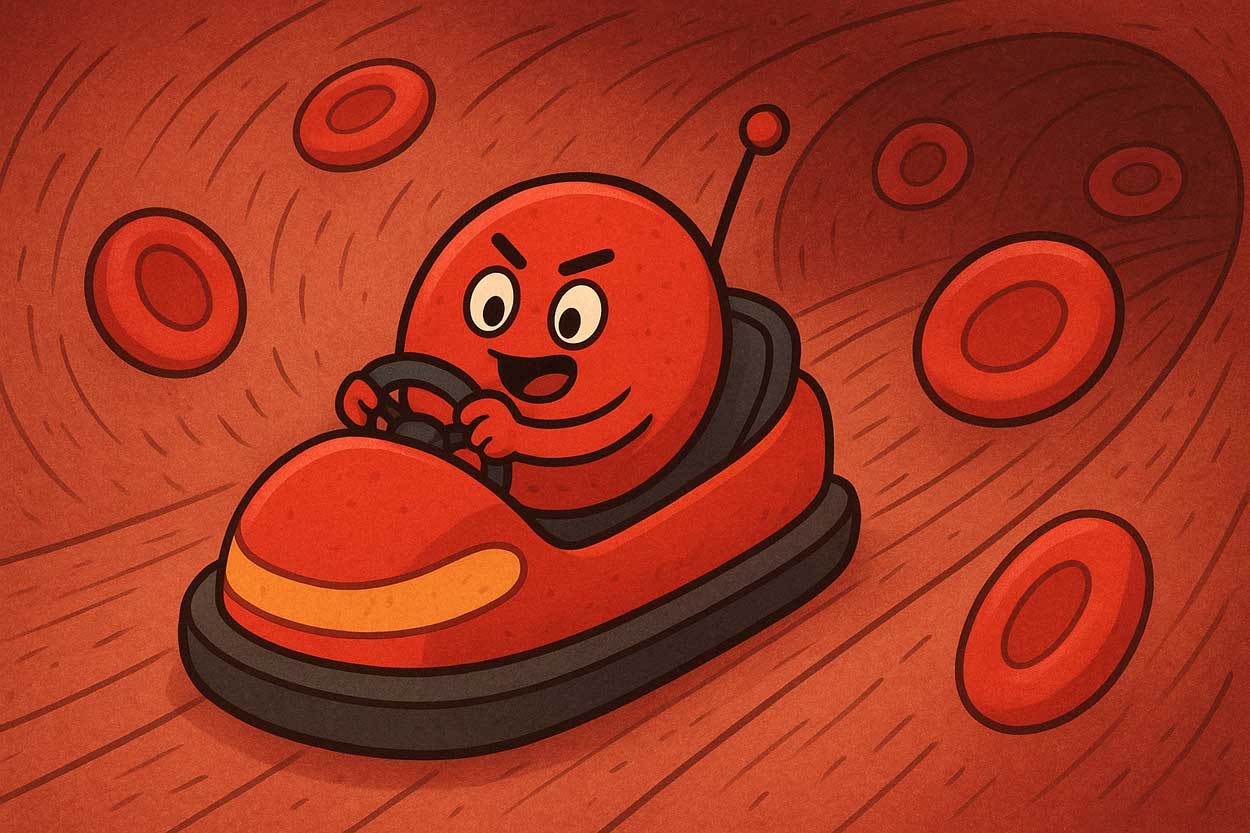
So why should I care if I have high blood pressure?

High blood pressure has a lot in common with a bad fart: it’s silent but deadly. Blood pressure is particularly sneaky because we usually don’t have any symptoms … until something bad happens.

Prolonged high blood pressure means speeding blood crashing against your arteries. Over time, this damages the arteries, meaning they struggle to bring oxygen and other important things to your organs. This damage affects smaller arteries the most. It causes four main issues:
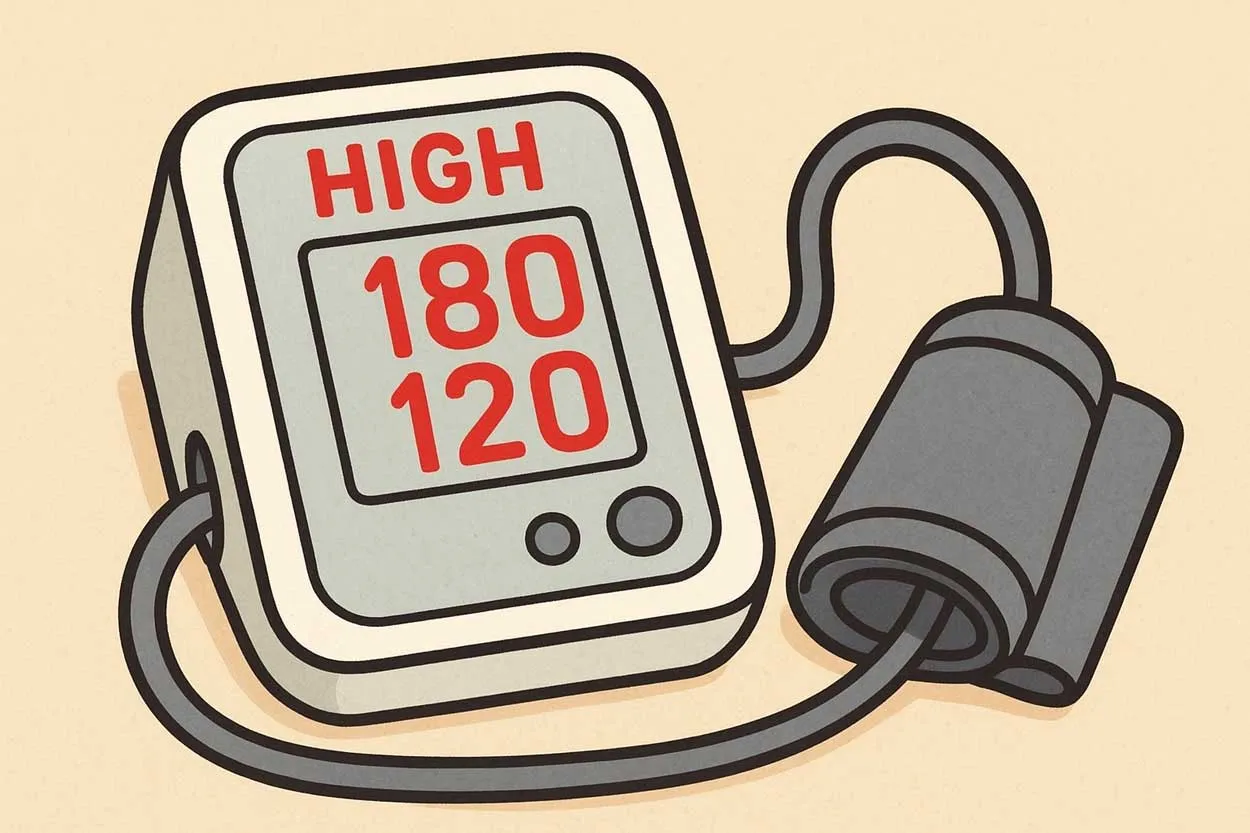
  1. Heart attacks: damaged arteries can become clogged, and, when this happens to the arteries that supply the muscles of your heart, you get a heart attack.
  2. Stroke (brain bleed): damaged arteries become frail and can burst. A burst artery, like a burst water pipe, means the blood can no longer get where it needs to go. When an artery in the brain bursts, this is a stroke.
  3. Retinal (eye) damage: like what happens in a stroke, the small arteries that supply your eyes can burst. This means the eye cells stop getting oxygen and start to die. This can cause vision issues.
  4. Kidney disease: the high speed of blood rushing through your kidneys overwhelms them, causing important cells to die. This means the ability of the kidney to filter out waste is reduced.

So how can I stop myself from getting high blood pressure?

I don’t think it’s helpful for me to write down a list of things you shouldn’t do – it’ll give nagging teacher vibes. So, instead, I’ll write down a list of things that cause high blood pressure, and then, if you want, you can think about the opposite of these things and whether they interest you.

Causes of high blood pressure:

  1. Smoking
  2. High salt diet
  3. Being overweight
  4. Uncontrolled sleep apnoea
  5. Not exercising
  6. Poorly controlled diabetes

Medications can also be an important part of managing high blood pressure for some people.

If you think you might have high blood pressure, please speak to your doctor. They’ll be able to give you personalised advice.

Thanks for reading this month’s article!

Please write to About Time with any questions you have or suggestions for future topics. Trust me, nothing is off limits – most of my day is spent asking whether people have opened their bowels or farted.

Hello! I’m Harley, a doctor working in Victoria. Welcome back to Ask the Doctor!

Today, we are talking about high blood pressure.

What exactly is “blood pressure”?

Blood pressure can be thought of as the speed of the blood whizzing around your blood vessels (arteries). This is affected by two things: your heart and your arteries.

1. Your heart: When your heart beats faster, the blood travels around faster, and, since this racing blood doesn’t follow road rules, it pushes on the walls of your blood vessels, stretching them this way and that. The more the blood pushes on your arteries the higher your blood pressure is.

2. Your arteries: When we’re young and invincible, so are our blood vessels; they’re flexible, like one of the balloons the clown weaves into a poodle. These flexible vessels can expand when the blood speed increases to create more space. So there’s less blood pushing against the wall and therefore a lower blood pressure.

But, as we get older, our vessels become stiff and rigid, like the magician left the balloon out in the sun for a few days. These stiff blood vessels can’t expand when the speed of blood rushing through increases. Since they can’t expand the blood has to squeeze through a smaller space, so there is more blood hitting the walls of the arteries. This means a higher blood pressure.

So why should I care if I have high blood pressure?

High blood pressure has a lot in common with a bad fart: it’s silent but deadly. Blood pressure is particularly sneaky because we usually don’t have any symptoms … until something bad happens.

Prolonged high blood pressure means speeding blood crashing against your arteries. Over time, this damages the arteries, meaning they struggle to bring oxygen and other important things to your organs. This damage affects smaller arteries the most. It causes four main issues:

  1. Heart attacks: damaged arteries can become clogged, and, when this happens to the arteries that supply the muscles of your heart, you get a heart attack.
  2. Stroke (brain bleed): damaged arteries become frail and can burst. A burst artery, like a burst water pipe, means the blood can no longer get where it needs to go. When an artery in the brain bursts, this is a stroke.
  3. Retinal (eye) damage: like what happens in a stroke, the small arteries that supply your eyes can burst. This means the eye cells stop getting oxygen and start to die. This can cause vision issues.
  4. Kidney disease: the high speed of blood rushing through your kidneys overwhelms them, causing important cells to die. This means the ability of the kidney to filter out waste is reduced.

So how can I stop myself from getting high blood pressure?

I don’t think it’s helpful for me to write down a list of things you shouldn’t do – it’ll give nagging teacher vibes. So, instead, I’ll write down a list of things that cause high blood pressure, and then, if you want, you can think about the opposite of these things and whether they interest you.

Causes of high blood pressure:

  1. Smoking
  2. High salt diet
  3. Being overweight
  4. Uncontrolled sleep apnoea
  5. Not exercising
  6. Poorly controlled diabetes

Medications can also be an important part of managing high blood pressure for some people.

If you think you might have high blood pressure, please speak to your doctor. They’ll be able to give you personalised advice.

Thanks for reading this month’s article!

Please write to About Time with any questions you have or suggestions for future topics. Trust me, nothing is off limits – most of my day is spent asking whether people have opened their bowels or farted.

Ask the Doctor: Heart Attack

By Harley

A heart attack occurs when there is blockage in the heart’s own blood supply.

Health

ISSUE NO. 20

2 MIN READ

Why Do I Feel Lonely When I’m Surrounded by People?

By Annalise de Groot

Loneliness is a pervasive, all-encompassing state comprised of many unpleasant and distressing feelings. It is distinct from being alone, or from being socially isolated.

Health

ISSUE NO. 20

8 MIN READ

Yoga for Good Digestion

Reprinted with permission from Inside Time

Determined to make positive changes in life? It can start with digestion!

Health

ISSUE NO. 19

2 MIN READ

Ask the Doctor: Stroke

By Harley Stiebel

A stroke describes death to brain tissue caused by disrupted blood supply.

Health

ISSUE NO. 19

2 MIN READ