Daughters
A documentary about four young girls and their incarcerated fathers
Netflix


Your browser window currently does not have enough height, or is zoomed in too far to view our website content correctly. Once the window reaches the minimum required height or zoom percentage, the content will display automatically.
Alternatively, you can learn more via the links below.
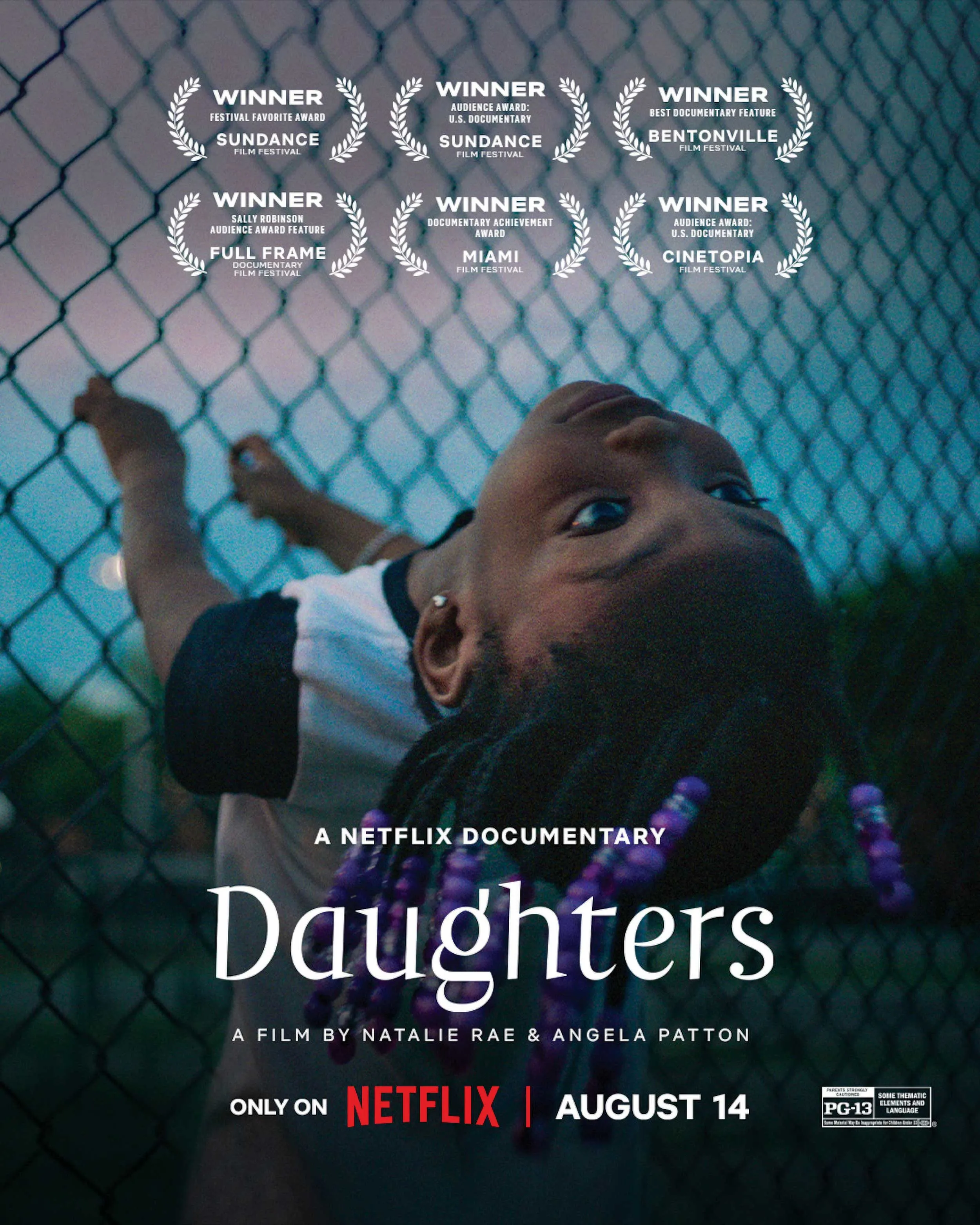
There is a new US documentary out on Netflix in the community. It’s called ‘Daughters’ and takes viewers inside a Washington DC prison where a special program to give daughters a prom experience with their incarcerated fathers takes them on a rollercoaster of emotions. For only a day, the dads get a chance to change out of their jumpsuits. We watch as they sit restlessly in their chairs waiting in anticipation for their girls to walk down the hallway, and you cannot help but shed a tear as some of them see their daughters for the first time in years.
“Some of them hadn’t hugged their fathers in years.” The documentary is about the bravery of daughters navigating life with fathers in prison.
Directed by Natalie Rae and Angela Patton, Daughters is a poignant and impactful documentary that centres on the lives of four young women who are part of the mentoring initiative aimed at fostering their personal growth and academic development. Patton is a community activist from Richmond who has organised 13 such dances since 2008. This documentary was made over an eight-year period, but it wasn’t until 2019 that they found their champions. Patton says in an interview with the Guardian, “It gets you when they walk down the hallway. I have to excuse myself and go to the ladies' room and get myself together.”
The documentary carries a powerful narrative that resonates deeply with the viewers. It intimately portrays the mentoring program designed to support these young women as they navigate their life through the complexities of self-worth, resilience, and identity. This program presents a crucial support system for the girls, providing guidance and a sense of community.
The documentary introduces the girls in different stages. It involves Aubrey, a bubbly 5-year old, who is the “smartest in her class”; 10-year old Santana, whose father’s absence puts her in a righties fury; 15-year old Raziah, who is struggling with her mental health issues; and 11-year old Ja’Ana, who is eager to visit her father but doesn’t remember him as her mother refused to let her visit him in prison.
For Patton, this documentary was not about prison rehabilitation, but the girls’ willingness to find forgiveness. Patton’s vision for the film was to pick up the energy and journey of these girls and translate it through the screen.
Even before going to prison, I was drawn to prison movies. Now, after my time inside, I’m even more captivated.
A new art exhibition in Melbourne calls attention to Indigenous incarceration in Australia. It’s on from April to July 2025 at Heide Museum of Modern Art in Melbourne.
We’re Bull Press. We make games – conversational tabletop games – for a prison environment. Most of us have spent time in prison, and we’re based in the USA.
An overview of recent sporting events, including AFL, F1, football and cricket.
Call me a grumpy old Baby Boomer, but I can’t understand young people. Or more specifically, young Queensland males. Literally.
Place Scotch Fingers into a large container and use a peanut butter jar (lid part) to crush the biscuits. Add plum jam for a richer flavour.