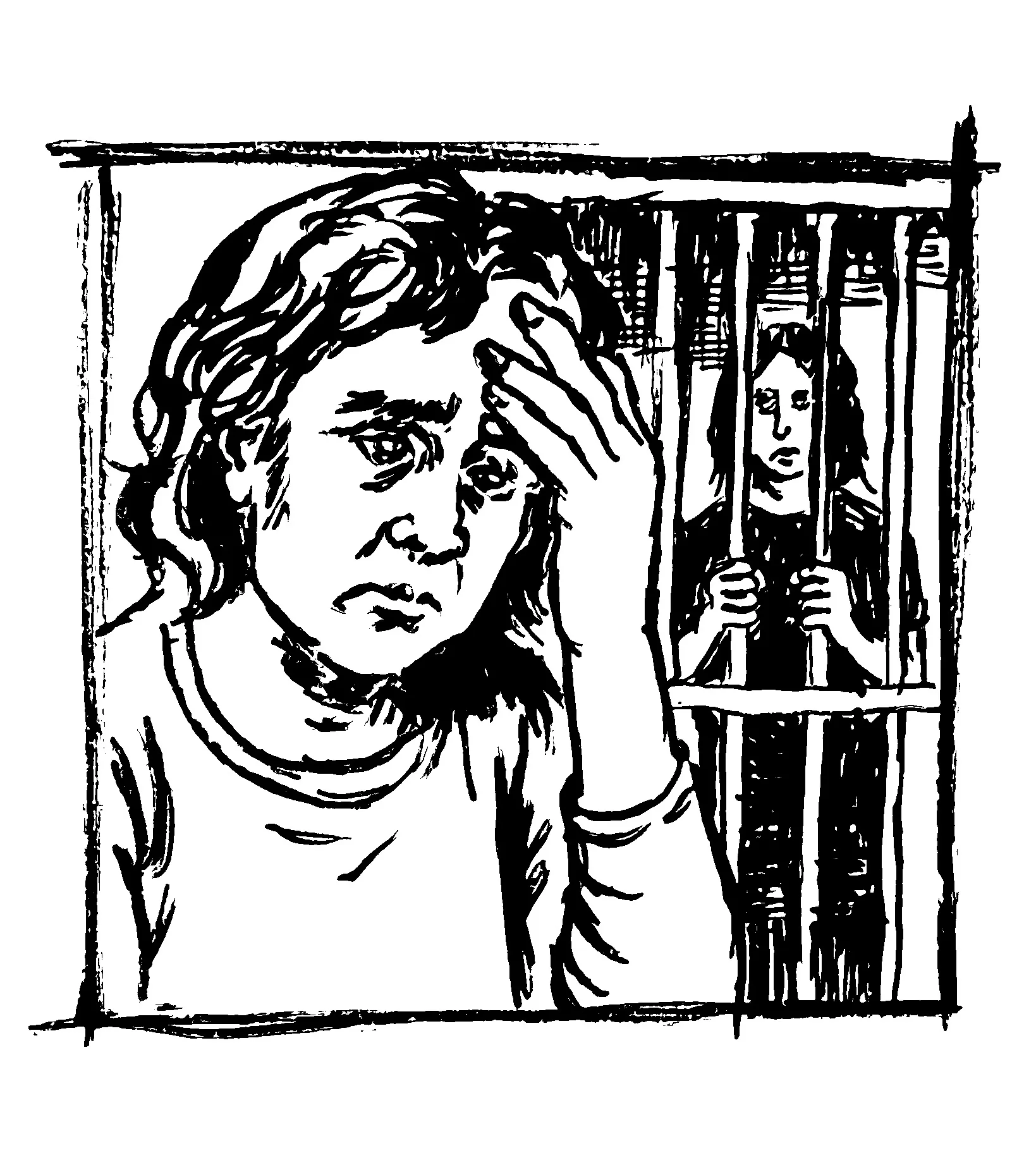
When the detective told me that my adult daughter was to be charged with attempted murder that night, I screamed and cried, "no, no, no! This isn't real, this isn't real!". But it was, and I had to deal with it.
When your adult child does something that you don't agree with and you have no say in it - that's hard. Especially when they've broken the law in a serious way.
No-one in my family or friends groups had ever been to prison so this was a big shock to me.
Somewhat naively, I brought food for her to the police station where she was in a cell. The policeman politely told me, "that's not allowed". I could talk to her briefly on the phone but not see her. She was cold so I brought her clothes which she was allowed to have.
I waited and worried about her immediate needs. Is she warm enough? Does she have enough to eat? And then once in remand in prison other questions were added: is she getting medical treatment? How is she settling in? Why doesn't she want to talk to me?
Having virtually no experience with the criminal justice system I was blind to the complexities I was about to discover and try to understand. I didn't know who I could trust in the process - if anyone.
In the coming months I became familiar with a different language, a sort of double-speak and a read-between-the-lines language, putting aside my layperson's understanding of words and phrases by Googling words in legalese to paint some kind of a picture for myself about what could possibly happen and how this might turn out.
I asked questions, made phone calls and tried to be brave. As I had done in the previous six months, I tried to advocate for my daughter as best I could.
I eventually realised that processes are processes and I can learn about them but I can't alter them and I am just going to have to adapt to how things are going to work now. For example, her personal possessions were seized and there was nothing I could do about it.
These things might seem like they should be expected and I came to appreciate that, however initially this was happening to us and our lives - it wasn't a soapie on TV.
Some things went smoothly, "yes, the referral has been made for legal advice" and other things were challenging until I worked out how things worked, "call this number, if that doesn't work or they don't answer leave a message and call back tomorrow", that kind of thing.
%20(1).webp)
I did research on court proceedings, court hearings and criminal trials. I read up online about trends in legal practices, new laws, police and prosecution processes, legal procedures for the accused, witness statements, victim impact statements, sentencing and penalties for similar crimes. I tried to understand the meanings of the different hearings but relied on the lawyer for interpretation of those.
I rang around my family and friends to tell them so they wouldn't find out in the news and to share my disquiet and sadness. I tried my best to have my daughter's identity protected, for now and in the future.
I came to the conclusion that I would have to draw on my inner resources of patience, trust and not getting ahead of myself.
As a somewhat anxious person, I was triggered by fears about my daughter's future. How will she get a job after this? How will she support herself? How can I protect her from discrimination and being judged by others? What do I tell people when they ask how she is?
I felt helpless, useless, frustrated and at times bewildered and overwhelmed. It took me three months to adjust to the reality of the situation. The other big issue was, of course, blaming myself for her predicament.
I am grateful that legal aid was approved, lawyers appointed, a very helpful and understanding social worker was allocated and my daughter was receiving medical treatment. Slowly I learned how to navigate prison systems (everything needs a form and an appointment) and got used to making the journey to the prison without crying behind my sunglasses.
I gratefully gather my friends and family around me for ongoing support through this complicated and protracted process, praying for the best possible outcome for my adult child when I have no option but to step back and let it all play out. I continue to give her my unconditional love as much as I can in the circumstances and hand the outcome over to the universe.
I did research on court proceedings, court hearings and criminal trials. I read up online about trends in legal practices, new laws, police and prosecution processes, legal procedures for the accused, witness statements, victim impact statements, sentencing and penalties for similar crimes. I tried to understand the meanings of the different hearings but relied on the lawyer for interpretation of those.
I rang around my family and friends to tell them so they wouldn't find out in the news and to share my disquiet and sadness. I tried my best to have my daughter's identity protected, for now and in the future.
I came to the conclusion that I would have to draw on my inner resources of patience, trust and not getting ahead of myself.
As a somewhat anxious person, I was triggered by fears about my daughter's future. How will she get a job after this? How will she support herself? How can I protect her from discrimination and being judged by others? What do I tell people when they ask how she is?
I felt helpless, useless, frustrated and at times bewildered and overwhelmed. It took me three months to adjust to the reality of the situation. The other big issue was, of course, blaming myself for her predicament.
I am grateful that legal aid was approved, lawyers appointed, a very helpful and understanding social worker was allocated and my daughter was receiving medical treatment. Slowly I learned how to navigate prison systems (everything needs a form and an appointment) and got used to making the journey to the prison without crying behind my sunglasses.
I gratefully gather my friends and family around me for ongoing support through this complicated and protracted process, praying for the best possible outcome for my adult child when I have no option but to step back and let it all play out. I continue to give her my unconditional love as much as I can in the circumstances and hand the outcome over to the universe.


