Australia's National
Prison Newspaper

Australia's National
Prison Newspaper

Donate Here

News and Investigations

‘Cascade of Harms’: Report Finds Racial Profiling Leading to Criminalisation and Over-Incarceration

Denham Sadler is the Chief Reporter at About Time.

Willy Pleasance

Font Size
Font Size
Line Height
Line Height
Dyslexia Friendly
Black & White
Hide Images
Night Mode

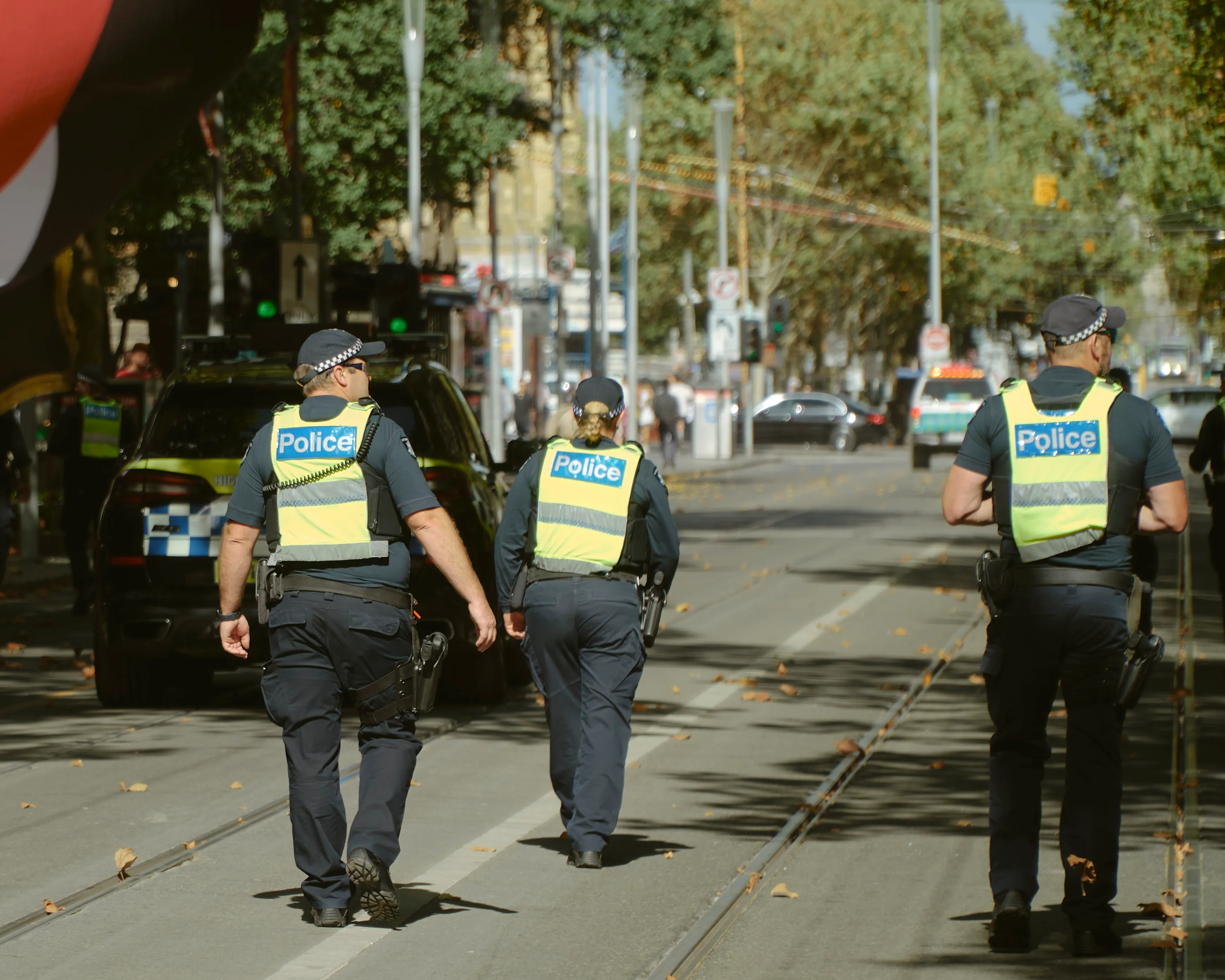
Racial profiling and the over-policing of certain groups is contributing to increased use of force and disproportionate incarceration rates, a new report has found. 

The report by the Racial Profiling Data Monitoring Project is based on Victoria Police data obtained through Freedom of Information requests.

The data reveals that in Victoria, First Nations people and those of African descent are far more likely to be searched by police and have force used against them. 

According to the report, First Nations people were 15 times more likely to be searched by Victoria Police officers in 2024 than those perceived to be white. Those perceived to be African were nine times more likely to be searched. First Nations people were also 10 times more likely to have force used or threatened against them, and 14 times more likely to be tasered or threatened with a taser than someone perceived to be white. 

The report also found that other racialised groups are far more likely to be searched than those perceived to be white, such as those of Middle Eastern or Pacific Island descent.

The over-policing of these particular communities is “confronting and deeply disturbing”, the report said.

“As the search rate for all groups is less than one in four searches, this over-policing is evidence of both systemic racism in Victoria Police practices and systematic racial profiling,” the report said.

Being searched by police can often be an individual’s entry point to the criminal justice system and racialised policing can lead to disproportionate incarceration rates, the report’s author Tamar Hopkins said.

“If police are 15 times more likely to search a person they perceive to be Aboriginal than a person they perceive to be white – and the hit rates for searches of these groups are roughly the same – this means that Aboriginal people are 15 times more likely to be criminalised and enter the criminal legal system than white people as a consequence of police activities alone,” the report said.

“This over-sampling has dramatic consequences in terms of who is arrested, who has to deal with courts, who has force used against them, who has to encounter the prison system, criminal record discrimination, time off work, impacts on families, stigma, stereotyping and a whole range of other consequences including increasing risks of physical and psychological harm and deaths associated with police and criminal justice contact.”

The first point of contact through a police search can have a devastating impact on an individual, Hopkins said.

“What that shows is that it is police contacts and police decisions about who to investigate that then leads to a cascade of additional harms, including use of force and custody and arrest,” Hopkins told About Time.

“It reinforces that link that it’s the police decision about who to stop and then search.”

The findings of the report have been rejected by Victoria Police.

“Assertions made in this research are incorrect,” a spokesperson for Victoria Police said.

“Victoria Police has zero tolerance towards racial profiling. Our officers are trained to police in response to a person’s behaviour, not their background.”

The spokesperson said that it is not mandatory for police to record ethnic appearance information when they are conducting searches, and that use of force incidents include the use of physical force and the threat to use force. 

Victoria Police in 2015 pledged to stamp out racial profiling in a  Federal Court settlement. 

But Hopkins said the new data shows that this was “in name only”.

“The policies introduced are sitting there in the police manual and they are not translating into action in any way,” Hopkins said.

“I think that really speaks to the disconnect between what police say to the public and the actual activities on the ground. The racial profiling ban was presentational only.”

The data shows that less than one in five searches conducted by police with reasonable grounds resulted in a “find” in 2024, a substantially lower rate than many other comparable jurisdictions.

“The poor performance of Australian police suggests that they engage in higher rates of unlawful searches,” the report said.

“This suggests that Australian police are subject to less scrutiny and accountability than police in comparable countries.”

Victoria Police recently designated the Melbourne CBD as a "designated search area" for six months, meaning they can search anyone within that zone without needing reasonable grounds or a warrant.

Racial profiling and the over-policing of certain groups is contributing to increased use of force and disproportionate incarceration rates, a new report has found. 

The report by the Racial Profiling Data Monitoring Project is based on Victoria Police data obtained through Freedom of Information requests.

The data reveals that in Victoria, First Nations people and those of African descent are far more likely to be searched by police and have force used against them. 

According to the report, First Nations people were 15 times more likely to be searched by Victoria Police officers in 2024 than those perceived to be white. Those perceived to be African were nine times more likely to be searched. First Nations people were also 10 times more likely to have force used or threatened against them, and 14 times more likely to be tasered or threatened with a taser than someone perceived to be white. 

The report also found that other racialised groups are far more likely to be searched than those perceived to be white, such as those of Middle Eastern or Pacific Island descent.

The over-policing of these particular communities is “confronting and deeply disturbing”, the report said.

“As the search rate for all groups is less than one in four searches, this over-policing is evidence of both systemic racism in Victoria Police practices and systematic racial profiling,” the report said.

Being searched by police can often be an individual’s entry point to the criminal justice system and racialised policing can lead to disproportionate incarceration rates, the report’s author Tamar Hopkins said.

“If police are 15 times more likely to search a person they perceive to be Aboriginal than a person they perceive to be white – and the hit rates for searches of these groups are roughly the same – this means that Aboriginal people are 15 times more likely to be criminalised and enter the criminal legal system than white people as a consequence of police activities alone,” the report said.

“This over-sampling has dramatic consequences in terms of who is arrested, who has to deal with courts, who has force used against them, who has to encounter the prison system, criminal record discrimination, time off work, impacts on families, stigma, stereotyping and a whole range of other consequences including increasing risks of physical and psychological harm and deaths associated with police and criminal justice contact.”

The first point of contact through a police search can have a devastating impact on an individual, Hopkins said.

“What that shows is that it is police contacts and police decisions about who to investigate that then leads to a cascade of additional harms, including use of force and custody and arrest,” Hopkins told About Time.

“It reinforces that link that it’s the police decision about who to stop and then search.”

The findings of the report have been rejected by Victoria Police.

“Assertions made in this research are incorrect,” a spokesperson for Victoria Police said.

“Victoria Police has zero tolerance towards racial profiling. Our officers are trained to police in response to a person’s behaviour, not their background.”

The spokesperson said that it is not mandatory for police to record ethnic appearance information when they are conducting searches, and that use of force incidents include the use of physical force and the threat to use force. 

Victoria Police in 2015 pledged to stamp out racial profiling in a  Federal Court settlement. 

But Hopkins said the new data shows that this was “in name only”.

“The policies introduced are sitting there in the police manual and they are not translating into action in any way,” Hopkins said.

“I think that really speaks to the disconnect between what police say to the public and the actual activities on the ground. The racial profiling ban was presentational only.”

The data shows that less than one in five searches conducted by police with reasonable grounds resulted in a “find” in 2024, a substantially lower rate than many other comparable jurisdictions.

“The poor performance of Australian police suggests that they engage in higher rates of unlawful searches,” the report said.

“This suggests that Australian police are subject to less scrutiny and accountability than police in comparable countries.”

Victoria Police recently designated the Melbourne CBD as a "designated search area" for six months, meaning they can search anyone within that zone without needing reasonable grounds or a warrant.

Leave a Comment

Thank you! Your submission has been received!
Oops! Something went wrong while submitting the form.
0 Comments
Author Name
Comment Time

Lorem ipsum dolor sit amet, consectetur adipiscing elit. Suspendisse varius enim in eros elementum tristique. Duis cursus, mi quis viverra ornare, eros dolor interdum nulla, ut commodo diam libero vitae erat. Aenean faucibus nibh et justo cursus id rutrum lorem imperdiet. Nunc ut sem vitae risus tristique posuere. uis cursus, mi quis viverra ornare, eros dolor interdum nulla, ut commodo diam libero vitae erat. Aenean faucibus nibh et justo cursus id rutrum lorem imperdiet. Nunc ut sem vitae risus tristique posuere.

Punched in the Face and Denied Care: Ombudsman Finds Assault Occurred in Victorian Prison

By Denham Sadler

A man on remand at a privately-run prison in Victoria was “punched in the face” by a supervisor and then blocked from accessing a medical appointment, the state Ombudsman has found.

News and Investigations

BREAKING

3 MIN READ

Rising Remand Numbers Drive Increase to Victoria’s Prison Population

By Joseph Friedman

The Sentencing Advisory Council report tracks the prison population in Victoria from 2004 to 2024, finding that it grew by 62 per cent in this time, far more than the less than 40 per cent increase in the general population of the state.

News and Investigations

ISSUE NO. 16

1 MIN READ

A Year of Being ‘Tough on Crime’

By Stacey Stokes

Is the NT walking into a more criminalised and less safe future?

News and Investigations

ISSUE NO. 16

2 MIN READ

The Importance of Radio in Prison

By Benjamin Aitken

A certain song at the right moment can anchor someone to memories, to hope or simply to themselves.

News and Investigations

ISSUE NO. 16

3 MIN READ

Newsletter

Be the first to learn about our monthly stories, plus new initiatives and live events

You've successfully registered!
Something went wrong when we tried to register your details. Please try again.

Support Australia's First National Prison Newspaper

A place for news and education, expression and hope

Help keep the momentum going. All donations will be vital in providing an essential resource for people in prison and their loved ones.

All donations of $2 or more are tax deductible. If you would like to pay directly into our bank account to avoid the processing fee, please contact donate@abouttime.org.au. ABN 67 667 331 106.

It's
About Time.

A place for news and education, expression and hope.

Help us get About Time off the ground. All donations are tax deductible and will be vital in providing an essential resource for people in prison and their loved ones.

Donate Here

Welcome to About Time

About Time is the national newspaper for Australian prisons and detention facilities

Your browser window currently does not have enough height, or is zoomed in too far to view our website content correctly. Once the window reaches the minimum required height or zoom percentage, the content will display automatically.

Alternatively, you can learn more via the links below.

Donations via GiveNow

Email

Instagram

LinkedIn

Newsletter

Be the first to learn about our monthly stories, plus new initiatives and live events

You've successfully registered!
Something went wrong when we tried to register your details. Please try again.