Walking on History: Sharing Culture and Country
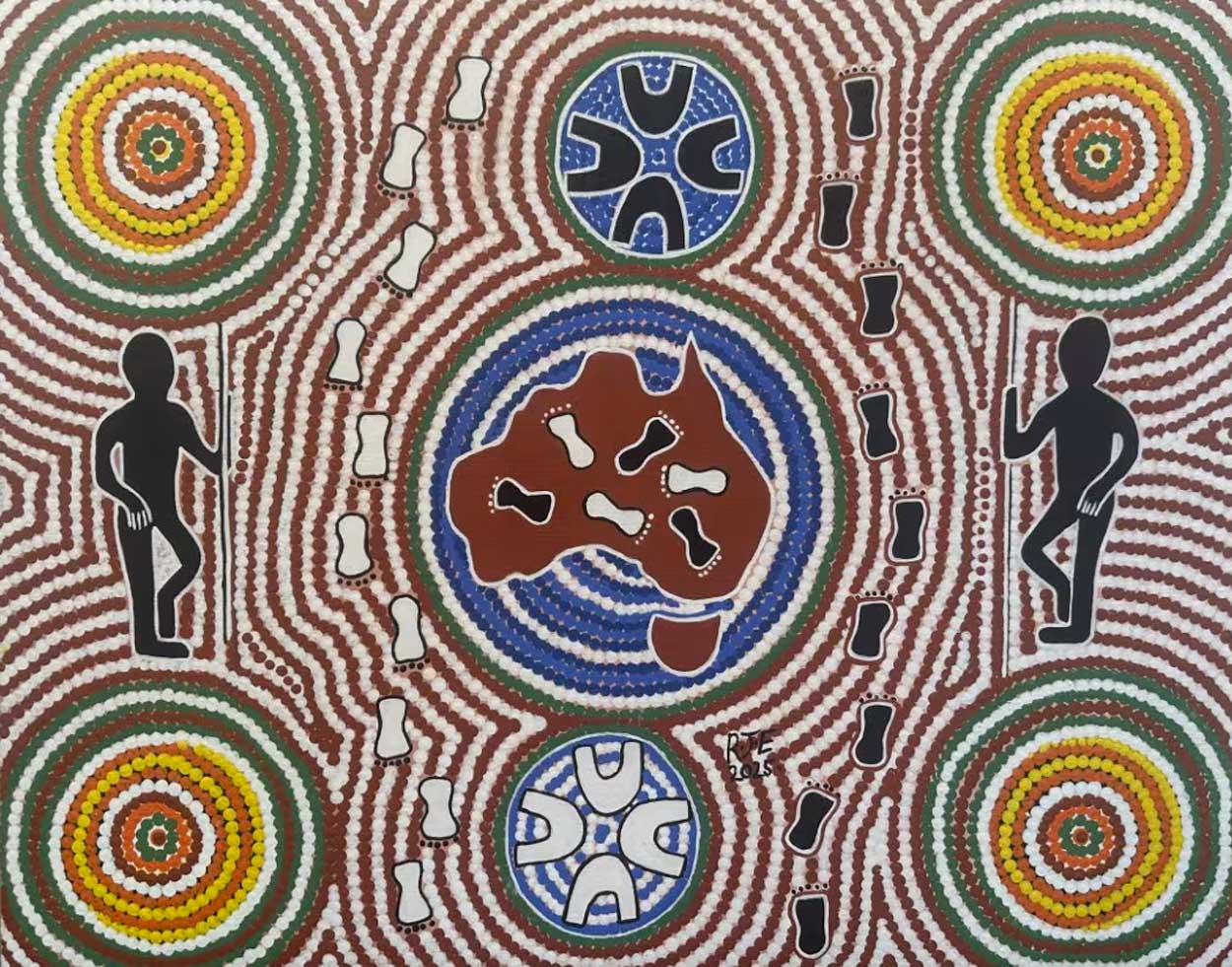
Boom Gate Gallery: ‘Walking on Country’ by Richard


Your browser window currently does not have enough height, or is zoomed in too far to view our website content correctly. Once the window reaches the minimum required height or zoom percentage, the content will display automatically.
Alternatively, you can learn more via the links below.
Hello About Time readers. I would like to tell you about a lecture from someone who came to our prison. This one was by Mr Tya Lovett.
Tya is a teacher for Latrobe Uni and teaches a Cert 4 in Cultural Heritage Management. He teaches about cultural landmarks and landscapes. He is also a member of the Victorian Aboriginal Heritage Council. Tya is one of the traditional owners of Tjap Wurrung County.
Tya started off by talking about the Langi Ghiran mountain and about all the art there, and Bunjil’s cave and the heritage that surrounds the mountain. He spoke about when you dig into the ground and the deeper you go the things that you find in the ground potentially can be thousands of years old artifacts and history and a lot of people overlook the significance of what is in front of them.
Tya also spoke about the landscape and rock art that is 22,500 years old on Gunditjmara Country, of stories of the Land, Sky, and the Sea that is the basis of the Traditional Owners’ knowledge, including Ceremonies, Creation stories and Skills involved in the creation of Cultural heritage.
Tya talked about the tools that have been made by the Aboriginal people for cultural purposes like the ground edge axes, grinding bowls that were made of stone and the things that they were being used for,like striping bark from trees, hunting, digging, help making shelters, grinding up wheat, flowers and berries to make food like damper and other foods.
He also spoke about the waterways and how the Aboriginal people use them to fish and live off the water by creating fish traps and digging out water channels from the river, as well as manmade watering holes where they can trap the fish and are able to keep the fish alive and fresh.
He spoke about the volcanoes that are here in Victoria and believe you me there are more than a few out there! Most of the land in Victoria has significant volcano sites.
He spoke about scar trees, ring trees, habitation trees and curved trees. First were the scar trees and what they were used for –depending on the size of the scar it could be used to make canoes or coolamons, to make shelter or even fish traps.
The Habitation trees were used to live in and for birthing and Woman’s Business – there are even stories about travelling Spirits using them.
The curved trees were used to identify different tribes’ burial grounds and to even warn people off. They were used as landmarks for people to find their ways back to the tribe, and for exploring.
It was a great turnout by both inmates and staff and we all left feeling informed and more vigilant of our surroundings or where we are and where we live.
So, my advice to you is be aware of your surroundings because you never know that what you are walking on, or passing, or could be used as a tool. Even a bit of charcoal that you found buried in the ground could mean something or the pippies shells that you see deep in the sand on the beach could tell us something about the past.
It all has a history. So just take a second to think on how old that could be and where it came from or even who or how it could have got there.
I would like to say a big thank you to Tya Lovett for coming out and speaking with us. It was a great learning experience, and we are looking forward to seeing him back in the future.
Also thank you to the About Time newspaper and their readers for giving us the opportunity to inform everyone on what we are doing here, so thank you.
To all you brothers and sisters out there, stay black and deadly, stay strong and keep your chins up.
Kind regards from the Teelack Brothers.
Most of the art featured at Boom Gate Gallery is made at Long Bay Gaol, with some coming from other prisons in NSW.
You’ve probably heard of AFL legends Adam Goodes and Michael O’Loughlin. But what you might not know, is that they also started their own charity called the GO Foundation.
NAAJA has a 50-year history of serving Aboriginal Territorians as they navigate the justice system.
Tracy was one of many women released from prison straight into homelessness. Thanks to the Homeward Sisters program, Tracy was able to secure priority housing that meets her needs.