Government Report on First Nations Healthcare in Prisons Calls for Urgent Changes
New ways to address complex needs
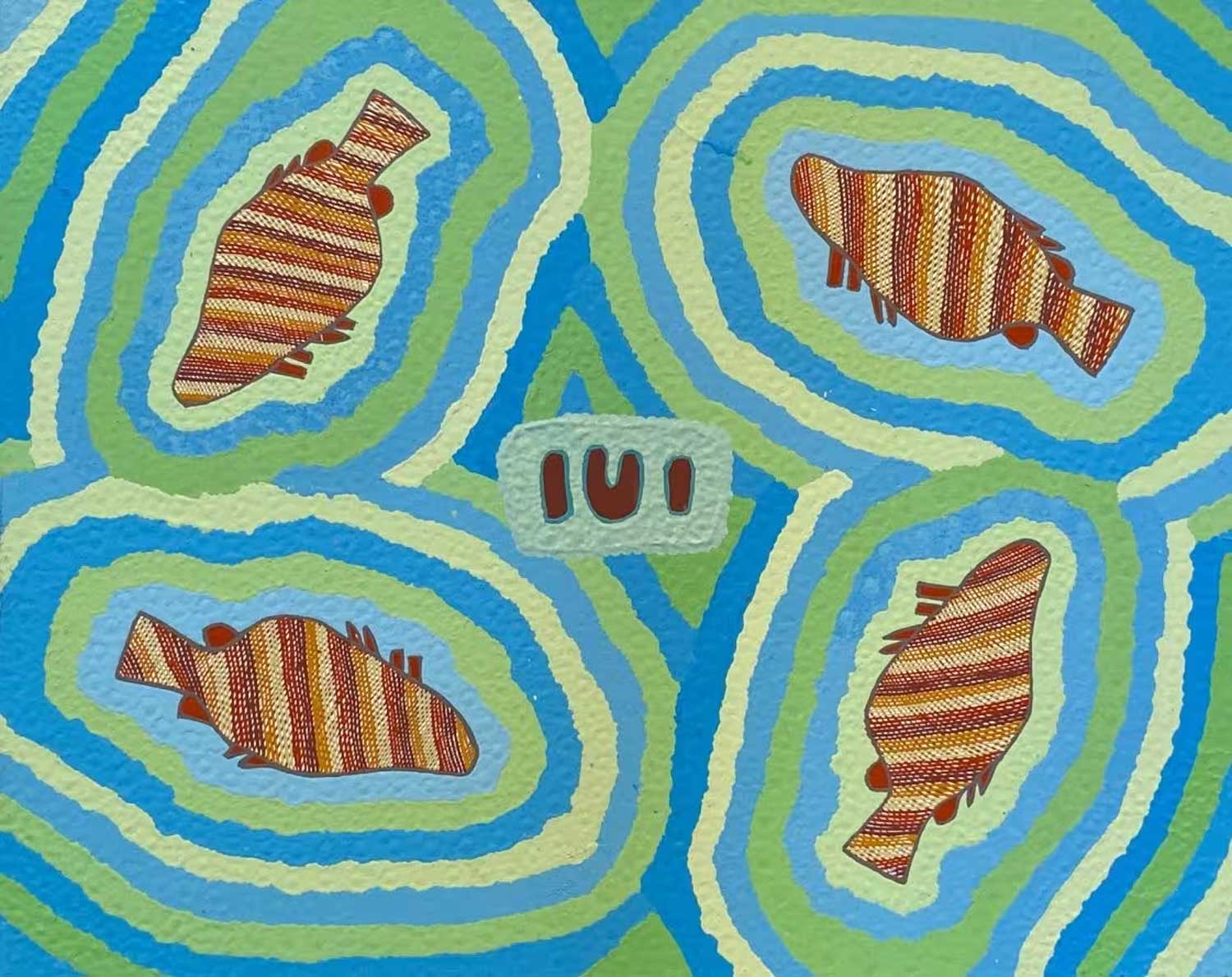
'Freshwater Gooya' by Andrew, $350, #5293, 60cm x 75cm, acrylic on canvas


Your browser window currently does not have enough height, or is zoomed in too far to view our website content correctly. Once the window reaches the minimum required height or zoom percentage, the content will display automatically.
Alternatively, you can learn more via the links below.
A wide-ranging report commissioned by the federal government has called for “urgent and proactive” system-level reforms to improve the standard of health care provided to First Nations people in prison.
The final report, released publicly in December, calls on governments at all levels to work together to implement large-scale reforms to address health care needs of incarcerated First Nations people. It also suggests that these reforms should be led by Aboriginal Community Controlled Health Organisations (ACCHOs) and draw on alternative models of custody for First Nations people.
The report leads with six high-level recommendations for systems change to address the serious concerns identified throughout the review.
These include an agreement on a set of national reform principles, and the establishment of a National Partnership Agreement to govern the implementation of changes.
The report also urged governments to investigate the evidence that had been provided to the review and take immediate steps to cease any practices that are violating the human rights of people in prison.
The report suggested that governments should also implement a national program of work for First Nations health care in prisons, and pilot alternative therapeutic models of custody for First Nations people.
The flagship recommendation from the review is for governments to support Aboriginal Community Controlled Health Organisations to lead the policy design and delivery of health services in prisons.
The federal government and all state and territory governments have endorsed the report and committed to developing an approach to implement the recommendations this year, in partnership with Aboriginal Community Controlled Health Organisations.
If you apply for a job, you might be told to complete a criminal record check. This provides a document summarising any criminal history that can then be given to a potential employer.
Most of the art featured at Boom Gate Gallery is made at Long Bay Gaol, with some coming from other prisons in NSW.
You’ve probably heard of AFL legends Adam Goodes and Michael O’Loughlin. But what you might not know, is that they also started their own charity called the GO Foundation.
NAAJA has a 50-year history of serving Aboriginal Territorians as they navigate the justice system.