


Donate Here
•
Experiences
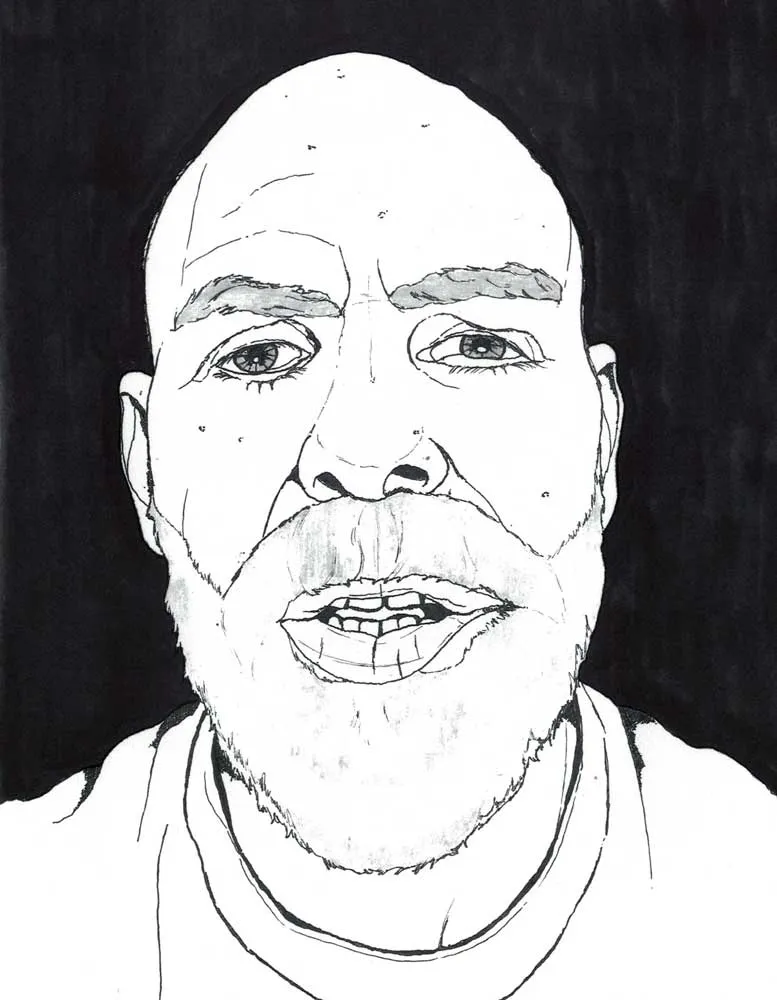
Ike Curtis
When I was twenty, I bought my first car – a Holden Torana. I loved it the second I saw it. I worked on it for months, stripping it back in mum’s garage. Sprayed it a kermit green with a tuxedo black bonnet. It looked a million bucks and I was proud of it.
But I didn’t appreciate the dangers and responsibilities of being on the roads. I still remember the haunting words of the old next-door neighbour when he saw it: ‘Young men die in green cars.’ Stupid old bugger, what would he know?
New Years Eve – 31st December 2004
I was at a house party and was drinking and smoking all afternoon. Rather than wait until morning, I made the stupid decision to drive to my girlfriend, two hours away.
Despite people’s best efforts, I got hold of my keys, and set off.
Only minutes into the trip, trying to light a cigarette and find directions in the street directory, I looked up to traffic lights and a T-intersection fast approaching.
No time to stop. My judgement and coordination were clouded. I was almost four times over the limit. I dropped the cigarette, the street directory fell off my lap. I hit the brakes and tried to veer left. I remember lights, noise and then everything went dark.
I only remember glimpses from the night after that. A bright flash of light before impact. Opening the door and collapsing onto the road in a heap, intense pain in my stomach. Voices of first responders and people trying to help me. A red and white emergency sign as I lay on a trolley, pushed through hospital doors.
New Year’s Day – 1st January 2005
I woke up in hospital with mum at my bedside. My mouth was wired shut from fracturing my lower jaw on impact with the steering wheel. My stomach was held together with forty staples.
I looked at mum and asked,“what did I hit?” She didn’t respond. I had this terrible, sinking feeling. “I hit another car, didn’t I?”
Still, she said nothing, a look of panic on her face, not knowing how to break it to me.
“Are they ok? Can I see them, can we send flowers?”
She began to cry, and her face told the horrible truth.
“They didn’t make it did they?’ I lay there. Taking a few minutes to try and process what had happened, comprehend the enormity of what I had done. Life would never be the same.
I suffered three perforations to my large intestine meaning one foot of my bowel had to be removed. I damaged my right knee hitting the dashboard, requiring surgery.
But I was alive.
Waiting to face court and likely jail time, I wondered, ‘why was I still here, but someone else wasn’t?’
The manslaughter charge was downgraded to dangerous driving occasioning death and driving with a high range prescribed concentration of alcohol. I plead guilty. I was given five years (2.5 non-parole).
I’m fortunate just to be here today, let alone receive that sentence. Given longer, I wouldn’t have objected.
The fact remained. My terrible decision meant my victim never got to live out the rest of his life. No amount of time or money equals a human life.
I was taken into custody in September 2005.
I had to go to prison for the crime I’d committed. If the same thing had happened to someone in my family, I’d want justice. But to say I was anxious is an understatement. I came from a good school with a loving family. I’d read books, seen movies. What would happen to me in there?
While prison is not as bad here as it is in some other countries, it’s still a dangerous place where you never want to find yourself. The first prison I went to was overcrowded and unsafe. I had no crew, no friends, no one to back me up.
But I avoided trouble because I played to my strengths. I stayed in my lane and did what I had to do. I went to the gym, and went often, learning that ‘training keeps the flies away.’ I learnt that if you don’t respect yourself, your body and mind, how can you expect others to? I learnt to respect myself, and others thought twice about bothering me.
I was forced to grow up, to decide what sort of person I was going to be.
On the outside, the world carried on. When doing time, you adapt and get on with it one way or another, but friends and family on the outside are the ones that really struggle. My mother struggled the most, visiting me every week. I was lucky to have that level of support.
Once released, I owed it to my family, friends, myself and most of all, my victim, to make up for what I had done.
Prison forged part of who I am today, but it would not define me. I vowed to try and give back. For some reason, I’d survived while my victim hadn’t. I had to try and make
up for some of the wrong I had done.
I replaced poor habits with good ones, and surrounded myself with supportive people.
I started a charity to honour the memory of my victim and to prevent others from making similar mistakes.
To challenge myself, build resilience and also raise money, I started endurance events. Last year I completed a 243 km triathlon across New Zealand, raising 20k for charity. Next year, I plan to cycle 4000 kms from Perth to Sydney, aiming to raise 200k for charity and share this story along the way.
I quit smoking over ten years ago, and eventually got drinking under control. At times, I thought this was impossible. But attributing all my greatest failures in life to alcohol, there was no denying the truth: I am a better man without it.
I also became a father, something I am most grateful for. I am blessed with two amazing kids and two step kids.
My message for those inside reading this article is that a mistake does not have to mean the end. You can come back. You can be the best version of yourself. You have the power to be more influential and successful than you give yourself credit for. Just have the courage to ask for and accept help and be willing to work hard.
I was taken into custody in September 2005.
I had to go to prison for the crime I’d committed. If the same thing had happened to someone in my family, I’d want justice. But to say I was anxious is an understatement. I came from a good school with a loving family. I’d read books, seen movies. What would happen to me in there?
While prison is not as bad here as it is in some other countries, it’s still a dangerous place where you never want to find yourself. The first prison I went to was overcrowded and unsafe. I had no crew, no friends, no one to back me up.
But I avoided trouble because I played to my strengths. I stayed in my lane and did what I had to do. I went to the gym, and went often, learning that ‘training keeps the flies away.’ I learnt that if you don’t respect yourself, your body and mind, how can you expect others to? I learnt to respect myself, and others thought twice about bothering me.
I was forced to grow up, to decide what sort of person I was going to be.
On the outside, the world carried on. When doing time, you adapt and get on with it one way or another, but friends and family on the outside are the ones that really struggle. My mother struggled the most, visiting me every week. I was lucky to have that level of support.
Once released, I owed it to my family, friends, myself and most of all, my victim, to make up for what I had done.
Prison forged part of who I am today, but it would not define me. I vowed to try and give back. For some reason, I’d survived while my victim hadn’t. I had to try and make
up for some of the wrong I had done.
I replaced poor habits with good ones, and surrounded myself with supportive people.
I started a charity to honour the memory of my victim and to prevent others from making similar mistakes.
To challenge myself, build resilience and also raise money, I started endurance events. Last year I completed a 243 km triathlon across New Zealand, raising 20k for charity. Next year, I plan to cycle 4000 kms from Perth to Sydney, aiming to raise 200k for charity and share this story along the way.
I quit smoking over ten years ago, and eventually got drinking under control. At times, I thought this was impossible. But attributing all my greatest failures in life to alcohol, there was no denying the truth: I am a better man without it.
I also became a father, something I am most grateful for. I am blessed with two amazing kids and two step kids.
My message for those inside reading this article is that a mistake does not have to mean the end. You can come back. You can be the best version of yourself. You have the power to be more influential and successful than you give yourself credit for. Just have the courage to ask for and accept help and be willing to work hard.
Date Published
June 4, 2025
By MJ
When I get released at the end of this year, I am faced with a massive uphill climb with barely a rope to save me.
ISSUE NO. 27
•
2 MIN READ
By Jonathan
When I was first transferred to PPP in 2000, I was warned about the dentist colloquially known as ‘The Butcher.’ I attended the dentist for a sore molar.
ISSUE NO. 27
•
3 MIN READ
By Andrew
I finally finished my VPP (Violence Prevention Program) in late June. It was one of the wisest decisions I ever made.
ISSUE NO. 27
•
3 MIN READ
By David
My name is David. I am a proud Yorta Yorta man currently locked up in Victoria.
ISSUE NO. 26
•
3 MIN READ