Welcome to About Time

About Time is the national newspaper for Australian prisons and detention facilities

Your browser window currently does not have enough height, or is zoomed in too far to view our website content correctly. Once the window reaches the minimum required height or zoom percentage, the content will display automatically.

Alternatively, you can learn more via the links below.

Donations via GiveNow

Email

Instagram

LinkedIn

Donate Here

Culture

Beyond the Bars: 25 Years of Prison Radio
By
Areej Nur

Areej is a volunteer at 3CR.

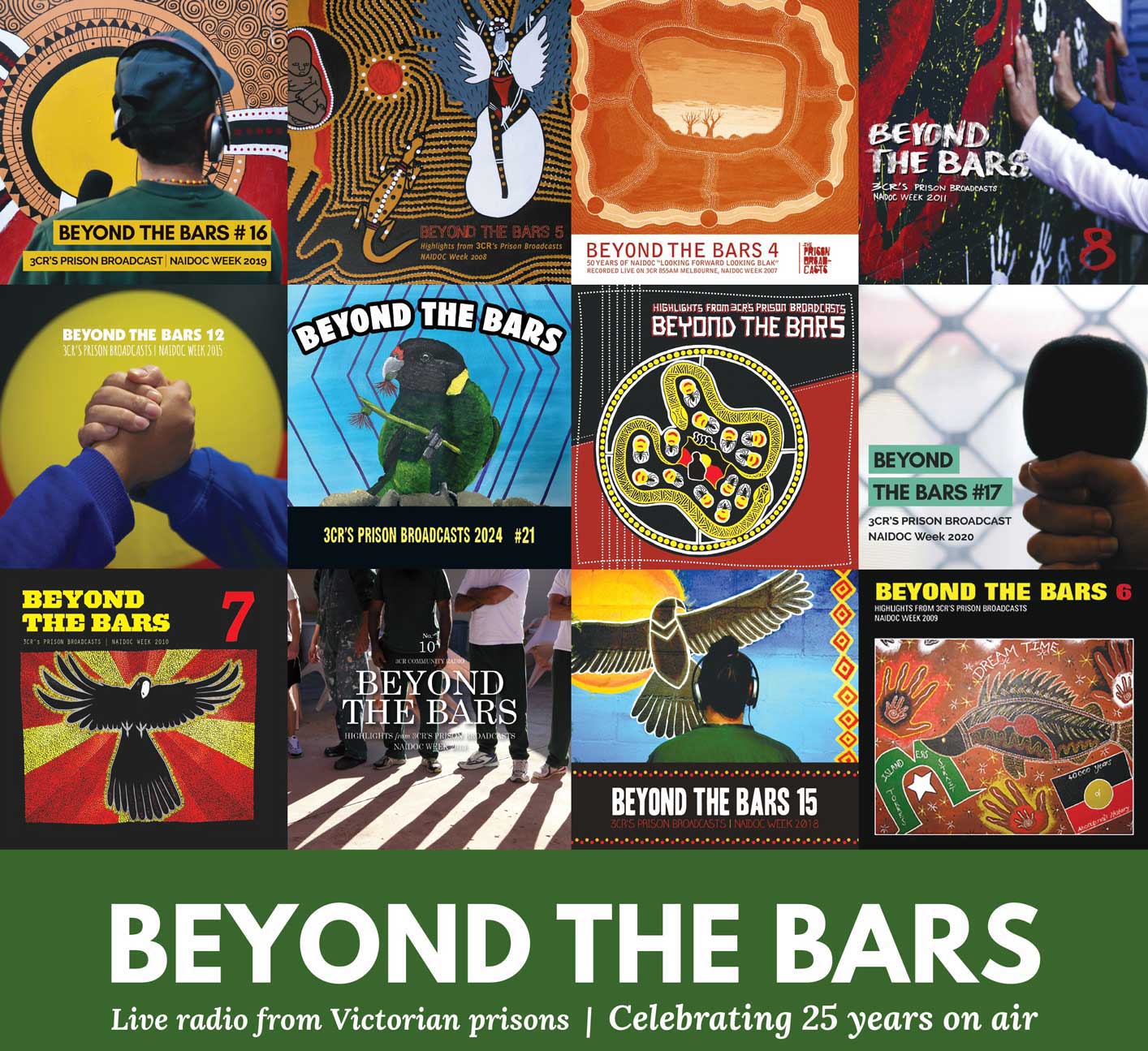
As 3CR marks 50 years of radical radio, Beyond the Bars enters its 25th year of broadcasting live inside Victorian prisons.

Since the inaugural broadcast during NAIDOC Week in 2002, Beyond the Bars has used radio as a vessel for cultural connection. The planning and time spent preparing for the yearly broadcasts reflects 3CR’s profound and inherent commitment to community.

Over the years, the station has continuously upheld its responsibility by providing a space for Aboriginal people to share their stories and strength.

For nearly 20 years, Kutcha Edwards steered these broadcasts with a deep understanding of the prison system. As NAIDOC Person of the Year in 2001, Kutcha was entrusted with speaking on air to the men at our very first broadcast from Port Phillip Prison.

As a survivor of the Stolen Generations, he helped establish the broadcast as a way to break the revolving door of the system.

“The mobs inside warm up to Beyond the Bars because they can, in a sense, voice what is going on within the confines of maximum-security prison but also internally in one’s self,” Kutcha said.

Beyond the Bars builds on the legacy of late broadcasters like Gilla McGuinness, a pillar of the community, and poet Lisa Bellear.

In 2003, Lisa presented the first women’s broadcast from the Dame Phyllis Frost Centre, providing a vital platform for truth-telling and radical love. When Beyond the Bars began, her work, alongside Gilla’s and many others including Johnny Mac, Freddy Norris, Haiden Briggs, Ross Morgan and Lester Green, established the airwaves as a space where Aboriginal people were heard on their own terms.

These pioneers understood that radio is more than sound, it is a lifeline that carries the warmth of community into the coldest of institutions.

Today, Shiralee Hood is leading the project alongside a dedicated team of Aboriginal broadcasters. Shiralee and the team spend months visiting six prisons before going live, building a bridge of trust and mutual respect.

She views the broadcast as a radical act of visibility, noting the project is about witnessing the profound resilience needed to survive, “getting people to see beyond the bars, to the actual Aboriginal person who’s speaking”.

This 25-year milestone is a testament to the enduring power of Aboriginal people. It also highlights the persistent neglect of a country that remains in breach of obligations from the Royal Commission into Aboriginal Deaths in Custody.

Within the prison industrial complex, the over-representation of the most incarcerated people on earth remains a stark reality.

“It’s hard to be in a society that doesn’t like you,” Shiralee said.

“Yet when the microphones go live, the spirit of the people proves stronger than the concrete walls.”

One participant once described Beyond the Bars as “a few hours of remission”, a moment where stories truly matter and the prison itself fades away. Another shared how the broadcast “makes us feel that we really belong back in the community”.

In this way, the airwaves become a sonic archive of survival where culture, from soulful songs and poems to the powerful rhythm of rap, acts as a lifeline of resistance and resilience.

These storytellers, artists, and Elders carry an unbroken spirit far beyond the bars, and for 25 years this groundbreaking project has proven that the sovereign voice of the oldest living culture is always louder than the systems attempting to contain it.

As 3CR marks 50 years of radical radio, Beyond the Bars enters its 25th year of broadcasting live inside Victorian prisons.

Since the inaugural broadcast during NAIDOC Week in 2002, Beyond the Bars has used radio as a vessel for cultural connection. The planning and time spent preparing for the yearly broadcasts reflects 3CR’s profound and inherent commitment to community.

Over the years, the station has continuously upheld its responsibility by providing a space for Aboriginal people to share their stories and strength.

For nearly 20 years, Kutcha Edwards steered these broadcasts with a deep understanding of the prison system. As NAIDOC Person of the Year in 2001, Kutcha was entrusted with speaking on air to the men at our very first broadcast from Port Phillip Prison.

As a survivor of the Stolen Generations, he helped establish the broadcast as a way to break the revolving door of the system.

“The mobs inside warm up to Beyond the Bars because they can, in a sense, voice what is going on within the confines of maximum-security prison but also internally in one’s self,” Kutcha said.

Beyond the Bars builds on the legacy of late broadcasters like Gilla McGuinness, a pillar of the community, and poet Lisa Bellear.

In 2003, Lisa presented the first women’s broadcast from the Dame Phyllis Frost Centre, providing a vital platform for truth-telling and radical love. When Beyond the Bars began, her work, alongside Gilla’s and many others including Johnny Mac, Freddy Norris, Haiden Briggs, Ross Morgan and Lester Green, established the airwaves as a space where Aboriginal people were heard on their own terms.

These pioneers understood that radio is more than sound, it is a lifeline that carries the warmth of community into the coldest of institutions.

Today, Shiralee Hood is leading the project alongside a dedicated team of Aboriginal broadcasters. Shiralee and the team spend months visiting six prisons before going live, building a bridge of trust and mutual respect.

She views the broadcast as a radical act of visibility, noting the project is about witnessing the profound resilience needed to survive, “getting people to see beyond the bars, to the actual Aboriginal person who’s speaking”.

This 25-year milestone is a testament to the enduring power of Aboriginal people. It also highlights the persistent neglect of a country that remains in breach of obligations from the Royal Commission into Aboriginal Deaths in Custody.

Within the prison industrial complex, the over-representation of the most incarcerated people on earth remains a stark reality.

“It’s hard to be in a society that doesn’t like you,” Shiralee said.

“Yet when the microphones go live, the spirit of the people proves stronger than the concrete walls.”

One participant once described Beyond the Bars as “a few hours of remission”, a moment where stories truly matter and the prison itself fades away. Another shared how the broadcast “makes us feel that we really belong back in the community”.

In this way, the airwaves become a sonic archive of survival where culture, from soulful songs and poems to the powerful rhythm of rap, acts as a lifeline of resistance and resilience.

These storytellers, artists, and Elders carry an unbroken spirit far beyond the bars, and for 25 years this groundbreaking project has proven that the sovereign voice of the oldest living culture is always louder than the systems attempting to contain it.

Topics
This
article
was originally printed in the
July 2026
edition of About Time.

How to Write: Reviews

How to Write: Reviews

How to Write: Reviews

By The Prison Journalism Project

Here are some tips for writing a review, courtesy of the Prison Journalism Project.

Culture

ISSUE NO. 6

3 MIN READ

Back to Black

Back to Black

Back to Black

By Vincent
By Vincent

‘Back to Black’ charts Amy's life from her teen years through to her success as a world famous musician and singer.

Culture

ISSUE NO. 7

3 MIN READ

Book Club Review: The Wife and the Widow by Christian White

Book Club Review: The Wife and the Widow by Christian White

Book Club Review: The Wife and the Widow by Christian White

By About Time
By About Time

Set on a quiet island in the dead of winter, The Wife and the Widow is a gripping mystery/thriller told from two perspectives.

Culture

ISSUE NO. 9

6 MIN READ

‘Blak In-Justice: Incarceration and Resilience’ Exhibition Opens in Melbourne

‘Blak In-Justice: Incarceration and Resilience’ Exhibition Opens in Melbourne

‘Blak In-Justice: Incarceration and Resilience’ Exhibition Opens in Melbourne

By About Time
By About Time

A new art exhibition in Melbourne calls attention to Indigenous incarceration in Australia. It’s on from April to July 2025 at Heide Museum of Modern Art in Melbourne.

Culture

ISSUE NO. 10

3 MIN READ

Bread Pudding With a Difference

By Mark

Bread pudding from behind bars.

Culture

ISSUE NO. 25

2 MIN READ

Banoffee

By Edward

A recipe for banoffee from inside.

Culture

ISSUE NO. 25

2 MIN READ

Apple Crumble for Under $2 a Serve

By Edward

Place Scotch Fingers into a large container and use a peanut butter jar (lid part) to crush the biscuits. Add plum jam for a richer flavour.

Culture

ISSUE NO. 25

2 MIN READ

King 810: Music for Hard Times

By Stacey Stokes

King 810, a nu metal band from the USA, toured Australia in March. I went, and a lot of other criminals went too. There was even a few reintegration officers spotted in the crowd. Simply because, they strike a chord… with those who have lived hardship.

Culture

ISSUE NO. 23

2 MIN READ